
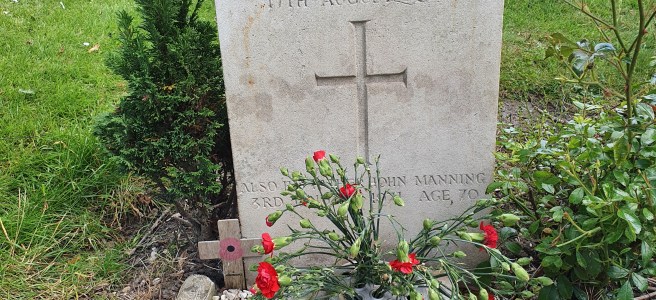
Killed in the Line of Duty Sapper George Lucas Service Number 7895135……….
The final part in the story of the six brave men that died near Nantwich in Cheshire, trying to defuse a bomb that was dropped during WW2. This brings to a conclusion, eight months of research and many visits to the surrounding areas trying to establish how these brave men lost their lives. I always knew that when I started researching the lives of the six men that died, that at least one of the six men was going to prove difficult to research and Sapper George Lucas is that man.
George Lucas was the only son of Arthur Percy Lucas and Catherine Wilkinson and he was born on 4 November 1919 at Fairfield, Locks House in Droylsden in Manchester. His father was an engineer pattern maker and also under the field for ‘occupation’, it also mentions that his father was an ex Private in the Royal Scots. Arthur Percy Lucas and Catherine Wilkinson were married on 15 March 1919 at the Trinity Wesleyan Methodist Chapel, Manchester Road, Droylsden in Lancashire. At the time they were married Arthur is also recorded as a pattern maker and ex Private in the Royal Scots and his address is given as Fairfield Locks, Droylsden. Catherine was living at 2, Mount Street, also in Droylsden.

Just two years later, the 1921 census was taken and the family are residing at 18, Wharf Street in Droylsden. Arthur Percy Lucas is still recorded as a pattern maker, but this time we get to find out who is employer was, The Great Central Railway Company and he was employed at the Gorton Works. Also recorded at home with young George are his mother Catherine Lucas and her younger sister, Lily Wilkinson.
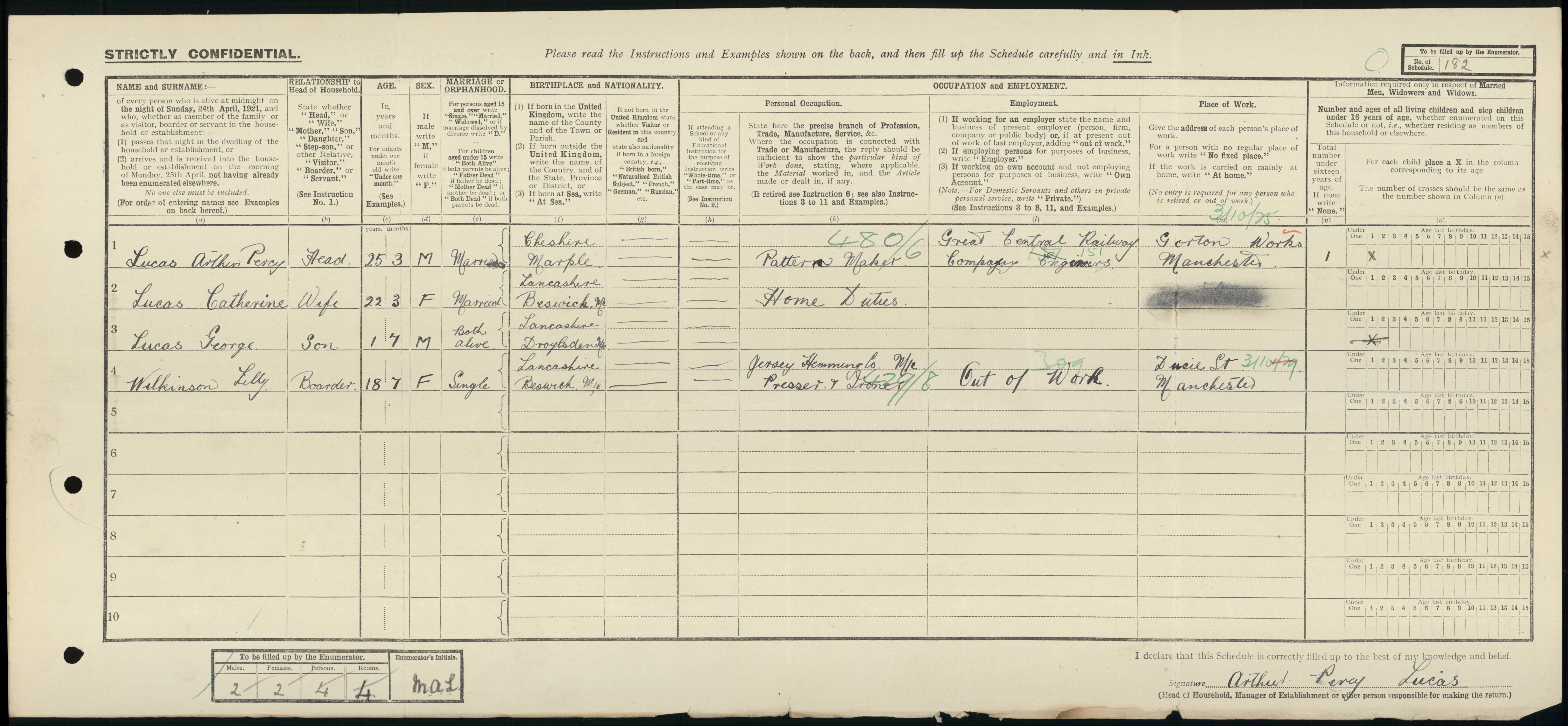
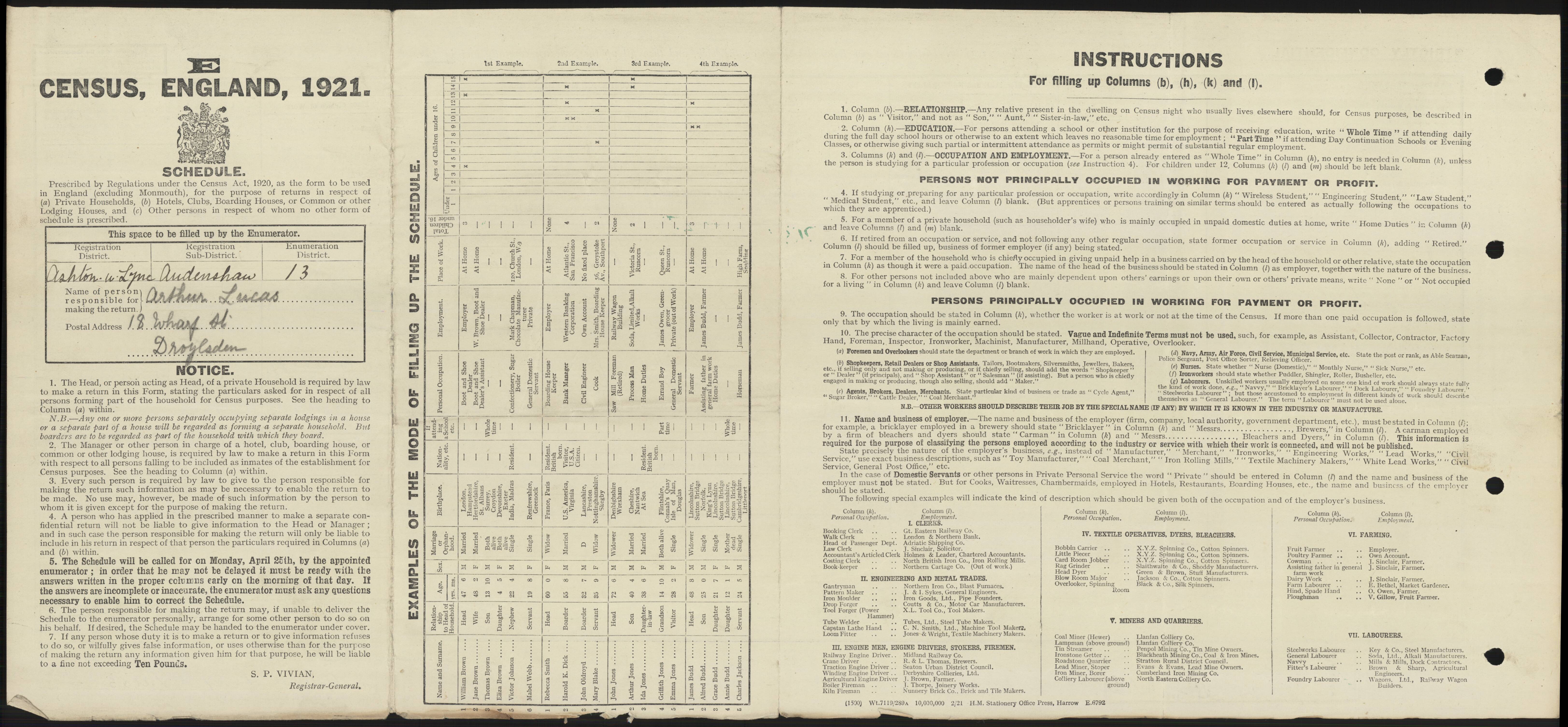
(1921 Census FindMyPast)
Just five years after the 1921 census was taken, George’s father, Arthur tragically died in 1926, aged just 30. In 1932 George’s mother Catherine remarried a man named John Manning and below is the 1921 census entry for John Manning and his family, who were living at Buckley Street in Newton Heath at the time. John was employed as a machinery maker, no doubt supporting the many mills located in the surrounding area and he was based nearby at Miles Platting.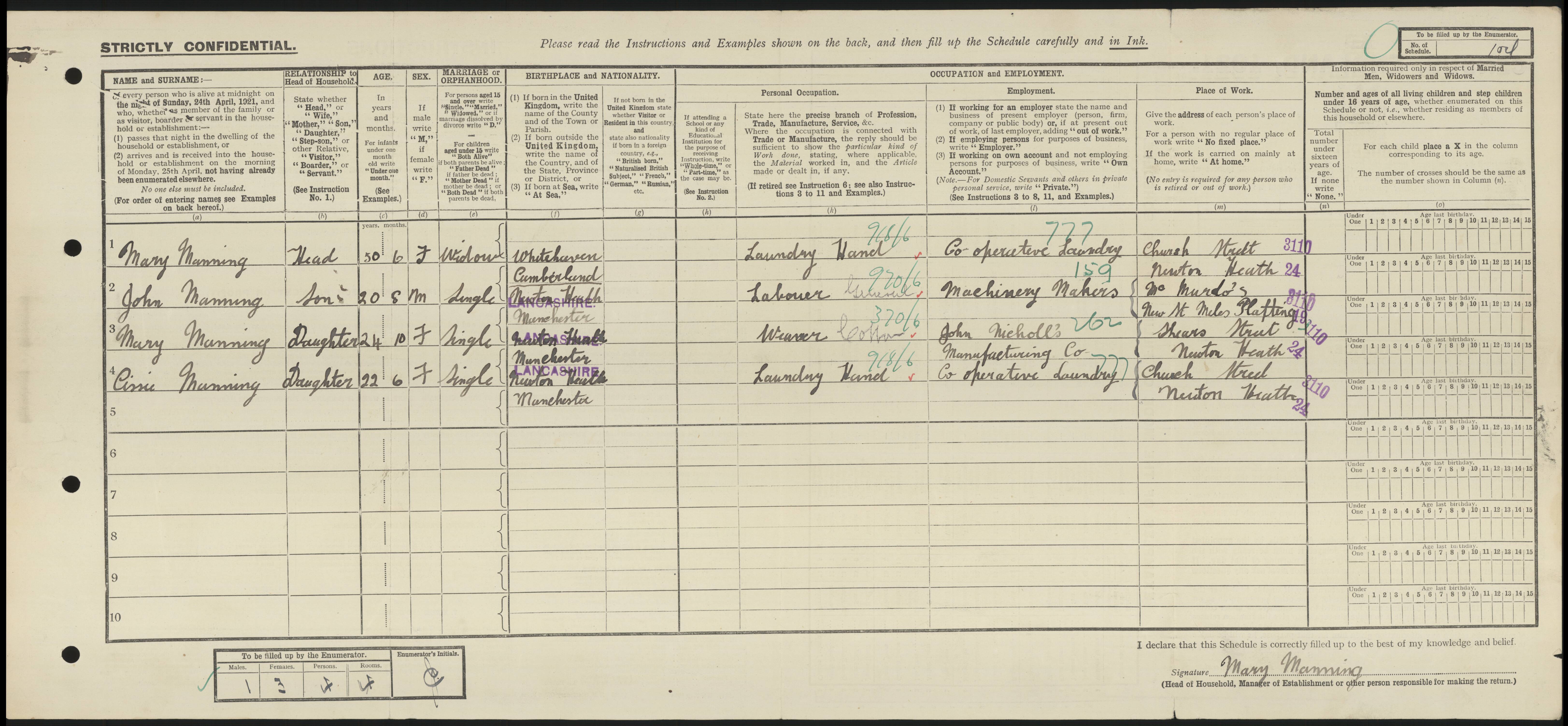

(1921 Census FindMyPast)
After John and Catherine were married, the address in Buckley Street became the family home for George Lucas and his parents for many years. This was in a heavily industrialised part of Greater Manchester known as Newton Heath, made famous as the home of Manchester United Football Club. The club was formed originally by workers at the Newton Heath Carriage Works and the Carriage and Wagon Works, also known as Newton Heath Loco, is still there today. The map below shows the location of Buckley Street and where it is located in Newton heath and you can also see the Newton Heath Football Ground and its close proximity to Buckley Street.

Before Industry arrived here, the area lived up to its name of ‘Heath’ and was very much a rural area. The original Heath stretched all the way from Miles Platting to Failsworth, which was separated by the Oldham Road. The Heath was largely remote and uninhabited, until the Industrial Revolution arrived. The building of the Rochdale Canal pretty much sealed the fate for what was once a quiet rural village. The coming of the ‘Railway Age’ and the construction of two main lines across the area saw the once rural village become an extension of the city itself. The Lancashire and Yorkshire Railway eventually occupied a 40-acre site and also became a significant employer in the area, employing over 2,000 workers at the time. The map below and its corresponding street view of today give a clear and precise indication of where Buckley Street was.
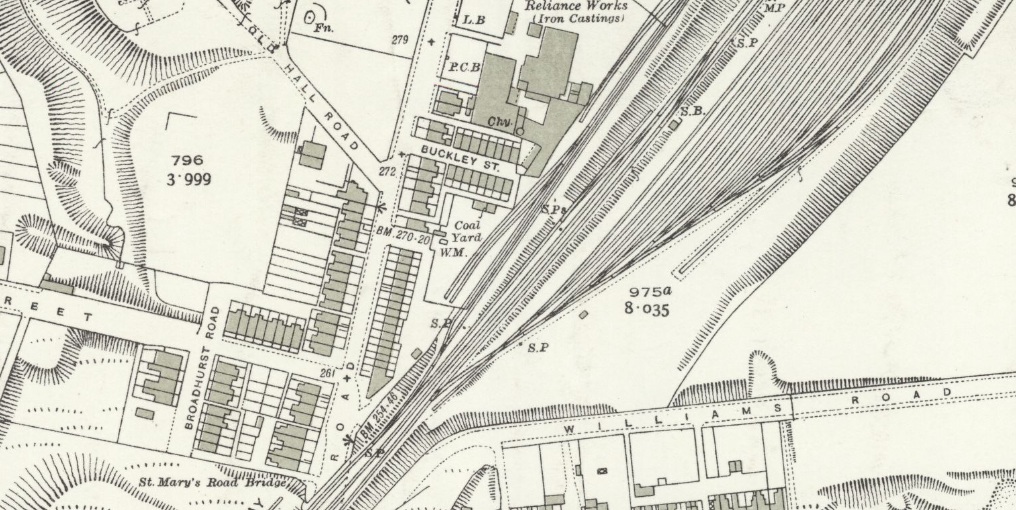
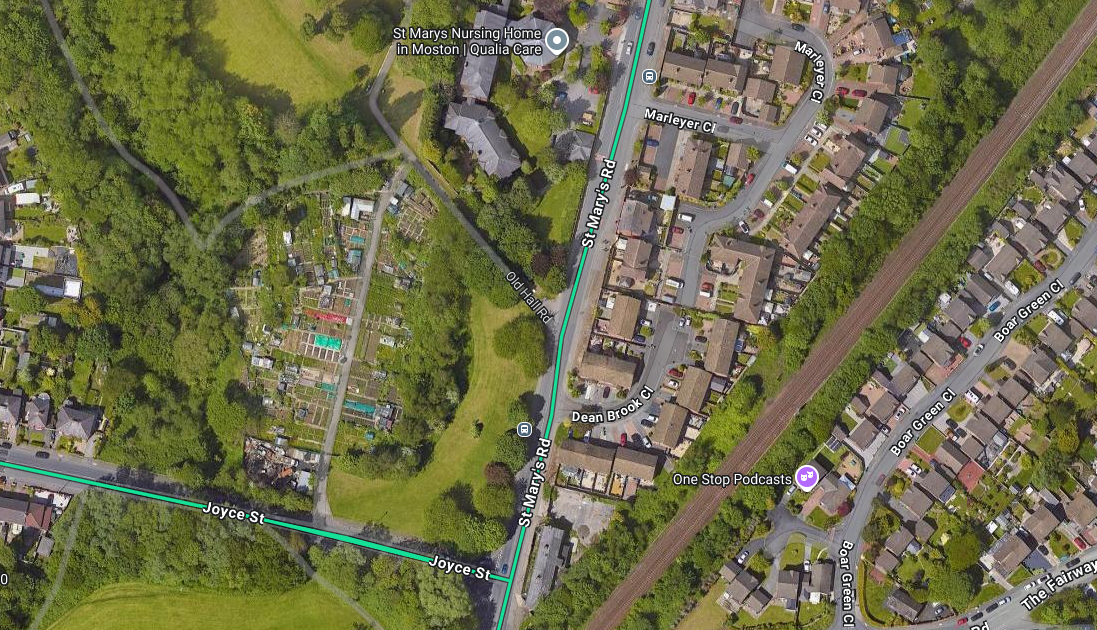
(Special thanks to Dean Kirby, Northern Journalist and Urban Historian for his additional support with maps and images of Buckley Street in Newton Heath, you can find out more about the work that Dean does on his website: https://deankirby.uk )
The middle of the nineteenth century also saw a large movement of population from rural districts to the burgeoning towns of the North West of England. Manchester and its Mills were booming at the time and to cope with the increase in population rows and rows of terraced houses were built to accommodate the vast numbers of workers now working in the City’s Mills. Newton Heath went from a rural farming community to a thriving working community in a very short space of time. The images below capture what inner city life would have been like for children growing up in Manchester during the 1940s and 50s.


In April 1939 the Military Training Act was passed, under which men aged 20 and 21 were conscripted to complete six months military training. This was swiftly followed with full military conscription in May 1939. A young George Lucas enlisted with the Army on 6 May 1939 and was one of 1.5 million called up by the end of 1939. At the time Europe was in turmoil, the Great War that was to end all wars had left Europe in a state of instability as various Countries were literally divided up after the end of WW1, which led to a rise of the Dictator in many European Countries, therefore another war was almost inevitable. Even before Hitler invaded Poland, Stalin had ordered troops to invade Japan which resulted in a 4-month battle that inflicted heavy losses on Japan. Also prior to the invasion of Poland, early in 1939, Hitler and Mussolini had signed the “Pact of Steel” formalising the 1936 alliance known as the Rome-Berlin Axis. Eventually after the invasion of Poland, Britain declared war on Germany, 3 September 1939. Little did George Lucas or his family know at the time what grief and heartbreak was to follow.
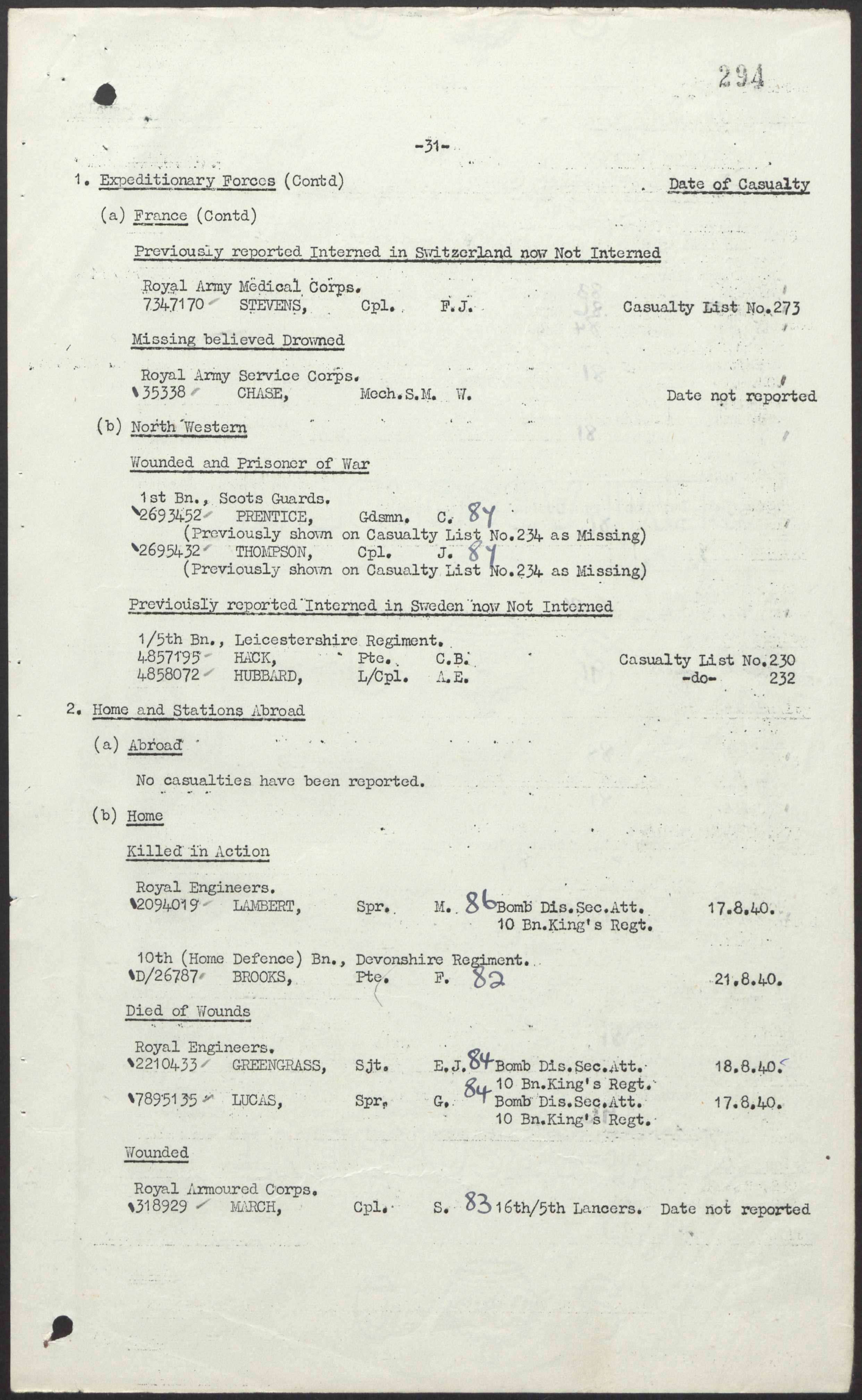
From the limited military records available, George’s records show that after completing his basic training with the Royal Engineers that he was transferred to 501 Field Company on 18 May 1940 before being attached to 10th battalion The Kings Regiment (Liverpool). He was assigned with the military number 7895135. Below are the Army records surrounding the death of George Lucas and these records can be found in the collection UK, World War II Army Casualty Lists, 1939-1945 on Ancestry.

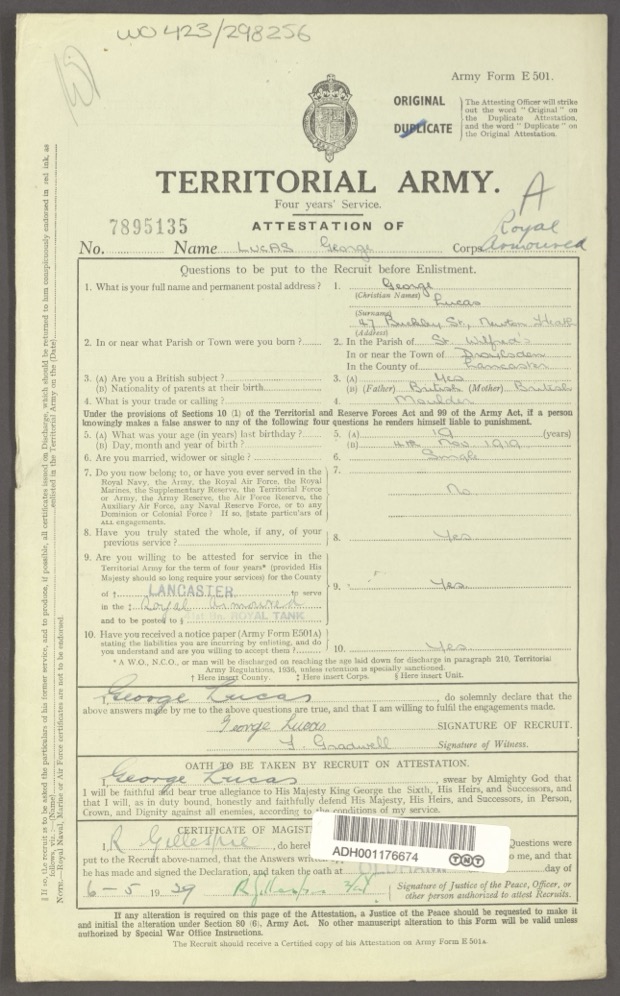
After the final draft of George’s life story was written and after many months of waiting, his full military service records were finally sent to me from the MOD, which can be seen below. Although there is limited information within these documents, George only served for 1 year and 105 days, they do confirm a lot of the other information that I had discovered. I always think that it’s nice to get the description of the serving soldier from his attestation papers, although it’s basic information, we now know of course that George was 5′ 4″ when he signed up. We also now know that his first assignment was with the 41st Battalion of the Royal Tank Regiment and that when he signed up for Military Service he enlisted at Oldham. He was later posted to 1st Division of London Royal Engineers on 14 February 1940. I would have been unable to discover any of this new information without his full military record.
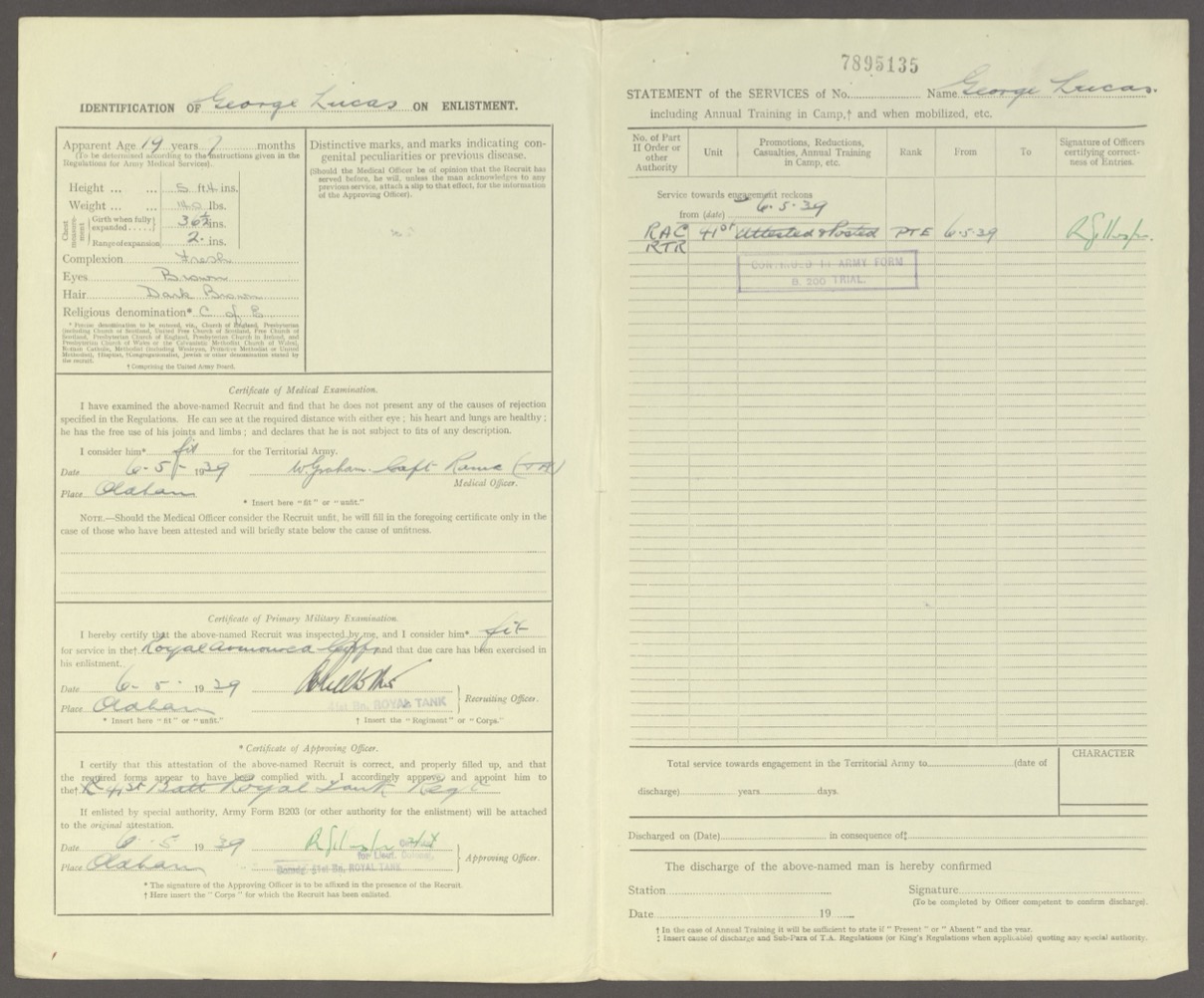


Sadly we already know that George’s Military career was all too brief. He was part of a group of Bomb Disposal Men working as part of the Royal Engineers that were despatched to defuse a series of bombs that dropped in and around the Nantwich area of Cheshire in August 1940. You can read the full story of how they died here:
The Story of the Six Brave Royal Engineers Who Died at Nantwich
George was buried in a CWGC grave at Philips Park Cemetery in Manchester, Section O Grave 767.
Despite the heavy censorship of newspaper reporting during the War, for fear of affecting the morale of the nation at the time, Sapper George Lucas’ death was reported in the Manchester Evening News on 20 August 1940.
LUCAS – On August 18, killed on active service, Sapper GEORGE LUCAS, R.E., aged 20 years, beloved son of Catherine and John Manning, 47, Buckley Street, Newton Heath. Service at St. Wilfrid’s Church, Thursday, 2-15, prior to interment Philips Park Cemetery, 3 p.m.

George was buried in a CWGC grave at Philips Park Cemetery in Manchester, Section O Grave 767. The pictures of his grave below were kindly taken by a member of the Friends of Philips Park Cemetery organisation and I would like to say a special thank you to researcher and volunteer Gail for taking the time to take the pictures for me. In later years, George was joined at his final place of rest by his mother, Catherine Manning and his step-father John Manning.
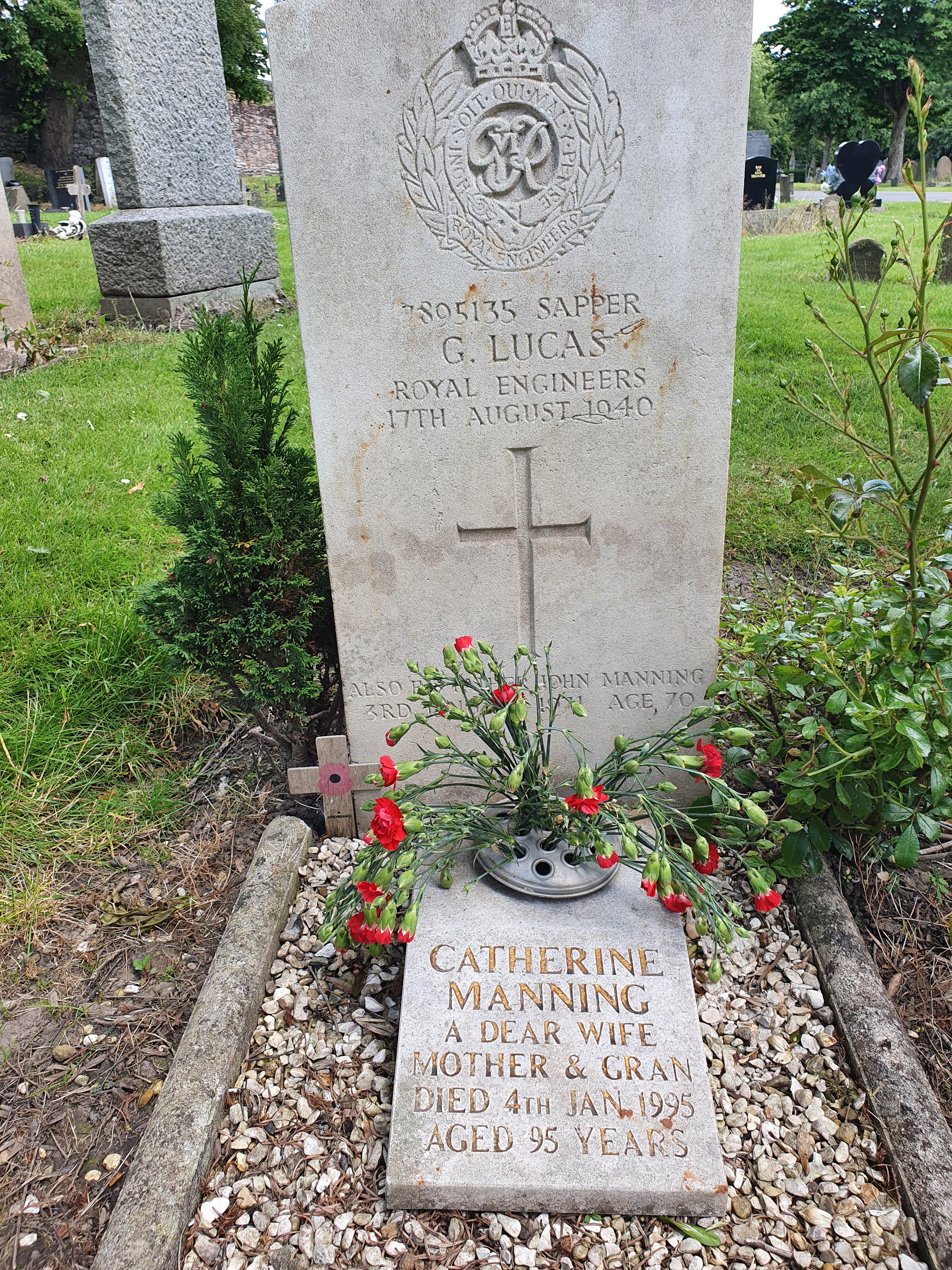
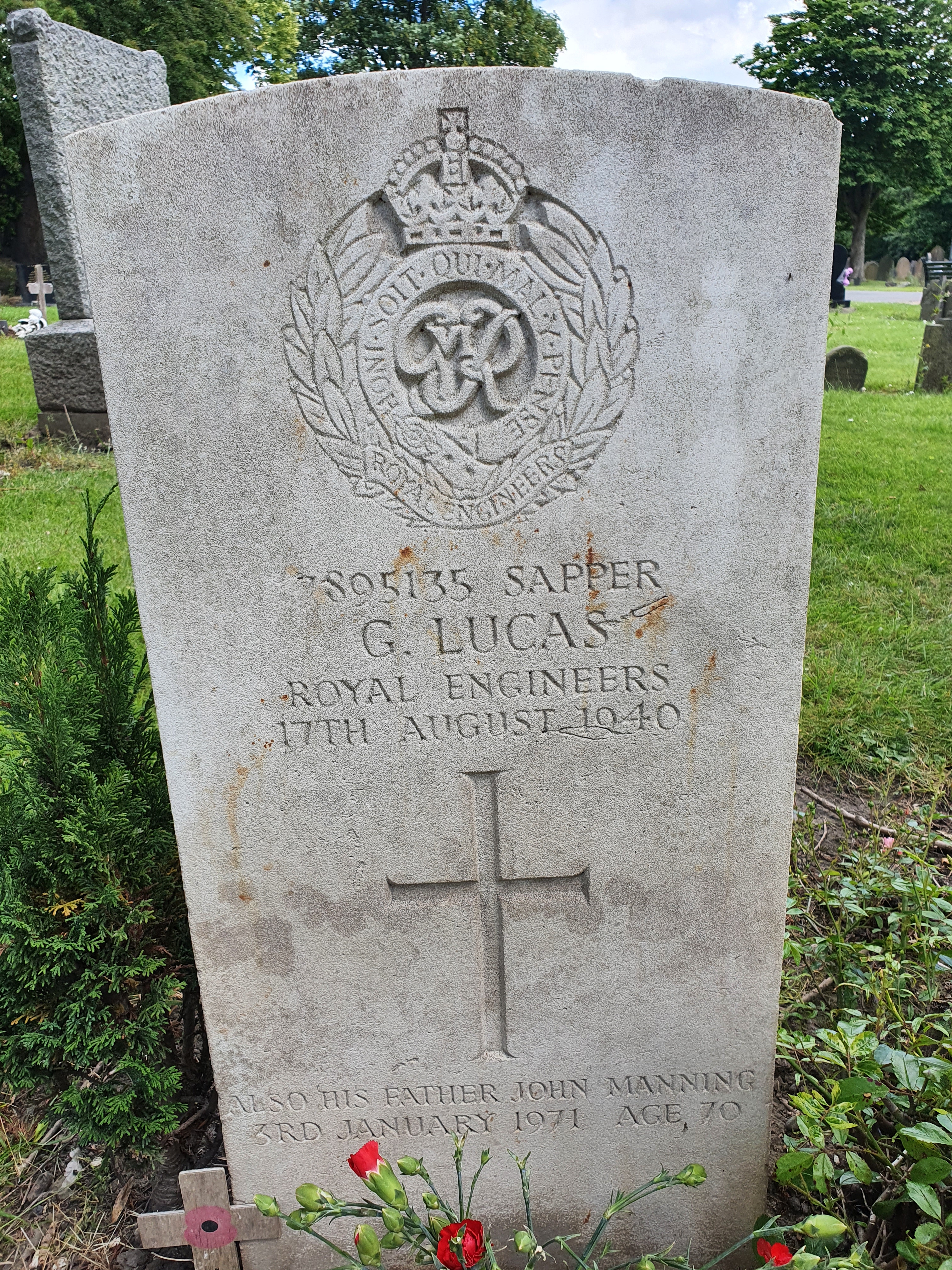
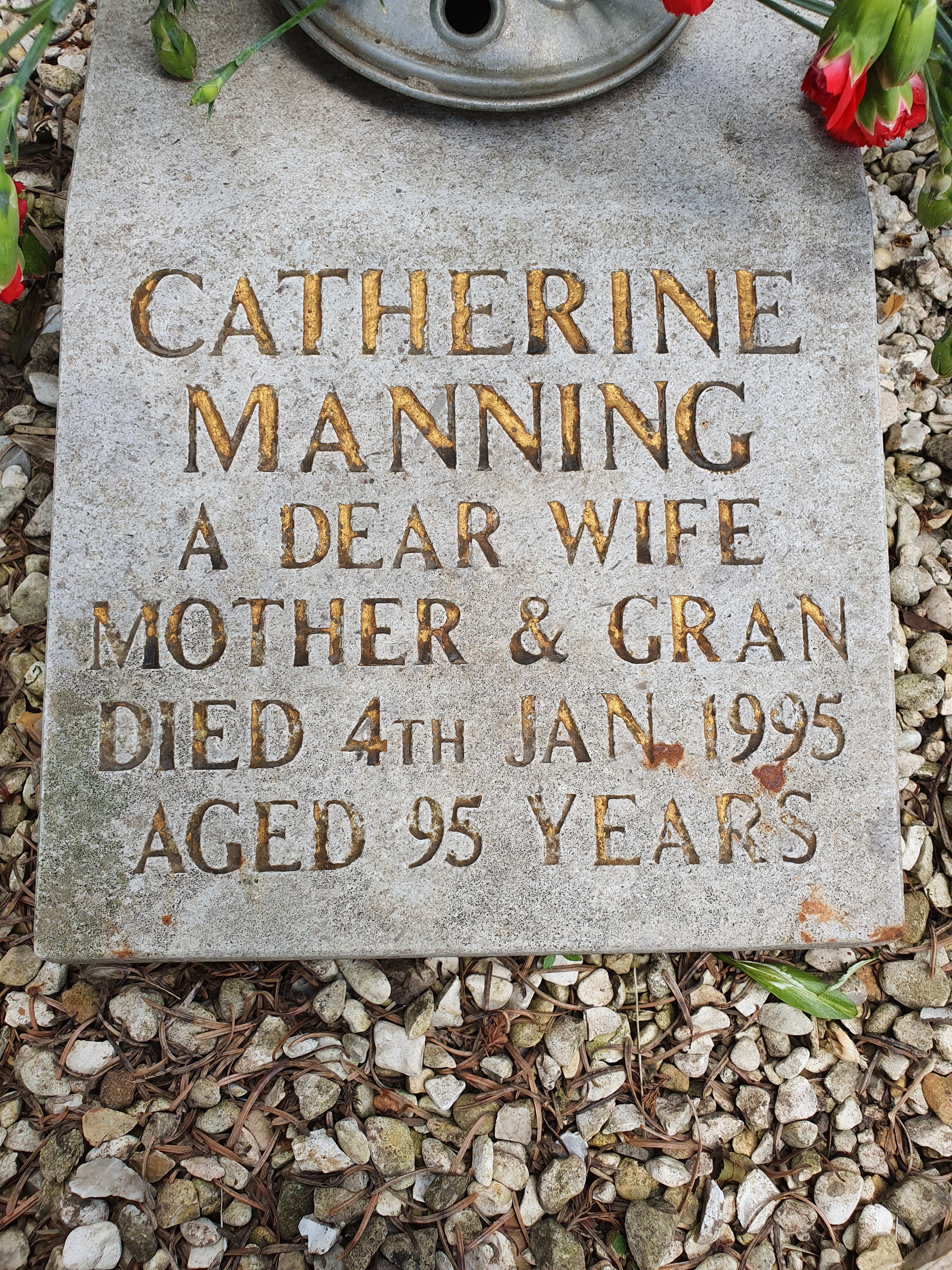

George’s story is doubly tragic because it was over almost before it had begun. He volunteered as a keen and enthusiastic young man, excited about the new adventures that lay ahead of him. His life, like those of his 5 colleagues, cut tragically short at the hands of the German Luftwaffe. I hope that this website goes someway to help to keep his memory alive and we can remember his bravery, courage and resilience and the ultimate sacrifice he made in defence of his Country, when it was needed most.
Why not visit my new website:
All My Blogs For Family Tree Magazine in one handy place
Copyright © 2024 Paul Chiddicks | All rights reserved

 The Chiddicks Family Tree