

Ever had one of those skeletons from the past come knocking at your door? Should you answer?
I guarantee that every family will have secrets, some might call them ‘skeletons in the cupboard’ but it amounts to the same thing. Something was kept hidden from the family, for what at the time, appeared to be a valid reason. Discovering a family secret in itself is not unusual, but deciding what to do next is a real dilemma. Every family history is different and no two stories will ever be the same, but we are always encouraged to put pen to paper and write our family story, but should we reveal all? Are we air-brushing the truth by leaving the details out, or are some secrets best kept that way?
So, let’s first consider the reasons that there was a secret in the first place. The most common or obvious reason was ‘fear’, the fear of being found out and the subsequent consequences of that. Our ancestor’s lived in fear of being judged by society. They chose the discomfort of hiding the secret over the possible pain of being judged by society. Fear of humiliation and judgement is one of the greatest fears that any of us can ever experience and is at the core of why many of us keep secrets. These secrets are baggage from the past, sometimes carried over several generations, they lie there in the consciouses of our minds festering in the darkness and shadows. If they are allowed to grow they can consume us and as they grow larger and scarier, they have the power to shape our whole lives without us even knowing it. But we have to be cautious, untimely revelation can be more destructive than the secret itself. Our beliefs, the sense of right and wrong, comes from those around us and it’s inherent in our DNA to want to please everyone. This explains why we keep secrets about the rules we break, so that people don’t judge us and our ancestor’s were no different. The old saying of ‘keeping up appearances’ was very much at the heart of the decision making taken at the time that a secret was made.
Every secret will have an element of shame or embarrassment attached to it, should the truth ever be told. Society has its own rules of supposed ‘acceptable norms’ and the shame of not living up to these could leave a whole family or a family member ostracised by society. The pressures of being part of the ‘establishment’ fuelled our ancestor’s desire to keep the secret hidden. Your dilemma as a recorder of your family history is whether you decide to reveal the secret or not and do you even have the right to reveal it?
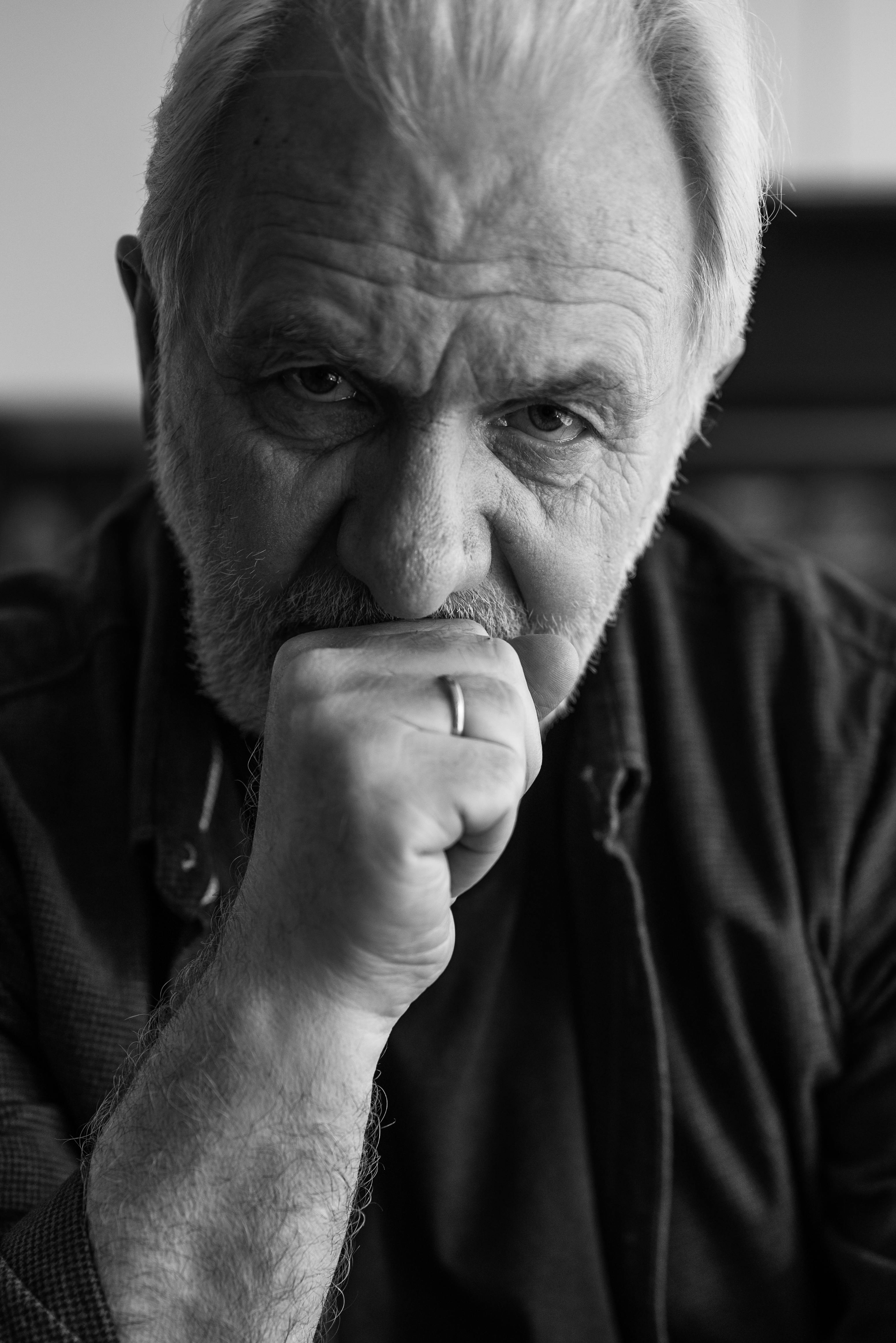
You might ask yourself, how did the family carry on after the decision to keep the secret, how did they manage? The simple answer to this question is, they had to, they had no choice. Today of course, we can look back at a series of events with the benefit of hindsight and what we now know today. There’s very little that we face today that has not been faced before. What is different now is how much we know today, it’s called life experience.
The first thing you should consider is who is going to be affected by the revelation of the secret? Are there living descendants who could be affected by the secret being revealed? Next take a step back, pause for a moment and consider why the secret was kept in the first place. The reason why there is a secret might not be obvious to you at this moment in time, or you might not be aware of all the facts.
Consider the value in revealing all, what is there to gain, if anything? Are you exploiting someone’s tragedy for your own gain? Are you just merely satisfying your own needs to tell the story or do you feel morally obliged to tell the story? Neither of these are not good enough reasons to reveal a secret, especially, if it is not your secret to tell. If the ancestor concerned has passed away, it doesn’t automatically give you the green light to go public, far from it. There will likely be descendants of the ancestor who could, potentially, face life changing information. Whatever you decide, sensitivity has to be the key element on how you approach the subject. Also consider taking into context the time and place of when the secret was made. How we look at things today will be vastly different to how our Victorian ancestor’s would have viewed things. Sometimes secrets in our ancestor’s days wouldn’t be considered a secret today. Some secrets don’t carry with them the level of shame or judgement that they did in days past.
Remember always that there are two sides to every story. If you do decide to tell the story, the hardest part is not approaching the subject with your own preconceived bias. To remain impartial, especially if it’s a controversial subject is extremely difficult. You also have to consider that by revealing all is likely to trigger a cascade of reactions, including guilt, anger, shame, and feelings of betrayal, among all the parties involved. Although the revelation of truth might unburden some, the fall out for others can and will be life-changing. ‘Oh what a tangled web we weave, when first we practice to deceive.’

If you do decide to write the story you must also be prepared for how it will affect and impact you. Don’t under estimate how much of ‘you’ this will take. It’s worth remembering that for every difficult story that you tell, you have to leave a little piece of you with that story, if you are to do any justice to the story. Are you ready for that? Are you truly prepared for every possible outcome and reaction? Some people might react vastly different to how you envisage they will and you can possibly destroy relationships with your own family members, is the truth worth that?
Some secrets of course remain that way forever and our ancestor’s take the truth with them to the grave. In these instances we will never get to the real truth and anything we think or write will only ever be supposition. We just have to accept the fact that the secret will never be known and perhaps that is for the best. Write what you know about and research what you don’t know about!
I would always urge you to proceed with caution. We have to go right back to the beginning and consider; “Whose truth is it anyway”. Ask yourself is it really your place to reveal all and what will you gain by doing so? All families have secrets, from the innocent to the deeply sinister and some secrets are just best left that way, but only you can be the judge of that………..
Why not visit my new website:
All My Blogs For Family Tree Magazine in one handy place
Copyright © 2024 Paul Chiddicks | All rights reserved

 The Chiddicks Family Tree
This is a question that has been very much on my mind since I started researching my family history from a century ago.
LikeLiked by 2 people
Not an easy question to answer unfortunately
LikeLiked by 2 people
My mother was subject to abuse after WW2 and her dad was put in an asylum (which became a nursing home) for the rest of his life. The impact on my mother was severe MH issues. The impact on her children (including me) was a mother who was absent and who never spoke about her father. PTSD travels down generations. Israel will find in the next 50 years they have severe MH issues travelling down generations. They will have child abusers and serial killers which will have one source – war.
LikeLiked by 3 people
Thanks David, I am sorry to hear of your own traumatic experiences within your own family. There has been a lot of research into the effects of inherited trauma and many examples of this across the last few hundred years.
LikeLiked by 1 person
Excellent blog post. Thank you for sharing it.
LikeLiked by 1 person
Thank you DIann for taking the time to read the blog
LikeLiked by 1 person
An important and sensitive topic. Your approach makes a lot of sense–think long and hard before revealing a family secret. For the sake of future descendants, I’ve written notes about a family secret and kept them in my surname file, to be rediscovered in the years ahead when all involved are long gone and nobody will be hurt or shamed. Nothing being said or written in public, to protect those who might be hurt.
LikeLiked by 3 people
Thanks Marian its a real dilemma that I am sure many of us will face at some point whilst carrying out our research. There is no one answer fits all, everyone of us will approach things from a different perspective, I would urge everyone to think carefully about what they publish as once it’s out there it’s out there. Your approach will ensure those affected will be protected in the future.
LikeLiked by 1 person
An excellent post Paul. I raise similar issues to those here when I present about Ethics and Privacy, We don’t have the right as researcher to share every secret we uncover nor do we have the right to pester people to reveal secrets they my know.
LikeLiked by 2 people
Thank you for sharing your thoughts with me, it’s always nice to know that I’m not the only one who thinks like this
LikeLiked by 1 person
Very well put. These are things we should consider carefully. I’m not sure I can recall an instance where I revealed a secret that caused offense. There is one that I will definitely not put online while certain parties are still living. It’s more in-the-open within my closer circle.
On the other hand, a writer in my critique group has a cousin who want to whitewash an ancestor’s known personality traits, so descendants won’t understand the truth of her life. I disagree with that approach. We all have warts and less-impressive behaviors.
LikeLiked by 2 people
Thanks Eilene there are definitely cases where what we learn really should not be made public but I also agree and like I mention in the blog, you can’t whitewash or air brush the truth
LikeLiked by 2 people
There is the other side as well, which I have experienced. When I discovered that my great-grandfather died by suicide, I struggled with how to tell my mom. She had said she wasn’t sure how he died but sort of hesitated with that explanation. I ordered his DC in 2017 (mom knew I had done so), and when I called to talk about it she interrupted with, “I already knew.” It turns out she had overheard her parents arguing when she was a small child and heard the truth then. Her mother told her that she must never – ever – speak of it again. My heart hurt for her…imagine carrying a secret like that for almost 70 years. She never even told her siblings (although it turns out that they found out too, and one sibling was pretty hurt that mom knew and had never shared the information). Mom discussed it freely after I got that DC. She said that she always figured one of us would find out on our own, and that if she discussed it at that point she wasn’t really telling the family secret. We discussed it quite often in the years after I made that discovery, and mom even approved of the blog post I wrote about it. Mom passed in January, and looking back now I can see how keeping that secret caused problems for her over the years…I guess hindsight really is 20/20 sometimes.
LikeLiked by 2 people
Thank you for sharing your story with me, this is a truly tragic set of circumstances and it must have caused so much pain and heartache across multiple generations. I have heard this mentioned several times before that when the truth comes out that other family members say that they already knew. But likewise many times I have heard that the burden of responsibility and the weight of carrying a secret for so long can be overwhelming. In many instances the truth eventually comes out. There is no answer to any of these conundrums and in many ways the saying “you’re damned if you do and you’re damned if you don’t springs to mind
LikeLiked by 2 people
I agree…that is exactly how it feels!
LikeLiked by 2 people
Some issues specific family members haveonly shared in person… and they likely will never be put online. It’s a decision. And not mine to make. Thanks for writing about these challenges in family history.
LikeLiked by 2 people
I think it’s important that we have these discussions in the hope that it might help others solve their own dilemmas
LikeLiked by 2 people
Really good blog post here; quite intriguing!
LikeLiked by 2 people
Thanks Sam much appreciated
LikeLiked by 1 person
Sometimes the ‘secret’ is ludicrous to our eyes – my maternal aunt always used to say, of her surname starting in ‘Mc’, ‘of course we’re Scottish, not Irish’. When I discovered our Mc family newly arrived on the 1841 census they were, unsurprisingly given her touchiness, from Ireland. Yet I didn’t publicise that around the family until after she had died. To be fair, they will have been from Scotland ultimately, probably arriving from there during the Plantation of Ulster in the seventeenth century.
LikeLiked by 3 people
It’s funny how things that were so important back then seem less so now. But we always have to put everything into the context of the generation at the time.
LikeLiked by 1 person