
Discover the dark tales of the past in my brand-new series: “Stories From The Grave.”
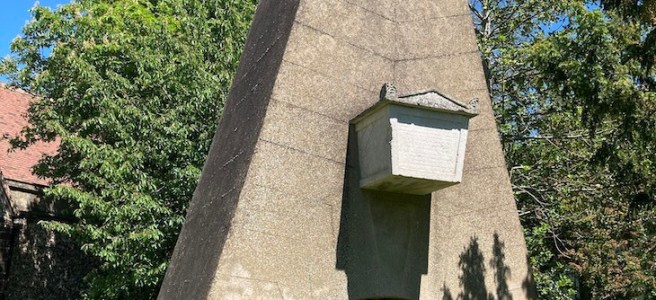
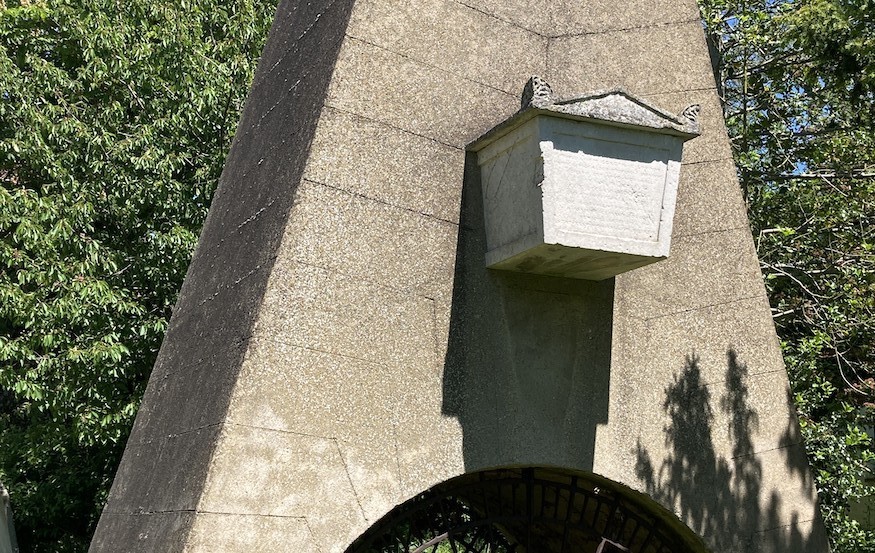
Tucked away in the peaceful churchyard of St John the Baptist Church in Pinner, Greater London, stands one of the most curious monuments you’re likely to encounter, a tomb with what appears to be a coffin floating above the ground. Its unusual design has inspired folklore, local curiosity, and years of storytelling.
At first glance, the structure seems almost unnerving: a tall, triangular stone edifice with a stone coffin protruding from its centre, jutting out on either side as if suspended in mid-air. So how did such a strange memorial come to exist, and what does it actually mean?
William and Agnes Loudon: The People Behind the Monument
The memorial was created by John Claudius Loudon, a celebrated horticultural writer and early cemetery designer, in honour of his parents, William and Agnes Loudon. William Loudon died in 1809, and Agnes in 1841.
Despite what the name might suggest, the floating coffin does not contain their remains. Both William and Agnes are buried in a vault beneath the monument, in a very traditional manner, even though the carved stone coffin sits above ground.
The Legend vs. The Reality
Over the years, a local legend has grown up around the unusual design. According to the most commonly told version:
The Loudons had inherited a sum of money that would only continue to be paid so long as their bodies remained above ground. Determined to preserve the family’s financial future, their son supposedly designed this floating memorial so that they would stay above the earth even in death.
It’s a vivid and emotional tale and understandably so. The idea of a devoted son looking for a way to honour his parents and keep a promise to them captures the imagination.
However, historical records and local church accounts make it clear that this is a myth rather than the truth. The Coffin is empty, and the real burial place is beneath ground in a vault, which means the supposed inheritance clause trick is almost certainly not factual.
So Why Does the Coffin Float?
There is no definitive answer, but historians suggest a far more meaningful reason:
- A Symbol of Status and Love – The towering, unique design may simply have been John Claudius Loudon’s way of setting his parents apart, not in some worldly bargain, but as a heartfelt tribute. Some suggest it reflects a desire to elevate them above others in the churchyard, honouring their place in his life and perhaps symbolising a closeness to heaven.
- A Reflection of the Times – Loudon was deeply involved in early 19th-century cemetery design and landscape aesthetics, and this memorial may have been an early expression of his ideas, blending architecture, symbolism, and personal affection in a bold, unconventional way.
Even the ironwork beneath the stone coffin bears the enigmatic words “I byde my time”, a phrase that has invited plenty of interpretation over the years, from legend to spiritual reflection.

A Lasting Legacy
Today, the Loudon memorial stands as a Grade II listed monument, a testament not only to the people it was built for, but also to the stories we pass on about love, memory, and the mysteries of the past.
Whether you visit with curiosity, reverence, or a touch of wonder, the Floating Coffin of Pinner continues to captivate all who pause to reflect on its strange beauty and the timeless human desire to remember those we love. At its heart, it speaks of a son’s wish to ensure his parents are never forgotten, and long after the local legends have faded, the monument still invites us to stop, to wonder, and to feel a quiet connection to those who came before us. Perhaps that is the true power of graves like this: they remind us that while lives end, stories endure, patiently waiting for someone to look, listen, and remember.
Part of the ongoing series, Stories From The Grave.
Stories From The Grave tells the stories of those once forgotten, misunderstood, or cast aside and considers how remembrance can restore dignity.
Pictures Courtesy of Matt Brown/Londonist.
Why not visit my new website:
All My Blogs For Family Tree Magazine in one handy place
Copyright © 2026 Paul Chiddicks | All rights reserved

 The Chiddicks Family Tree
I love these stories, Paul. Thank you. Now I need to book that ticket from California.
LikeLiked by 1 person
I’m glad you are enjoying these unusual and quirky gravestone stories.
LikeLiked by 1 person
That really is an unusual monument!
LikeLiked by 1 person