
Discover the dark tales of the past in my brand-new series: “Stories From The Grave.”
Betty Corrigall’s grave is reputed to be the loneliest in the UK, yet it is probably one of the most visited in the Orkney Islands. In the late 1770s, a young woman named Betty Corrigall lived at Greengairs Cottage near Rysa on the island of Hoy, Orkney. She was around twenty-seven years old and part of a local crofting family, ordinary island people whose lives were shaped by hard labour, strict faith, and close community ties.
Orkney at this time was deeply religious and socially conservative. Reputation mattered greatly, particularly for women, and deviation from accepted moral codes could result in lifelong shame and exclusion. It was within this rigid environment that Betty became pregnant by a visiting sailor, a man who returned to sea and never came back. She was left alone to face the consequences.
For an unmarried woman, pregnancy carried devastating social stigma. There was no meaningful support, no welfare, and little mercy. Ostracism was common, and the weight of communal judgement could be overwhelming. For Betty, despair took hold.
She first attempted to end her life by drowning herself, but survived. Days later, consumed by shame and hopelessness, she hanged herself in the family barn, dying alongside her unborn child. Her death was tragic, but what followed would be just as cruel.
Death Without Mercy: Burial Outside the Community
In the 18th century, suicide was considered both a crime and a sin. Church law forbade burial in consecrated ground, and social attitudes treated those who took their own lives as morally irredeemable.
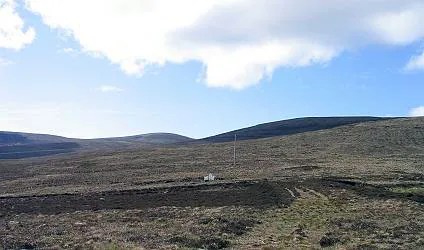
The Lairds of Hoy and Melsetter refused permission for Betty to be buried on their estates. As a result, she was denied a Christian burial and instead interred on unconsecrated ground at the parish boundary, a bleak stretch of peatland. There was no headstone, only a simple marker stick to indicate where she lay.
This kind of burial was intended not just as punishment, but as a warning. Even in death, Betty was excluded from the community.
Rediscovery in the Peat
More than 150 years later, in the 1930s, peat diggers working in the area uncovered a wooden coffin. The peat had preserved Betty’s remains with startling clarity, her hair still visible, her features darkened by centuries underground.
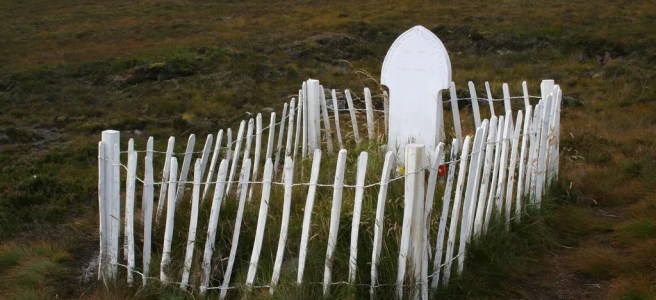
Authorities reburied her in the same location, but this time enclosed the grave within a picket fence, placing a wooden cross at its centre. For the first time, her resting place was visibly marked.
Yet even then, peace did not last.
Wartime Disturbance and Protection
During World War II, soldiers stationed nearby repeatedly exhumed her remains out of curiosity. Isolated, bored, and detached from local history, they treated her body as a spectacle rather than a person.
Eventually, officers intervened. To prevent further disturbance, Betty’s coffin was moved slightly and sealed beneath a concrete slab. Ironically, it took military authority, not compassion, to finally protect her remains.
A Long-Delayed Act of Dignity
In 1949, an American minister named Kenwood Bryant visited Hoy and learned Betty’s story. Deeply moved, he felt compelled to conduct a proper service for her. Along with local officer Harry Berry, he erected a new wooden cross and restored the picket fence.
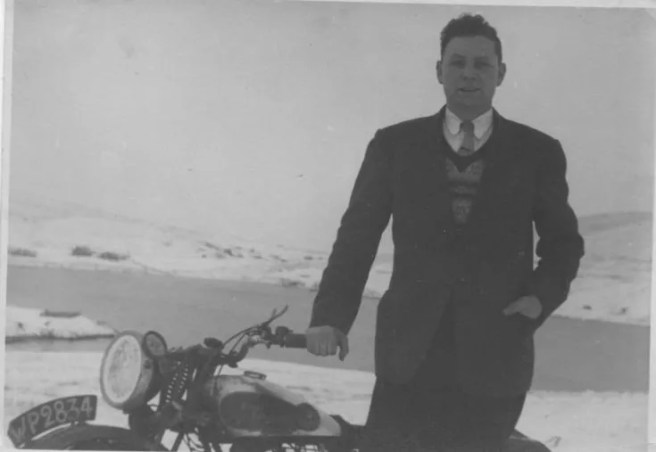
Bryant promised to send a headstone, but it would take decades before it was in place.
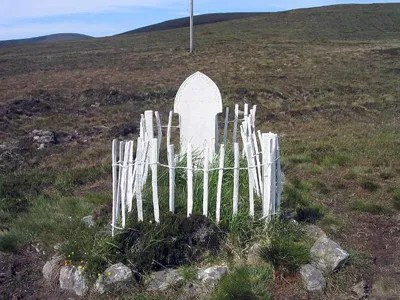
Finally, in 1976, a marker was installed. Because the peat ground was too unstable for stone, a white fibreglass memorialwas placed instead, simply inscribed:
“Here lies Betty Corrigall.”
Today, that stark white marker stands alone against the moorland, one of Orkney’s most haunting and visited remote memorials.
Changing Attitudes, Changing Memory
Betty Corrigall’s story has come to represent much more than one woman’s tragedy. It reflects how societies treat their most vulnerable and how those attitudes can evolve.
In 18th-century Orkney, strict moral codes and religious judgment left little room for compassion toward unmarried mothers or those struggling with mental health.
By the 1930s and wartime years, fascination with preserved bodies and a lack of understanding led to further indignities, though this period also marked the beginning of official protection. From the late 20th century onward, growing awareness of historical injustice and mental health reframed Betty’s story.
Family Threads and the Corrigall Name
Betty’s precise genealogical line has not been fully traced. Records confirm she belonged to a local Orkney family involved in crofting or farming, but documentation of her immediate relatives is sparse.
The Corrigall surname, however, remains woven into Orkney’s history. It appears in places such as Corrigall Farm Museum, which preserves 18th–19th-century rural life and offers valuable cultural context, though it is not directly linked to Betty’s branch.
Orkney folk memory also recalls figures like Geordie Corrigall, a 20th-century poet and performer from Harray, reminding us that the Corrigall name endured, creating art and identity long after Betty’s time.
Reflection at the Edge of the Moor
Modern visitors who make the journey across Hoy often arrive in silence. Against the grey peat and open sky, the white marker feels almost fragile, a quiet contradiction to the harsh judgement that once surrounded her.
Betty Corrigall’s grave is no longer a place of shame. It is a place of reflection.
Her story reminds us how easily communities can fail individuals and how, over time, memory and compassion can restore dignity. From isolation and condemnation to remembrance and respect, Betty’s journey mirrors our evolving understanding of guilt, mental health, and forgiveness.
To remember her today is not only to mourn the past, but to reaffirm empathy in the present
Part of the ongoing series, Stories From The Grave.
Stories From The Grave tells the stories of those once forgotten, misunderstood, or cast aside and considers how remembrance can restore dignity.
The images here are courtesy of the https://hoyorkney.com/attractions/hoy-history/betty-corrigalls-grave/ website.
Why not visit my new website:
All My Blogs For Family Tree Magazine in one handy place
Copyright © 2026 Paul Chiddicks | All rights reserved

 The Chiddicks Family Tree
I’ve often reflected on how society has traditionally treated women who get pregnant out of wedlock as though they became that way by immaculate conception. Meanwhile, very little attention is paid to the men involved. I suppose this is partly because it’s women who get pregnant and therefore bear the evidence of their so-called transgression.
Of course, since I have regularly run across births that occur less than ten months after a marriage in my own research, I must content myself with the fact that there have always been some men who take responsibility for their actions.
Thank you for sharing this story, along with its much-delayed sort-of-happy conclusion. Such a sad story.
LikeLiked by 1 person
Thanks Kym for sharing your thoughts with me. Throughout time women that fall pregnant out of wedlock have been judged. Although things have progressed in some societies even today, a child born out of wedlock can still be prejudiced against.
LikeLiked by 1 person
Probably because they are the ones who are literally left “holding the baby.”
LikeLiked by 1 person
A very sad end for this young woman and now finally, a silent memorial that invites contemplation and understanding. I found this image of Rev. Bryant: https://photos.orkneycommunities.co.uk/picture/number26472.asp
LikeLiked by 1 person
Thanks for the image Marian, I will add this to the story, thank you for this.
LikeLike
Thank you for this very thoughtful post, Paul. I like to believe humans have become more empathetic and compassionate in recent times. I fear we are moving now in the other direction, at least in the U.S.
LikeLiked by 2 people
Thanks Eilene I agree we’ve come along way but there’s still a lot more we can do
LikeLiked by 1 person