
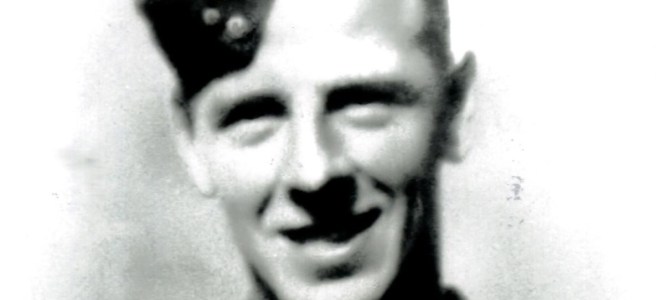
Killed in the Line of Duty Sapper John Perrins Service Number 1895467………..
John Perrins was born on 16 June 1916 in Bolton, one of seven children born to parents, John Thomas Perrins and Sarah Ann Hurst. The Perrins family had spent many years living in the Little Lever area of Bolton and came from a background of strong traditional Lancashire values. John attended St. Matthews Day School and also attended St. Matthew’s Church and Sunday School and the Perrins family had strong links to the Church. The images below show Little Lever as it would have looked growing up to a young impressionable child, the Church is clearly visible in the background of the first picture.
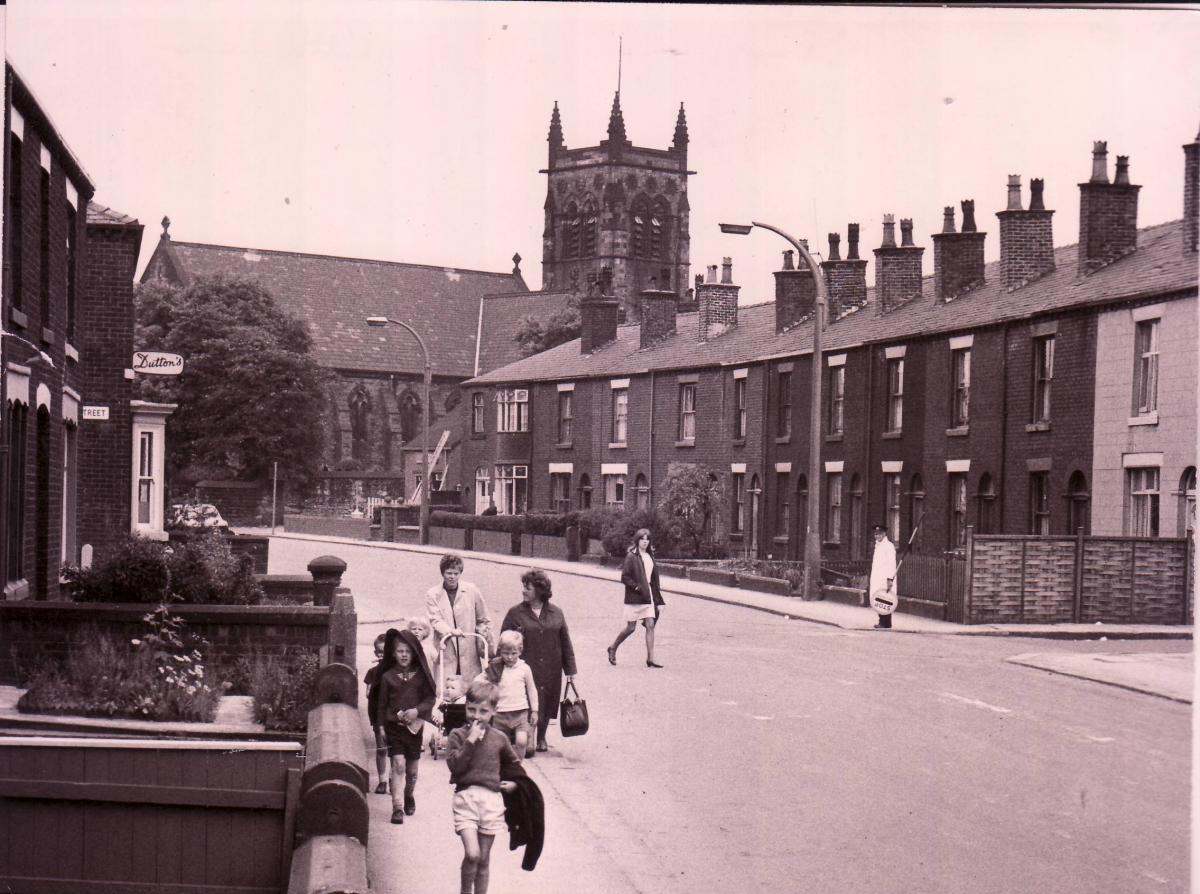

Like many villages at the time, the square was the ‘centre-piece of the village and a popular place for young families to gather. There was also a public house called the Nags Head which again, would have been at the very centre of things in the village. Landlord William Elabys held the licence until after the end of the 1940s. There was also Williams Deacons Bank and a small shop which was a grocery store and confectioner and this was owned by the Britlands. There was a Co-op Drapers and the shop also had a department that sold hand-made boots and shoes and furniture. All of these shops would have been a regular haunt of the Perrins family and the other villagers of Little Lever. The school that young John attended, St Matthew’s old school ,was built at the same time as the present church in 1865 and was, then, in Market Street.
The 1921 Census shows young John living at home with his parents at 126 Church Street, Little Lever in Bolton along with five of his siblings. His father, John Thomas Perrins is recorded as a Collier (Hewer). Sadly 126 Church Street in Little Lever is no longer standing, but from the picture below of 122 Church Street, we can get an idea of the type of Property that the Perrins family were living in at the time.
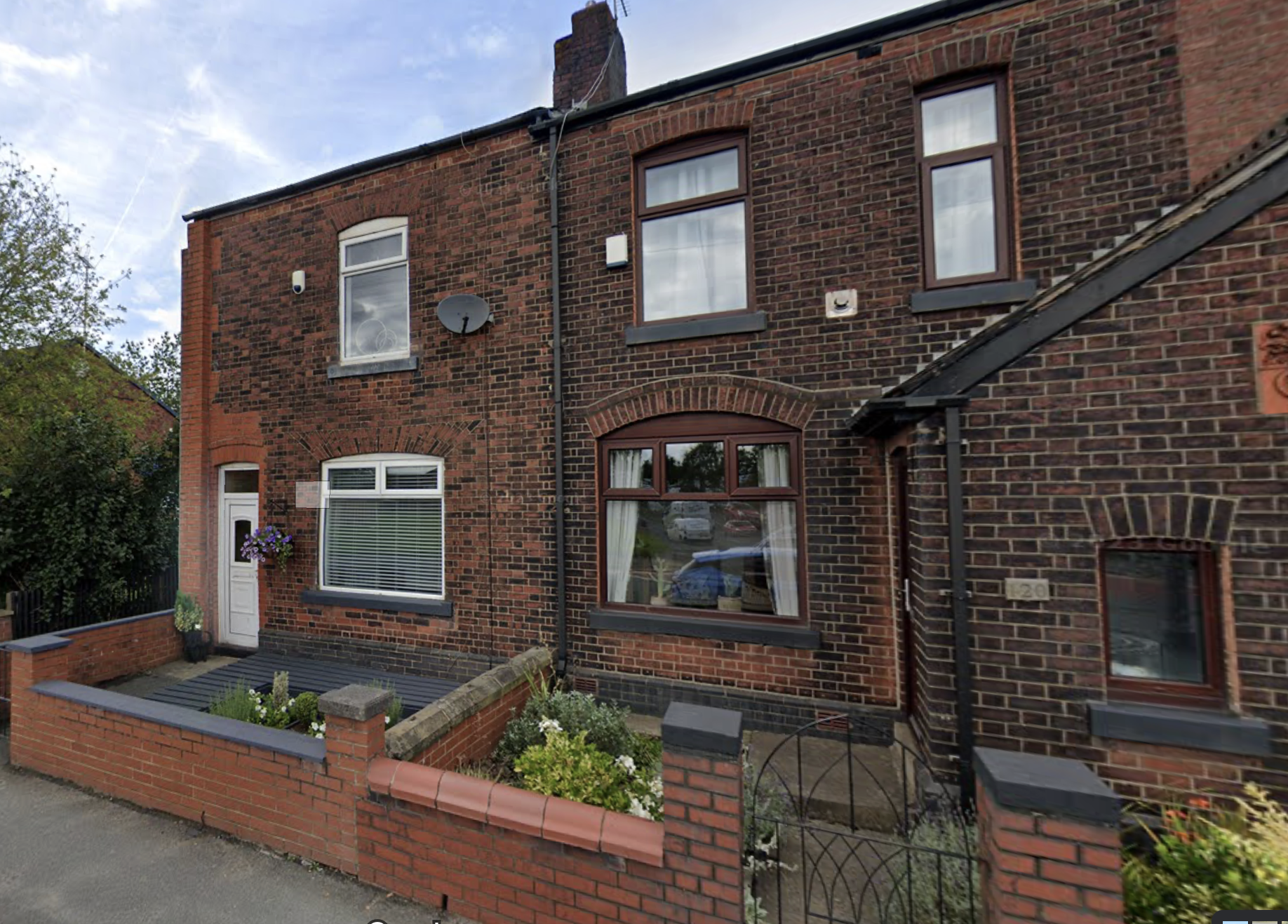
(Church Street, Little Lever)


(1921 Census FindMyPast)
Just before the warJohn married Beryl Duxbury a local girl, in Bolton in 1934, but little did they know at the time that, just six years later, their lives would be forever changed. The young couple lived at 22, Clarendon Street in Whitefield in Lancashire and at the time, Bolton was a 19th-century boomtown, at its height, in 1929, it boasted 216 cotton mills and 26 bleaching and dyeing works, which made it one of the largest and most productive centres of cotton spinning in the world.

(22, Clarendon Street, Whitefield)
John and Beryl had three children, Patricia M Perrins who was born in Bolton in 1935, Beryl Perrins born in Farnworth, near Bolton and 1937 and John Ian Perrins born in Heywood in Lancashire in 1939.
The 1939 register shows John and his family still residing at 22, Clarendon Street in Whitefield in Lancashire, which is about half way between Bolton and Manchester and he is recorded as a Permanent Way Labourer and oral testimony from the family confirm that before the war, John was a paver and made roads.

(1939 Register – The National Archives; Kew, London, England; 1939 Register; Reference: Rg 101/4915a)
John’s work as a paver would have made him a natural choice for the Royal Engineers and he enlisted as a member of the Royal Engineers Embodied Territorial Army on 27 December 1939. From John’s military records it shows that he was assigned to the No.5 Training Battalion on 15 January 1940 where he would have received the basic military training. After receiving his basic training he was assigned section 87 of the Royal Engineers Bomb Disposal Section and attached to 10th battalion The Kings Regiment (Liverpool). He was assigned with the military number 1895467.
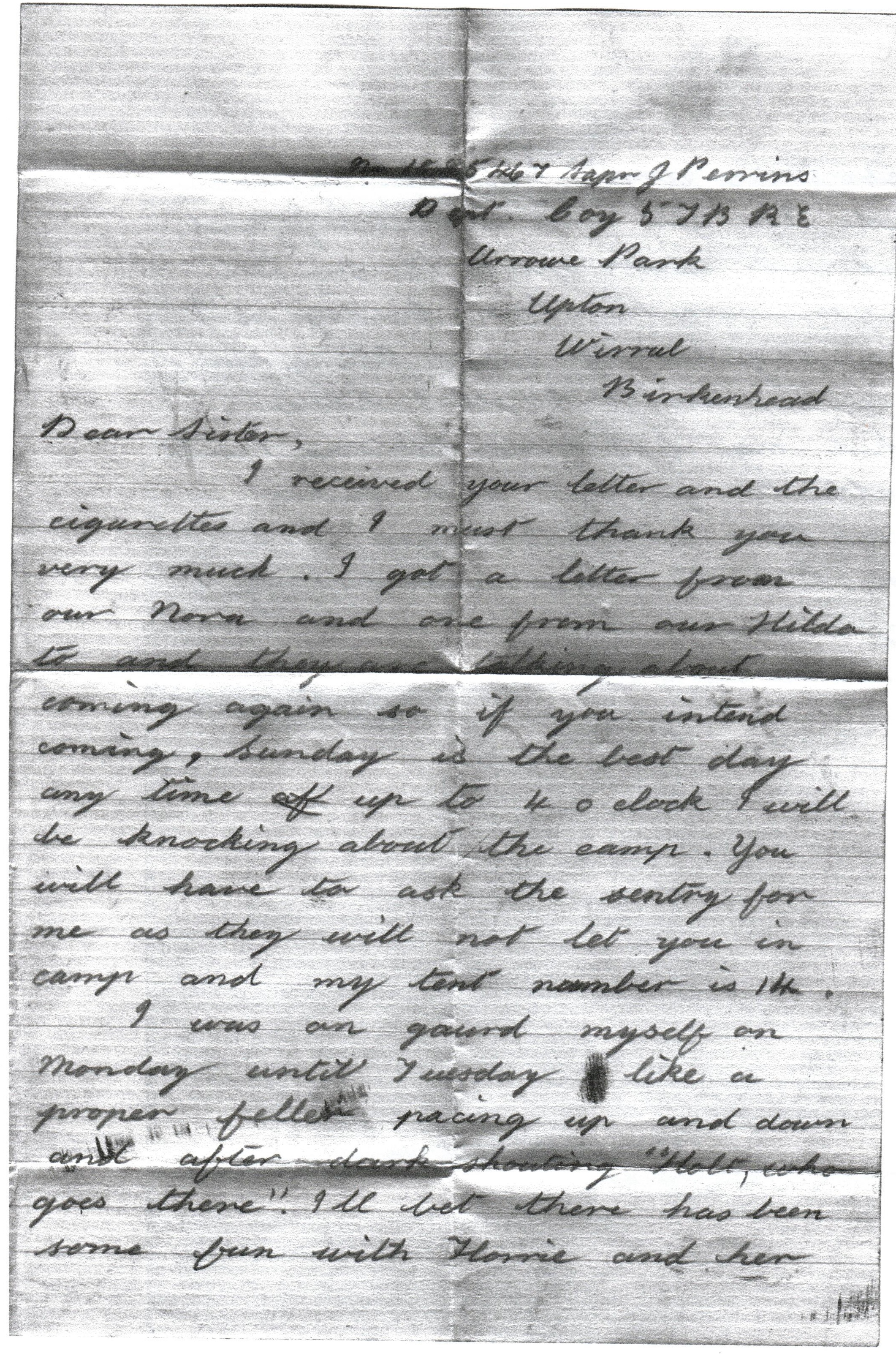
Whilst he was serving with the Army, young John. wrote two rather poignant letters home to his sister Bessy and these are attached below:
Dear Sister,
I received your letter and the cigarettes I must thank you very much. I got a letter from our Nora and one from our Hilda to and they are talking about coming again so if you intend coming, Sunday is the best day any time up to 4 O’Clock I will be knocking about the camp. You will have to ask the sentry for me as they will not let you in camp and my tent number is 14.
I was on guard myself on Monday until Tuesday like a proper feller pacing up and down and after dark shouting “Halt who goes there?” I”ll bet there has been some fun with Florrie and her measles, she won’t half have been marked. If you come on Sunday and the Sergeant Major speaks to you tell him you were here last Sunday as I got a day out of camp telling him you were coming. Well I have finished my CB now and I will be able to go out and have one or two at the boozer at the bottom. I will close now hoping to see you soon.
Loving Brother John
xx
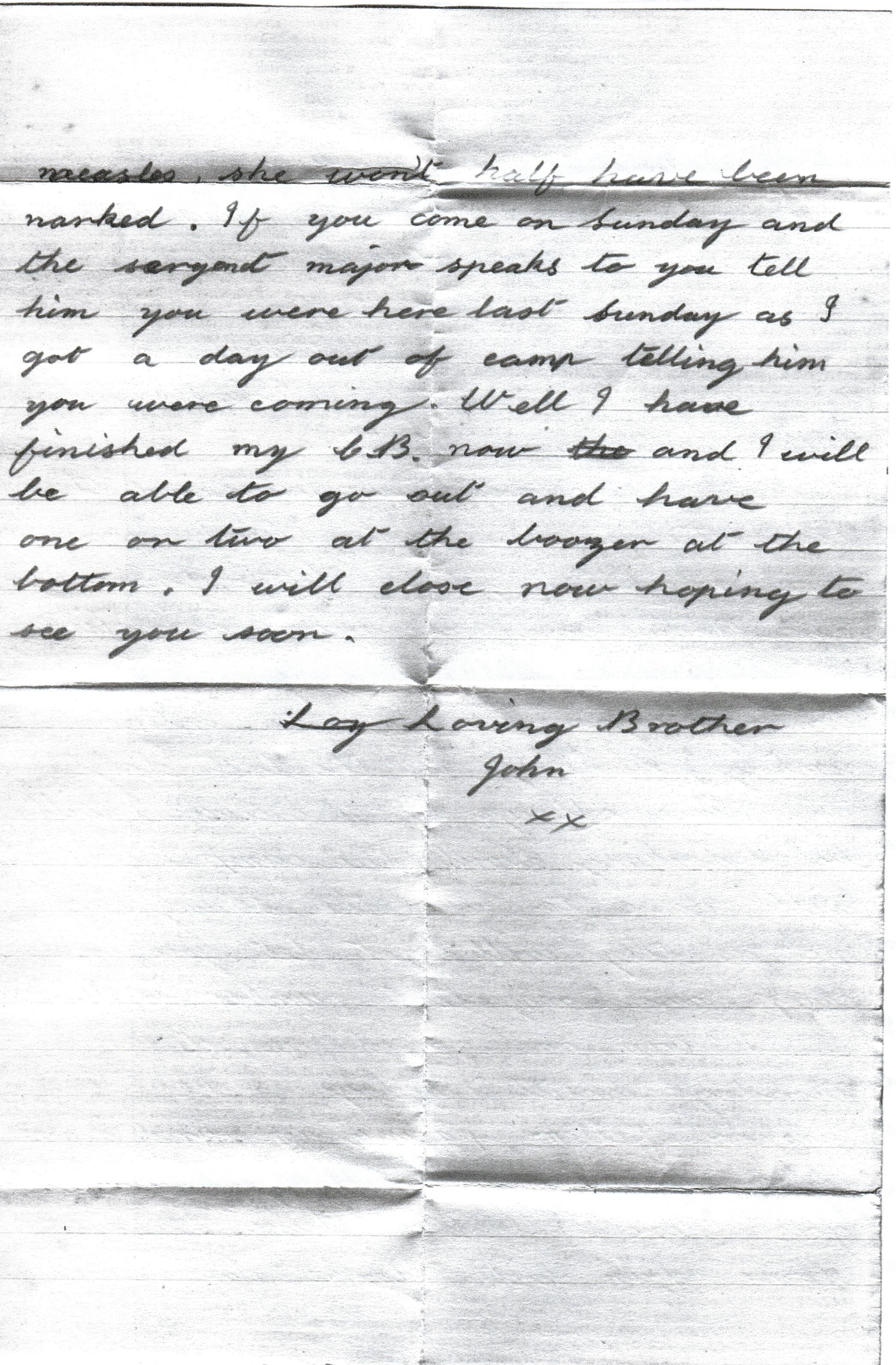
The second letter reads:
Dear Sister,
I received your letter this morning and I am sorry I was not in camp when you came, they told me you had been as soon as I got back.
I was expecting going away this week and they told us we would get no leave at all so I went home for a few hours. I was only 15 hrs absent and I didn’t like the idea of going away without seeing the children anyway the draft hasn’t come off so I will be here a week now at least.
It is not a bad place to be at here and it is OK under canvas, the army life is alright on the whole but it’s nice to get home for a few hours. We have had an easy time since we came to this camp. It is a rest camp it must be there are only trained soldiers here waiting for draft but it looks as though they are short over the other side or we would have been gone by now.
By the way you mentioned coming this weekend but if I were you I wouldn’t bother, as I will not be able to come out of the camp, if you do intend coming you will have to ask for me at the guard tent and they will send for me, I’ll be knocking about somewhere in camp. Well I will close now hoping you are all OK and the child is doing alright.
With Love John xxx

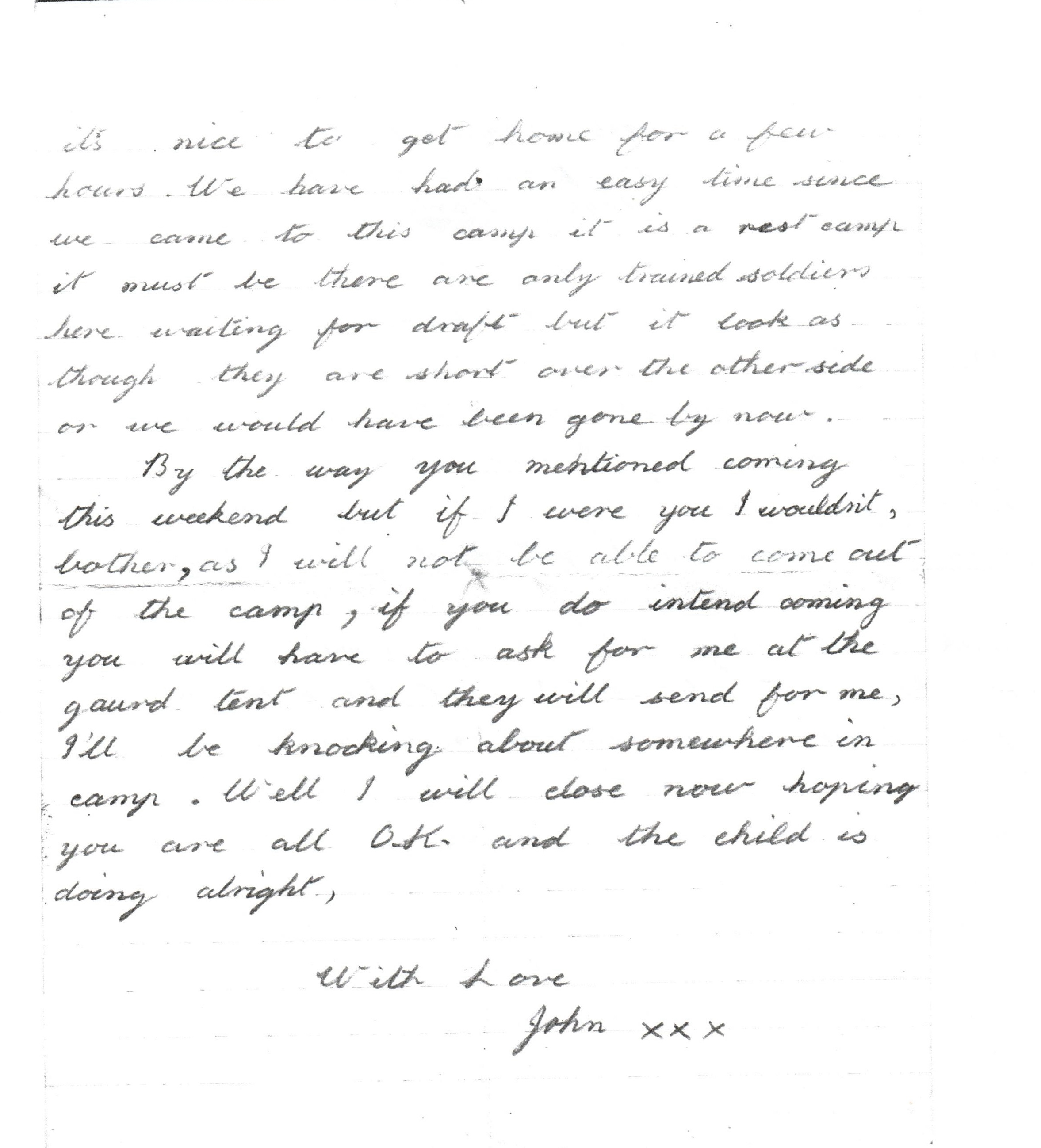
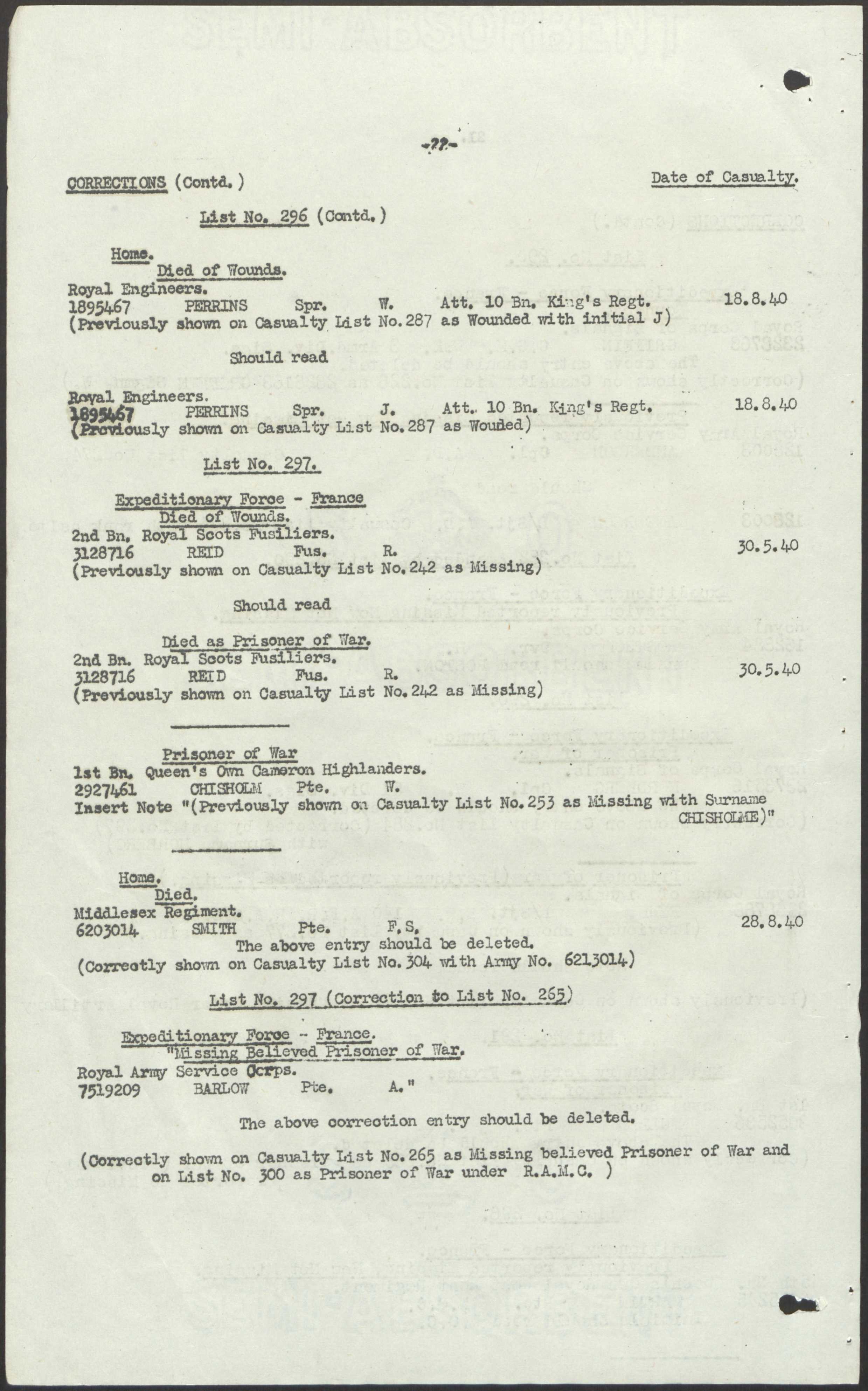
Below are the Army records surrounding the death of John Perrins and these records can be found in the collection UK, World War II Army Casualty Lists, 1939-1945 on Ancestry. Note that he was initially reported as wounded which was later corrected. John was initially injured from the blast from the unexploded bomb, but like his Sergeant, Edward Jospeh Greengrass, he succumbed to his injuries the following day and died on 18 August 1940. You can read the full story of how they died here:
The Story of the Six Brave Royal Engineers Who Died at Nantwich

Below is the Casualty Card for Sapper John Perrins.

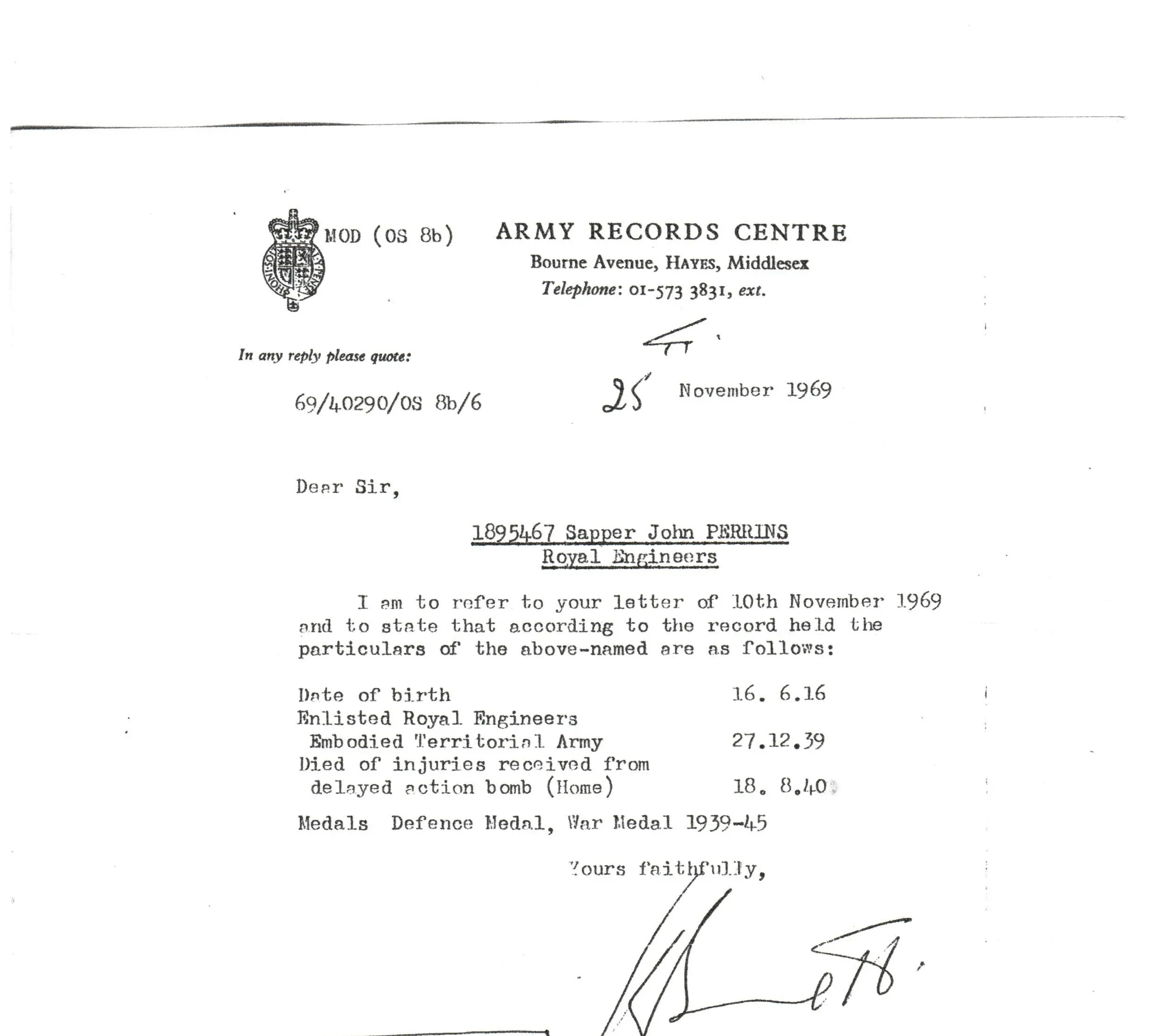
Like his colleagues that served alongside him, Sapper John Perrins received both The 1939-45 Defence Medal and The 1939-45 War Medal. Both medals were campaign medals of the British Commonwealth awarded for service during WW2, which is confirmed in the letter below received by the Perrins family in November 1969.
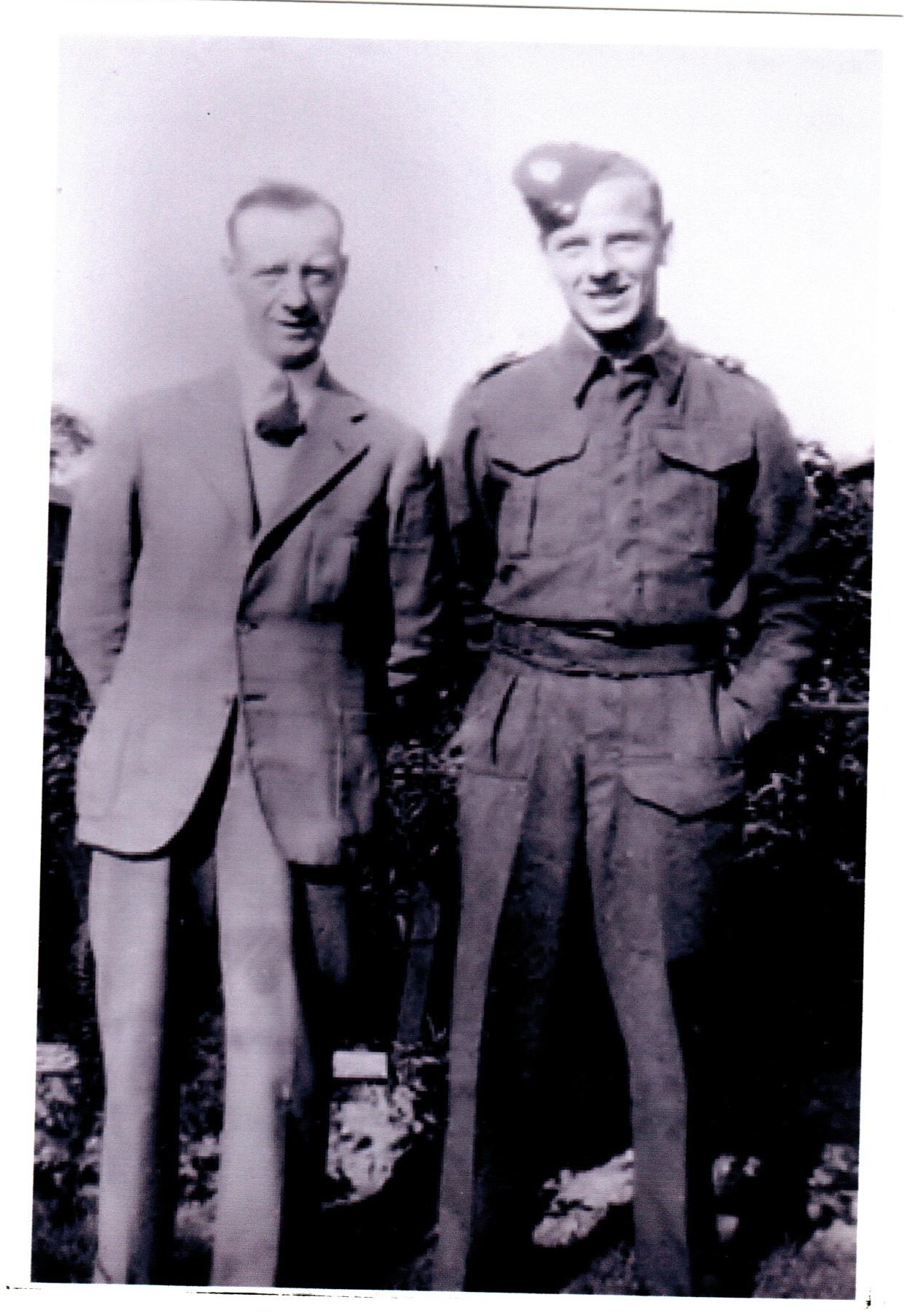
The Perrins family have very kindly allowed me to share with you some pictures of John and his family. The first picture shows John and his wife Beryl along with baby John Perrins junior, along with older sister Beryl.

The next picture is one of a proud John Perrins in his Army Uniform.

Young John looking keen on a practice range during training.

John in full Army uniform alongside his older brother Norman.

John is buried at All Saints Churchyard, Stand Whitefiled, in Bury, Greater Manchester, he is buried at The Lower Ground, Grave Number 1748.
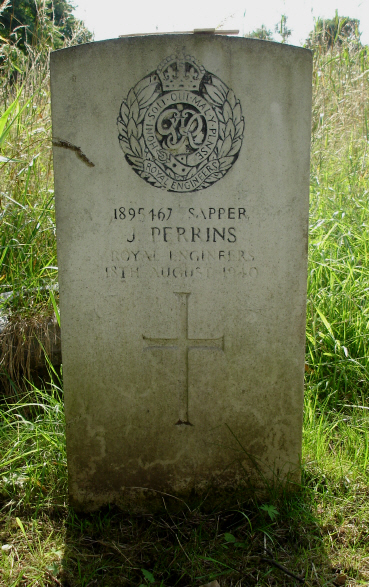

(All Saints Church, Stand, Bury)
Like all the men killed in the name of ‘war’, Sapper John Perrins is remembered on the CWGC website.

The deaths of these six brave men was barely covered in the newspapers at the time, due to censorship and the fear of affecting the morale of the nation at the time. Sapper John Perrins death was however reported locally in Bolton and the extracts from the newspaper cuttings taken at the time, can be seen below.

John Is remembered alongside his fellow Bomb Disposal colleagues who died in August 1940, at Alvaston Hall in Cheshire, the closest location to where the six brave men were killed.
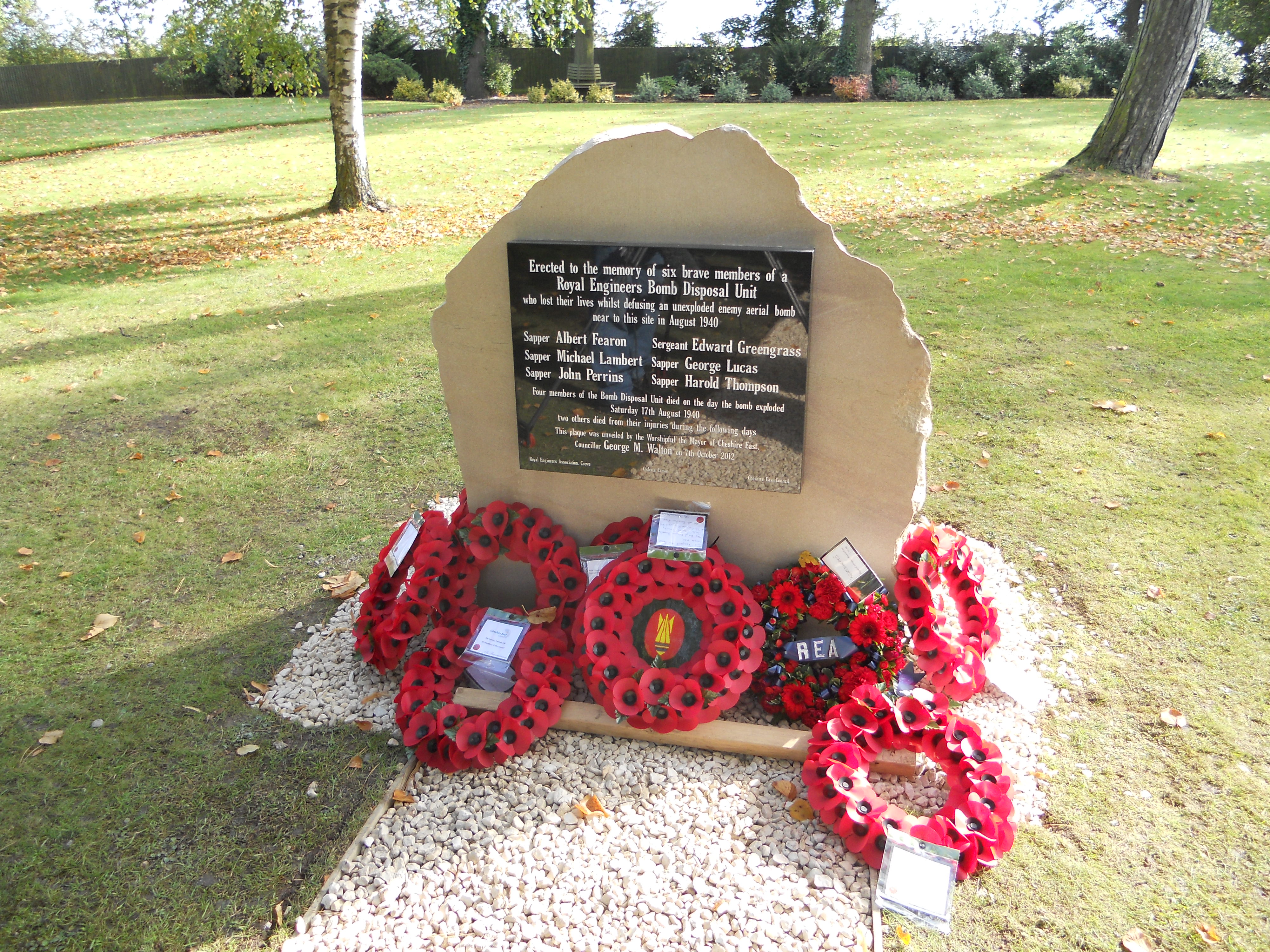
The ultimate sacrifice given by Sapper John Perrins is summed up so beautifully by his wife in his loving memory.
“He laid his richest gift, his life, on the altar of duty”……….”He died that we might live”
I spend a lot of time researching and sharing these family connections, so if this post helped you uncover part of your family story, you can support my ongoing research here:

Why not visit my new website:
All My Blogs For Family Tree Magazine in one handy place
Copyright © 2024 Paul Chiddicks | All rights reserved


He was a brave young man and your eloquent post will keep his memory alive for so many who never knew him and now will know what his life was like.
LikeLiked by 1 person
Thank you so much Marian it’s so important that we keep the memories of these brave heroes alive
LikeLike
Thanks for sharing this story. I especially loved seeing the old handwritten letters! Poignant!
LikeLiked by 1 person
Thanks Carole it really brings it home that these stories are about real people when you read the letters written from the family
LikeLike
Thank you for keeping his story alive.
LikeLiked by 1 person
Thanks Joy I really appreciate you saying that thank you
LikeLiked by 1 person
How tragic…and he was only 24. And his poor wife, left with those three young children. Did she ever remarry?
LikeLiked by 1 person
So many lives changed forever – she did remarry and they were together for over 30 years
LikeLiked by 1 person
Happy to learn that…
LikeLiked by 1 person
That was really interesting – John would have been my grandfather. My mum was Pat, she never really talked about her father. My grandmother, Beryl, remarried and I remember Tommy, a very keen fisherman.
LikeLiked by 1 person
Hi Mark my email address is chiddicks@yahoo.co.uk I can share with you the photographs of John if you would like
LikeLike
That would be wonderful, thank you.
LikeLiked by 1 person
That would be wonderful – thank you.
LikeLiked by 1 person