

Killed in the Line of Duty Sapper Albert Edward SA Fearon Service Number 4270436………..
Albert Edward Sidegewick Anderson Fearon, to give him his full name, was born in the second quarter of 1920 in Newcastle-upon-Tyne, the youngest of six children born to parents Christopher Stephenson Fearon and Alice Oliver.
What is really interesting with Albert’s father is that there were two patents registered in his name, the first was registered on 7 November 1906 and the second was for an international patent which was registered in France on 1 March 1907. Both patents apply to basically the same invention, which was for a device for bringing ships or other submerged objects, back to the surface by the use of air bags. The patent gives more specifics as to the details of how the device worked, but this is certainly a series of documents that I have never seen before.
The 1911 census shows Christopher Fearon living at the family home of 53 Oban Road, Byker, Newcastle-upon-Tyne where he is recorded as a Lamplighter, the same occupation that he had also in 1901 which begs the question how did a modest Lamplighter come to invent a device for rescuing submerged vessels? The 1921 Census shows young Albert living at home at 53 Oban Road, Byker, Newcastle-upon-Tyne, along with his five other siblings and parents. The family lived at this address for a considerable length of time and noticeably Albert’s father is still occupied as a Lamplighter for the City Lighting Department of Newcastle-upon-Tyne.
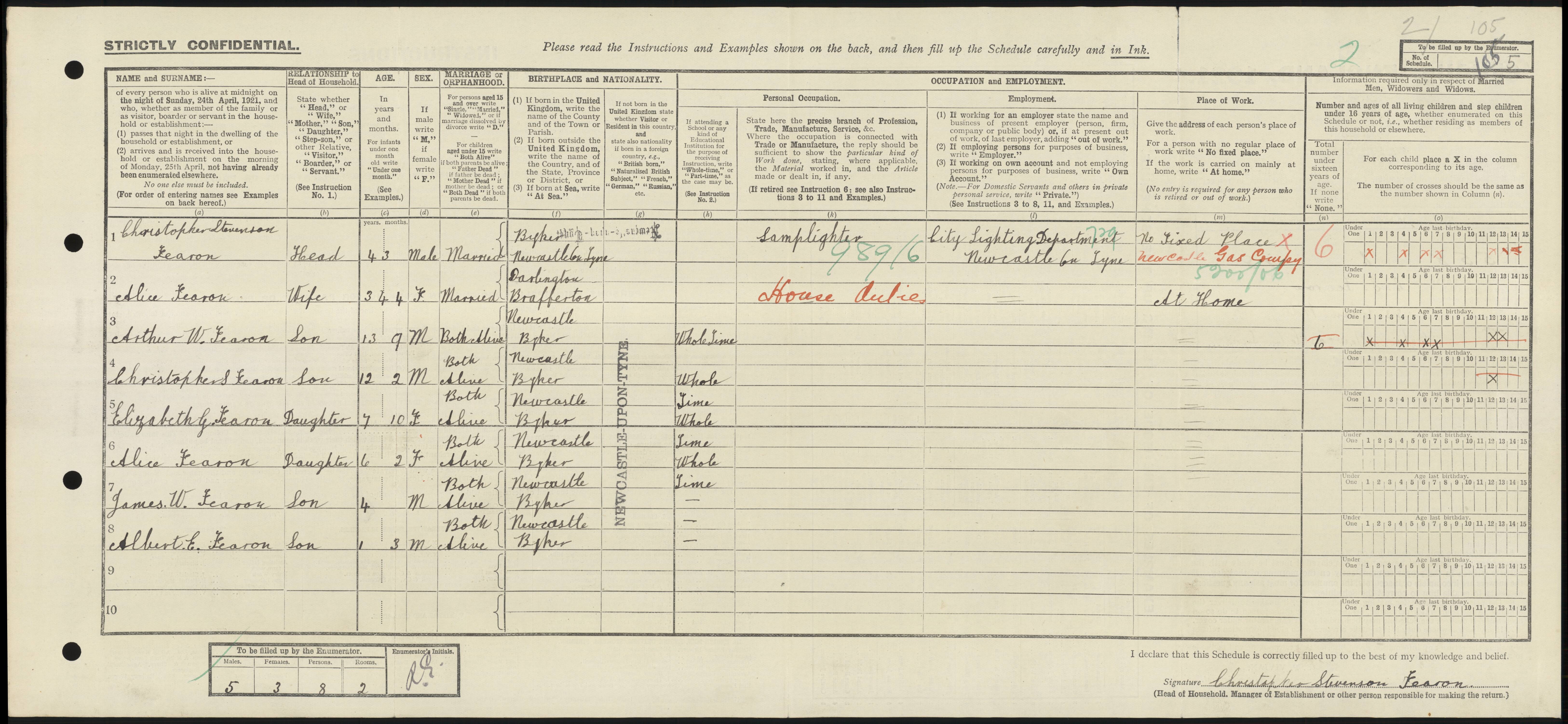
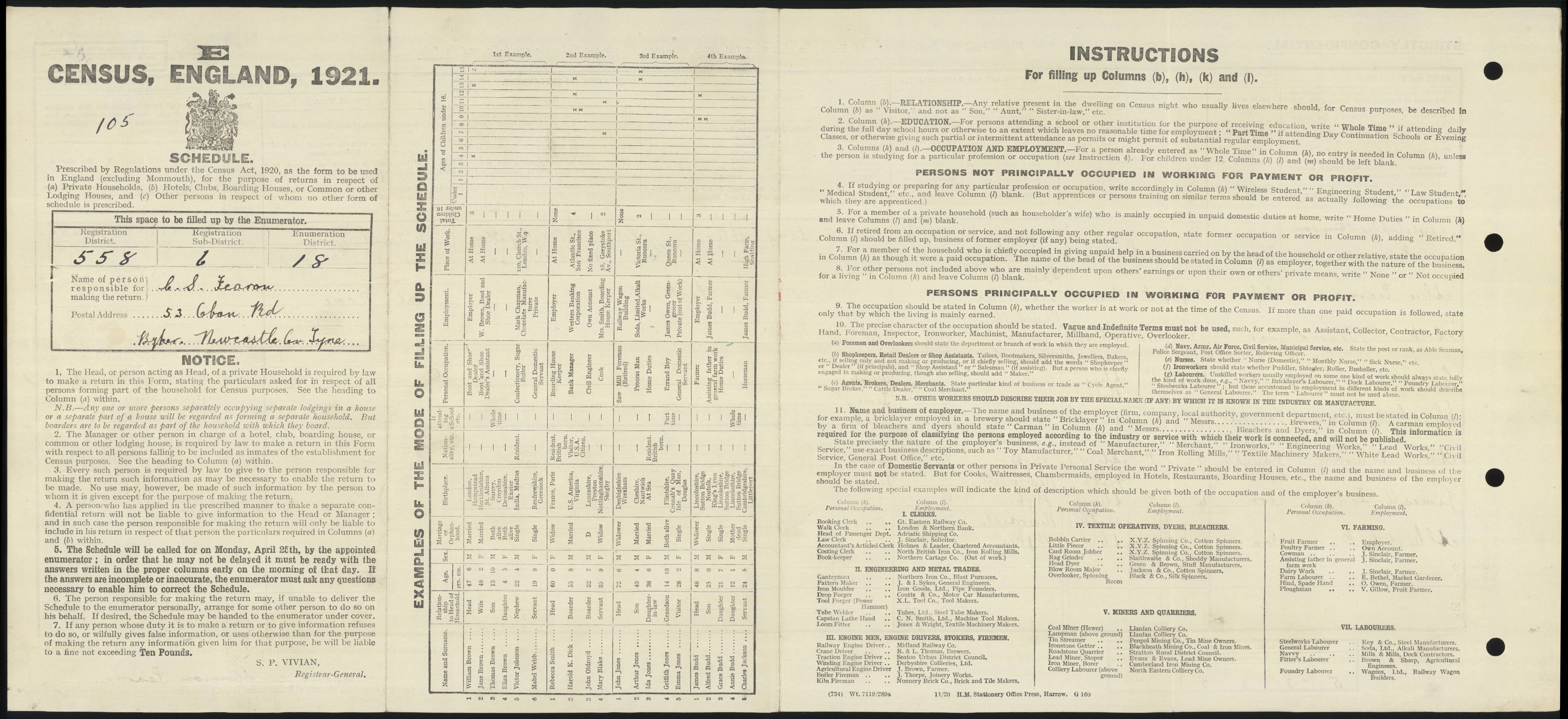
(1921 Census FindMyPast)
Sadly the family home at Oban Road in Newcastle no longer exists and I have been unable to find any pictures of the street online, however I have found some pictures of some of the adjacent streets in the area of Byker taken around the 1920’s which give you some idea of what the community would have been like at the time.
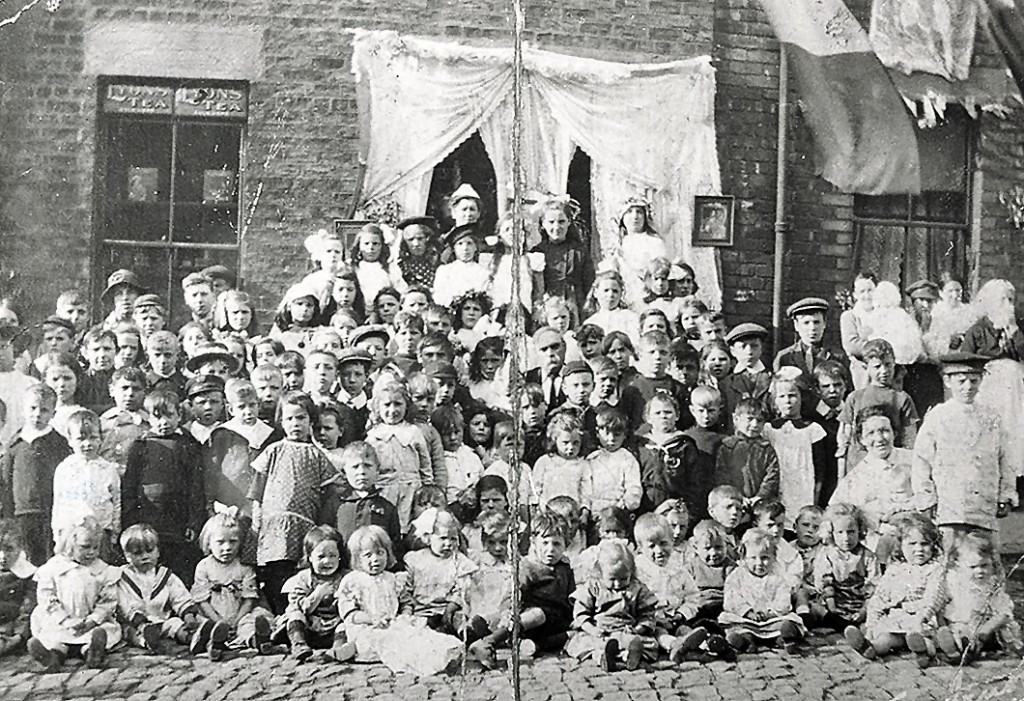
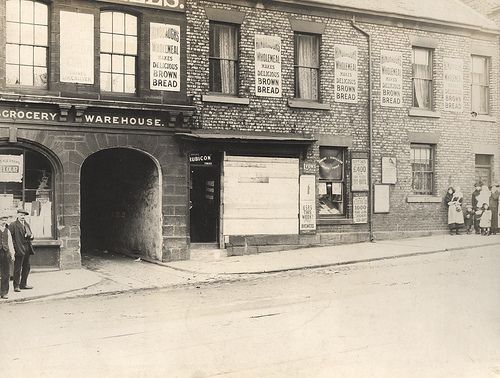
Like many inner-city areas, Byker was a very friendly community and although no one had much, what they did have would be shared amongst friends and family, it was that kind of place. In the immediate aftermath of the Great War, society, industry and culture all underwent major change in an era which for some brought great opportunities, but for the majority brought depression and deprivation. The period between the two world wars was one of instability and insecurity. Political, economic and social unrest was made worse by the collapse of the international economy in 1929. Areas around the North East of England in particularly were hard hit. The rest of the world was catching up fast and the Great British Empire was starting to decline. Post-war Europe was in chaos and the threat of a Second World War never seemed far away. The once-thriving industries of shipbuilding and coal never recovered from the slump they experienced at the end of 1920 and the middle of the decade saw widespread industrial action. There were two police strikes, a national rail strike, two national coal strikes, a two-month shipbuilding strike, a two-month engineering strike, and the nine-day General Strike in which nearly two million workers withdrew their labour. All of which would have had a deep impact on the Fearon family and the wider community of Byker. To meet the need for homes, long streets of featureless houses were built. There was no water, gas, toilets, baths, washbasins or sinks installed. Basically, they were brick boxes with two or three bedrooms upstairs and a room downstairs with a coal range, in what we would traditionally refer to today as “a two-up two down house”. In the home, some families were acquiring basic wireless sets while, in 1924, John Logie Baird created Britain’s first television transmitter. I wonder what a young Albert would have made of all this wonderful new technology. He would have also witnessed the building of the New Tyne Bridge which was opened by King George V in 1928. Many young men, including Albert, would have struggled to find work and many turned to the Forces for work and Albert enlisted with the Territorial Army on 14 May 1935, he would have been just 15 at the time. He was transferred to the Royal Engineers once war had broken out and I wonder if young Albert ever imagined when he enlisted that he would hear these immortal words.
“This is London. You will now hear a statement by the Prime Minister.”
The Prime Minister, Neville Chamberlain: “I am speaking to you, The Cabinet Room, 10 Downing Street. This morning the British Ambassador in Berlin handed the German Government a final note stating that unless we heard from them by 11 o’clock that they were prepared at once to withdraw their troops from Poland, a state of war would exist between us. I have to tell you now that no such undertaking has been received and that consequently this country is at war with Germany.”
Albert served with 563 FD (Field) Park Company on 14 February 1940 before moving to 220 FD (Field) Company on 12 May 1940. He was then transferred to No. 85 Bomb Disposal Section on 27 June 1940 before being attached to 10th Battalion The Kings Regiment (Liverpool), like his colleagues that died alongside him.
Below are the Army records surrounding the death of Albert Fearon and these records can be found in the collection UK, World War II Army Casualty Lists, 1939-1945 on Ancestry.
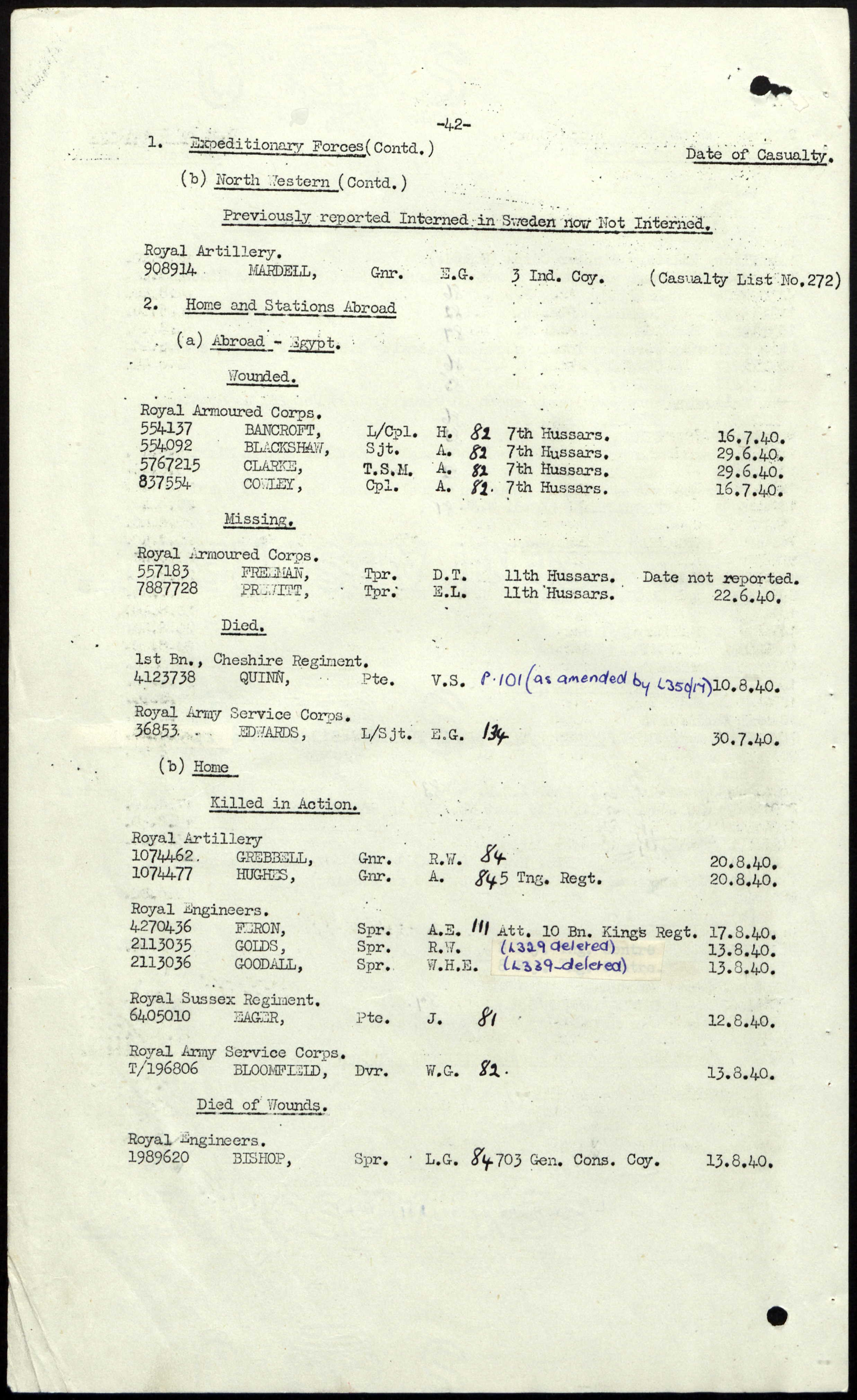
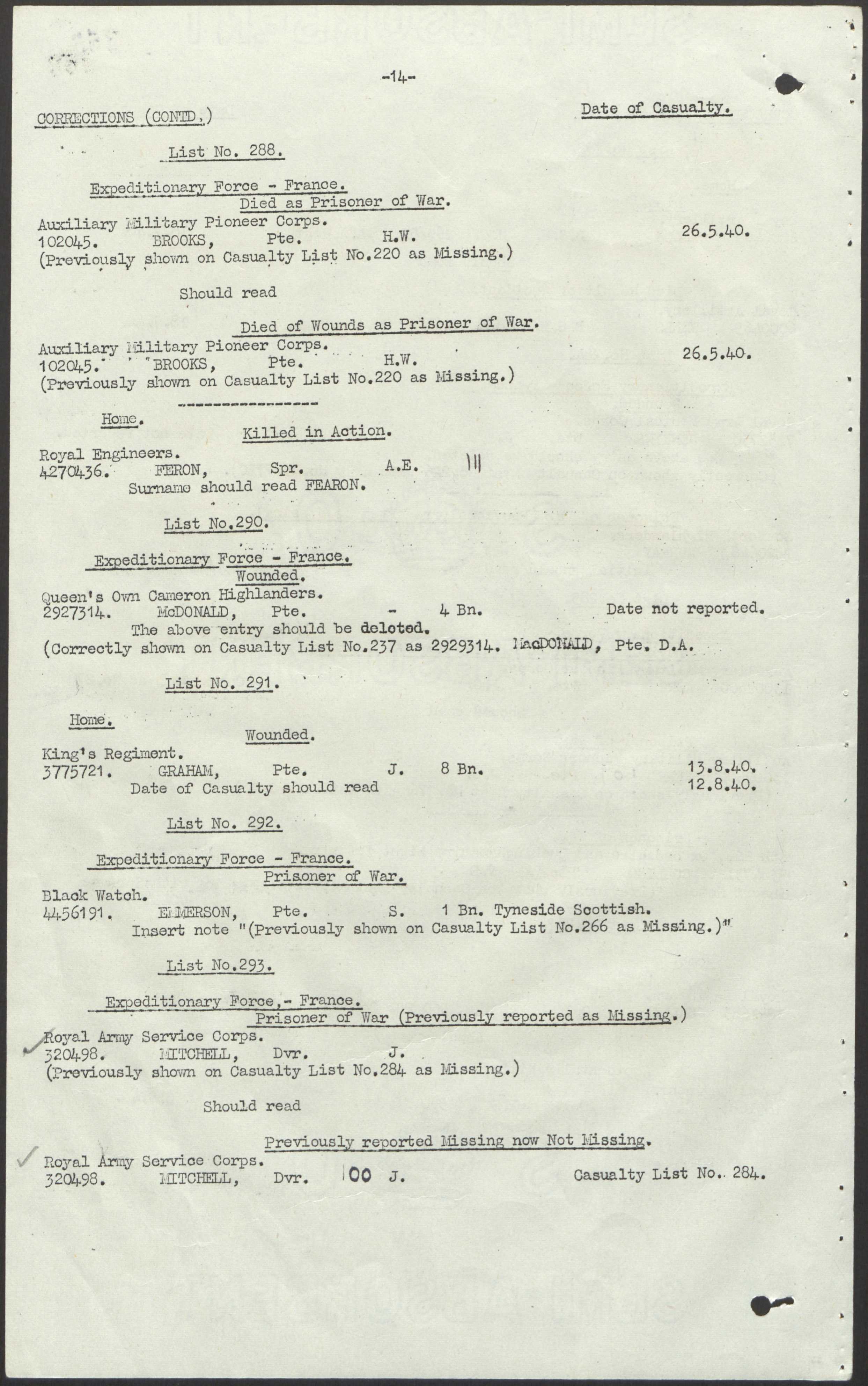
Below is the Casualty Card for Albert Fearon.
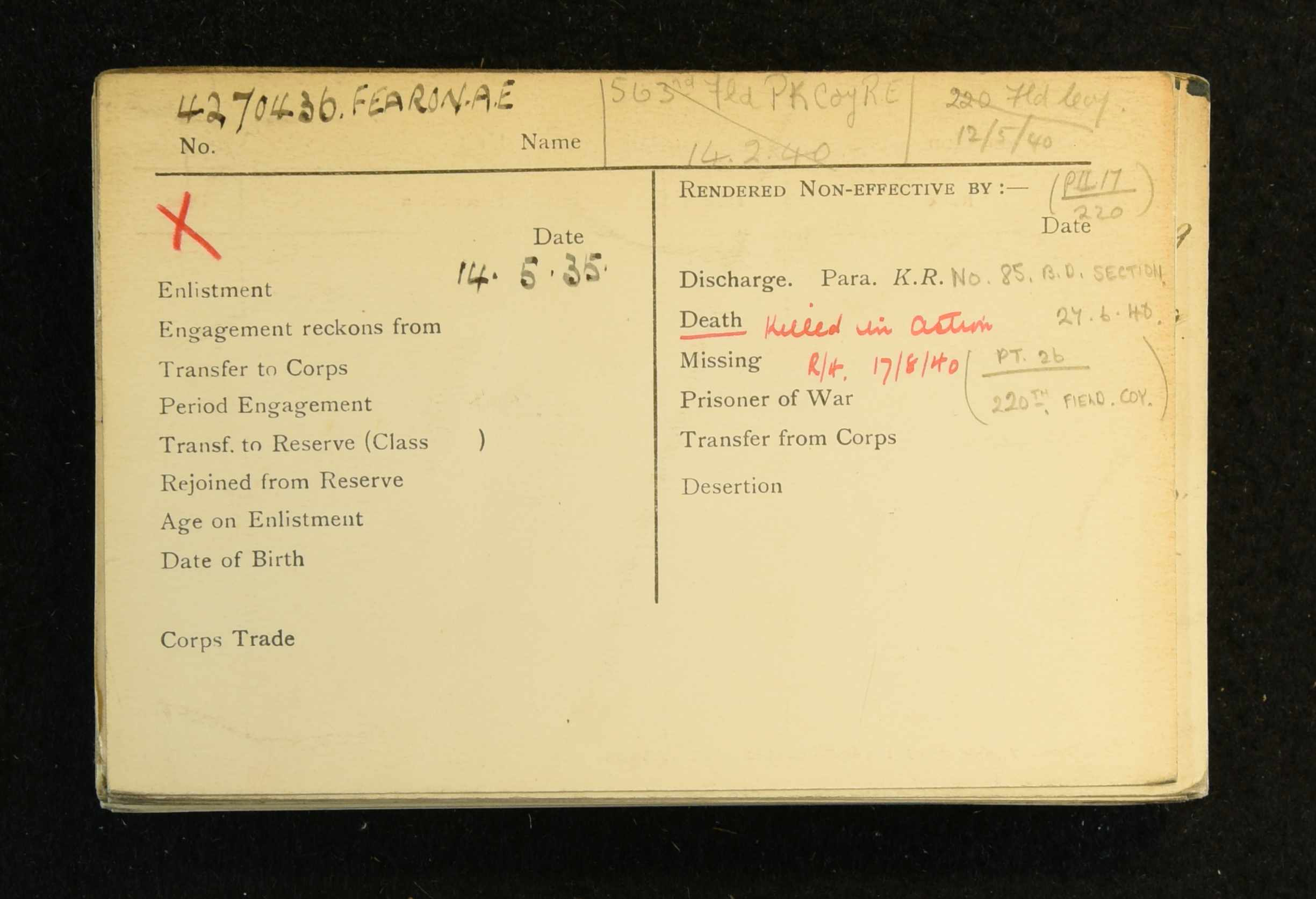
Like many of the incidents at the time, much of the information surrounding the deaths of the six men from the Royal Engineers was sensitised and kept out of the papers. However, a brief account of Albert’s death was recorded in the Newcastle Evening Chronicle on 23 August 1940, which I have transcribed below:
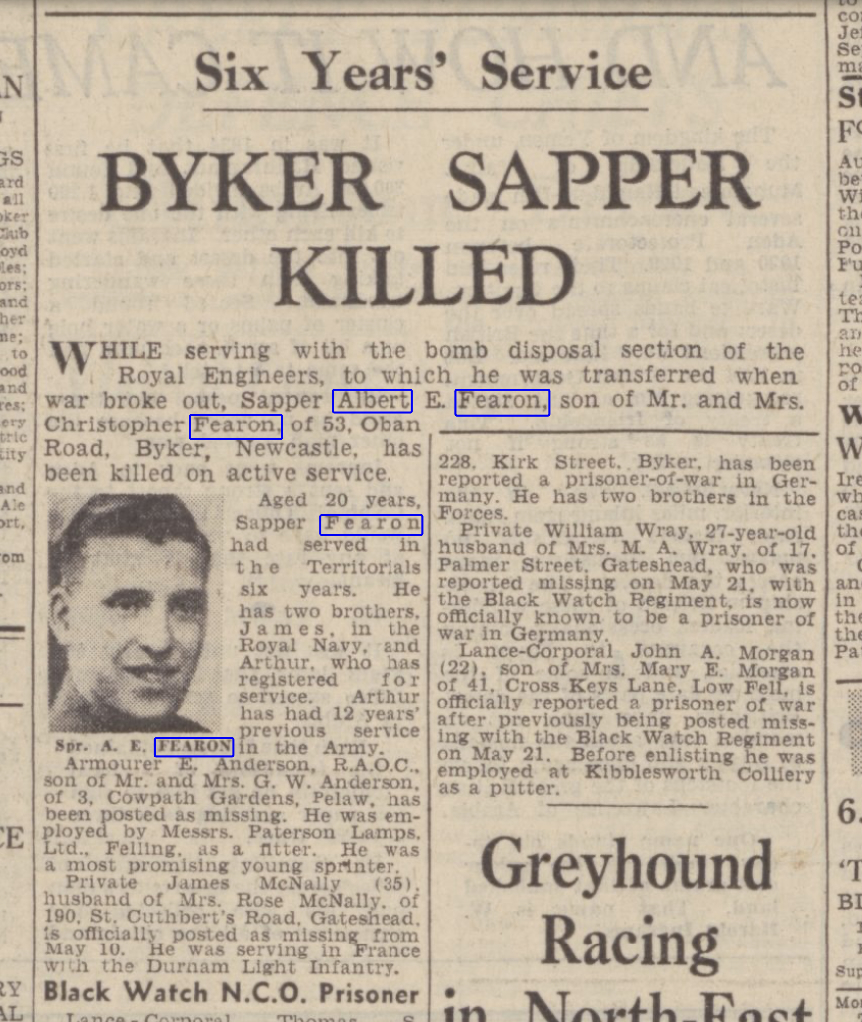
Six Years’ Service – Byker Sapper Killed
While serving with the bomb disposal section of the Royal Engineer’s, to which he was transferred when war broke out, Sapper Albert E Fearon son of Mr and Mrs Christopher Fearon of 53, Oban Road Byker, Newcastle has been killed on active service. Aged 20 years, Sapper Fearon had served in the Territorials six years. He has two brothers, James in the Royal Navy and Arthur who has registered for service. Arthur has had 12 years previous service in the Army.
Like his fellow men, Albert is commemorated on the memorial dedicated to the six that died which is at Alvaston Hall, in Nantwich, Cheshire.
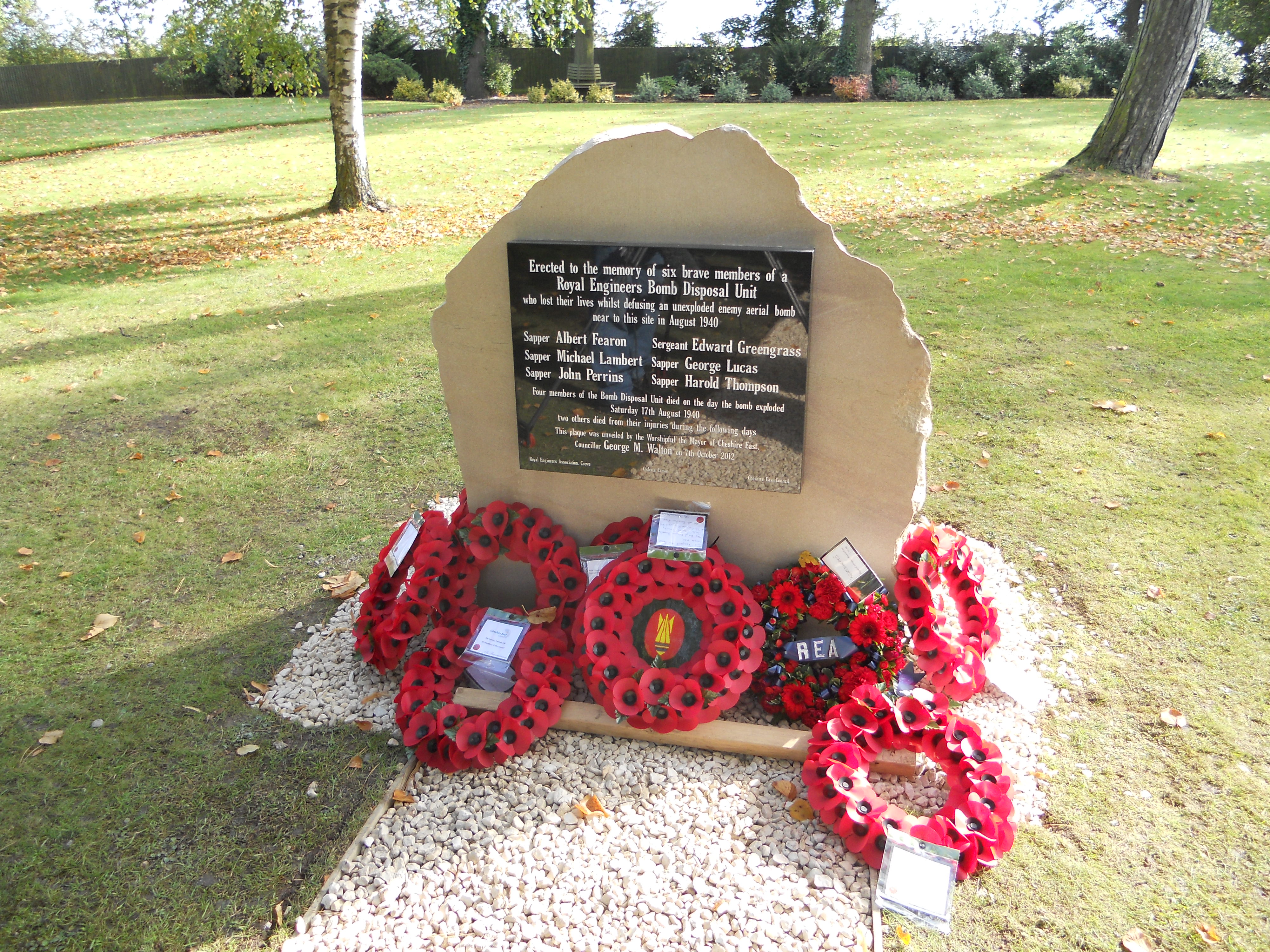
The memorial was unveiled in 2012 and at the time of the unveiling of the Memorial to all of those that died, an appeal was made nationally in the local press to try to trace any living descendants of the six men and Cheshire Council managed to trace the nephew of Sapper Albert Edward Fearon, a gentleman named George Horton, who was invited to the unveiling of the memorial at Alvaston Hall.
Mr Horton, who lived at Sutton-on-Sea, in Lincolnshire, himself served in the army for 26 years, nine of those as a bomb disposal engineer. On the day of the memorial dedication service Mr. Horton said “I am delighted that Cheshire East Council is going to remember my uncle Albert. We were never entirely sure where he had died, so it is nice to see that he is going to be recognised in the area in which the incident took place. Unfortunately, my uncle and his colleagues were not capable of carrying out the work required because they and other bomb disposal teams of the time were only given very basic training. There was very little knowledge of how to perform the work as the responsibility was passed to the Royal Engineers from the Civil Defence Force.”
You can read the full story of how Albert and his fellow bomb disposal colleagues died here:
The Story of the Six Brave Royal Engineers Who Died at Nantwich
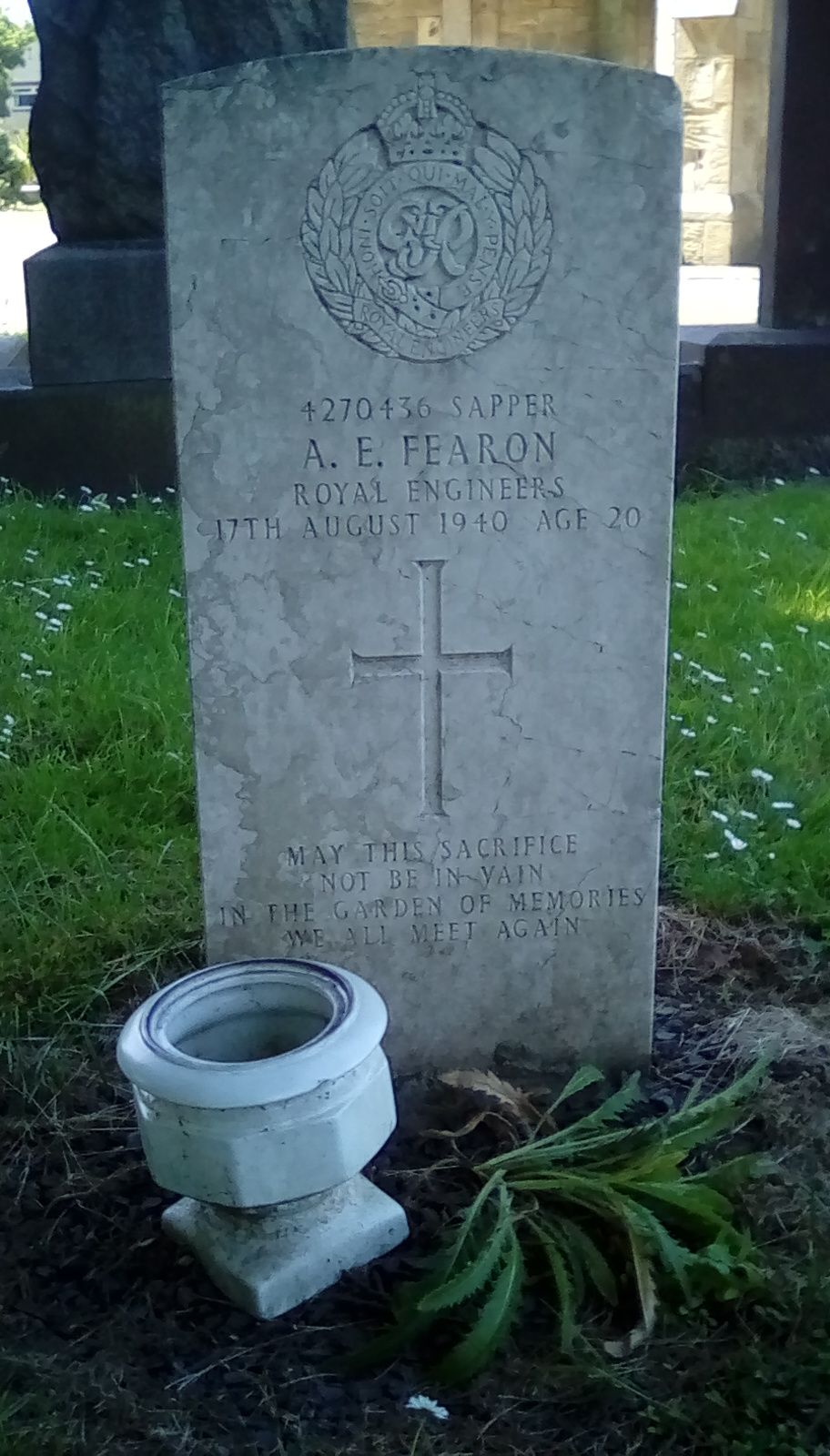
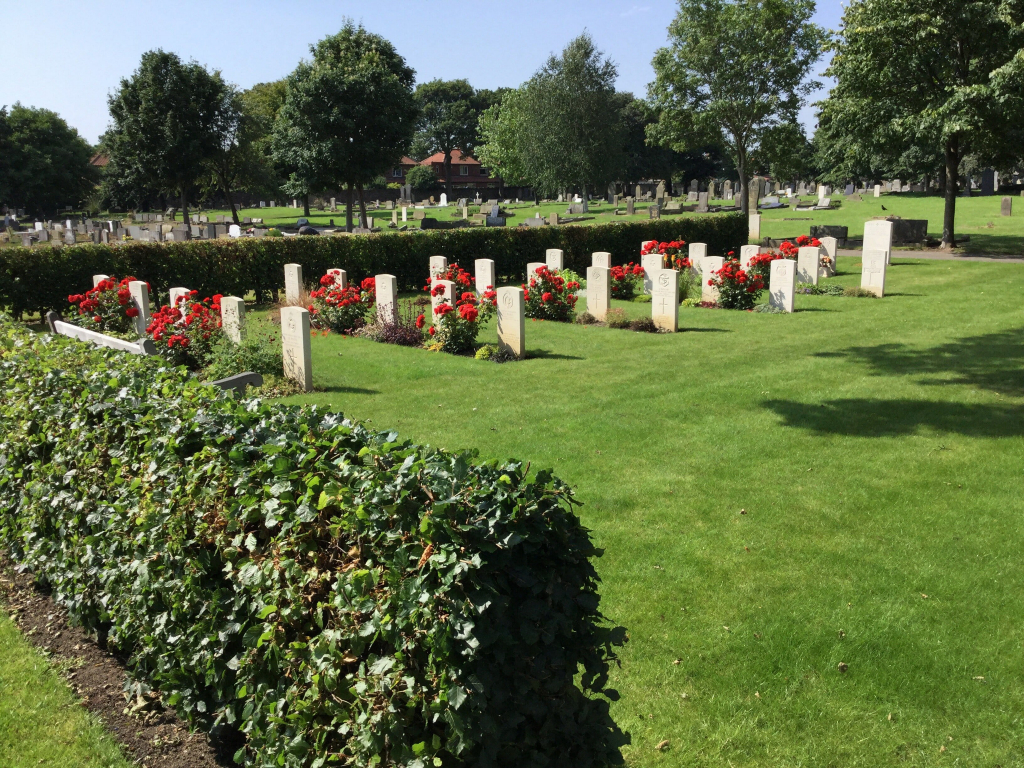
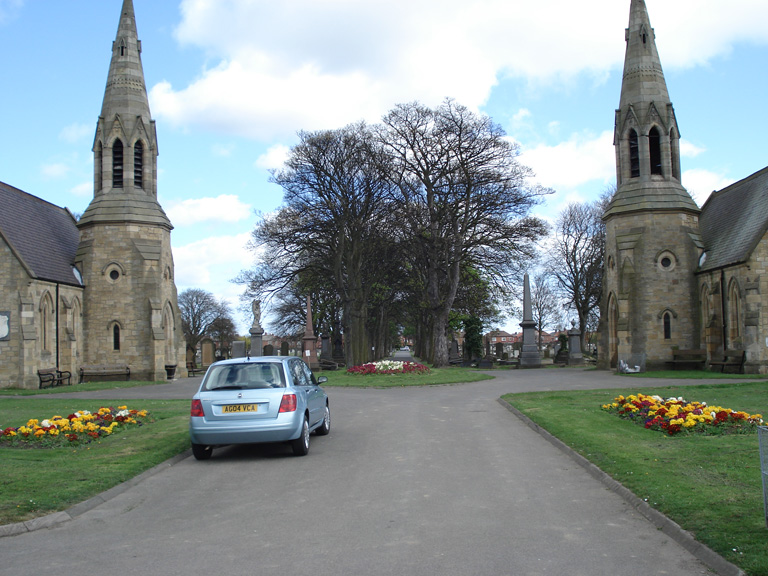
Albert is buried in the CWGC Military Section of Byker and Heaton Cemetery, Newcastle-upon-Tyne, Section G, Grave 251. With special thanks to FindAGrave researcher River Tyne Lass for kindly taking the photographs of Albert’s grave which can be seen below.
Albert was a bright young man full of hope, his whole life ahead of him, his story, like so many of those who died trying to diffuse the German WW2 bomb is one of devastation and loss, a future that was so cruelly taken away on that tragic day in August 1940. We can never know what his loved ones would have felt at such a devastating loss, we can only imagine what this would have been like from our own experiences. Life can deal the cruellest of blows and change lives forever and that loss never goes away. The Fearon family, like so many others were a family torn apart from the ravages of war.
Why not visit my new website:
All My Blogs For Family Tree Magazine in one handy place
Copyright © 2024 Paul Chiddicks | All rights reserved

 The Chiddicks Family Tree
So many lives lost
LikeLiked by 1 person
It’s heartbreaking Sheree 💔
LikeLiked by 1 person
Very true
LikeLiked by 1 person