
We all have hidden treasures tucked away in the corners of our family homes. These keepsakes passed down through generations are more than just objects—they’re pieces of history, bearing stories and memories that connect us to our ancestors and their lives. These heirlooms serve as silent but powerful reminders of where we come from, linking us to moments and people who helped shape our lives.
Each family heirloom is unique and every item has its own individual story to tell. And while no two family treasures are alike, the one thing that links them all is the emotional significance they hold for the families that cherish them. However, as much as we treasure the object itself, it’s just as important to preserve the story behind it. The value of a family heirloom is not only in the artefact, but in the memory and meaning that accompany it. Without understanding where it came from, who it belonged to, and what role it played in your family’s history, that connection to the past is lost. That’s why documenting the history behind each heirloom is just as vital as keeping the object safe. Think about how much deeper the connection will be when we know the significance of the item—who owned it, when it was acquired, and the memories attached to it. In many ways, documenting the story behind your heirlooms is a way of preserving your family’s legacy for future generations. It ensures that the memories and experiences tied to the objects are not lost to time, and that they continue to hold meaning long after the original owner is gone.
Before you see the truly wonderful family heirlooms I have in store for you in this blog, it might be worth a timely reminder of what cherished keepsakes you shared with me previously.
What’s Your Favourite Heirloom?
What’s Your Favourite Heirloom Part 2
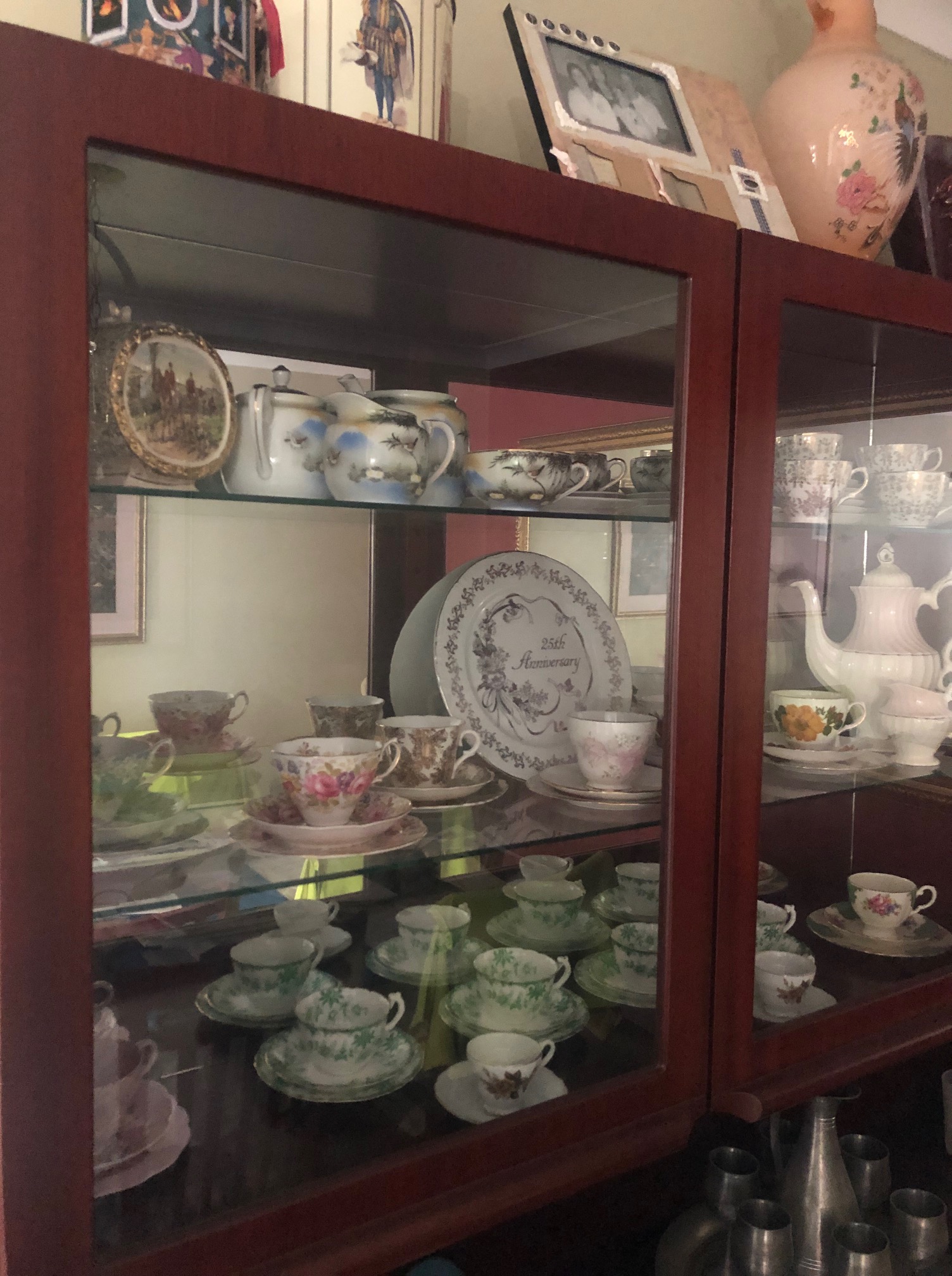
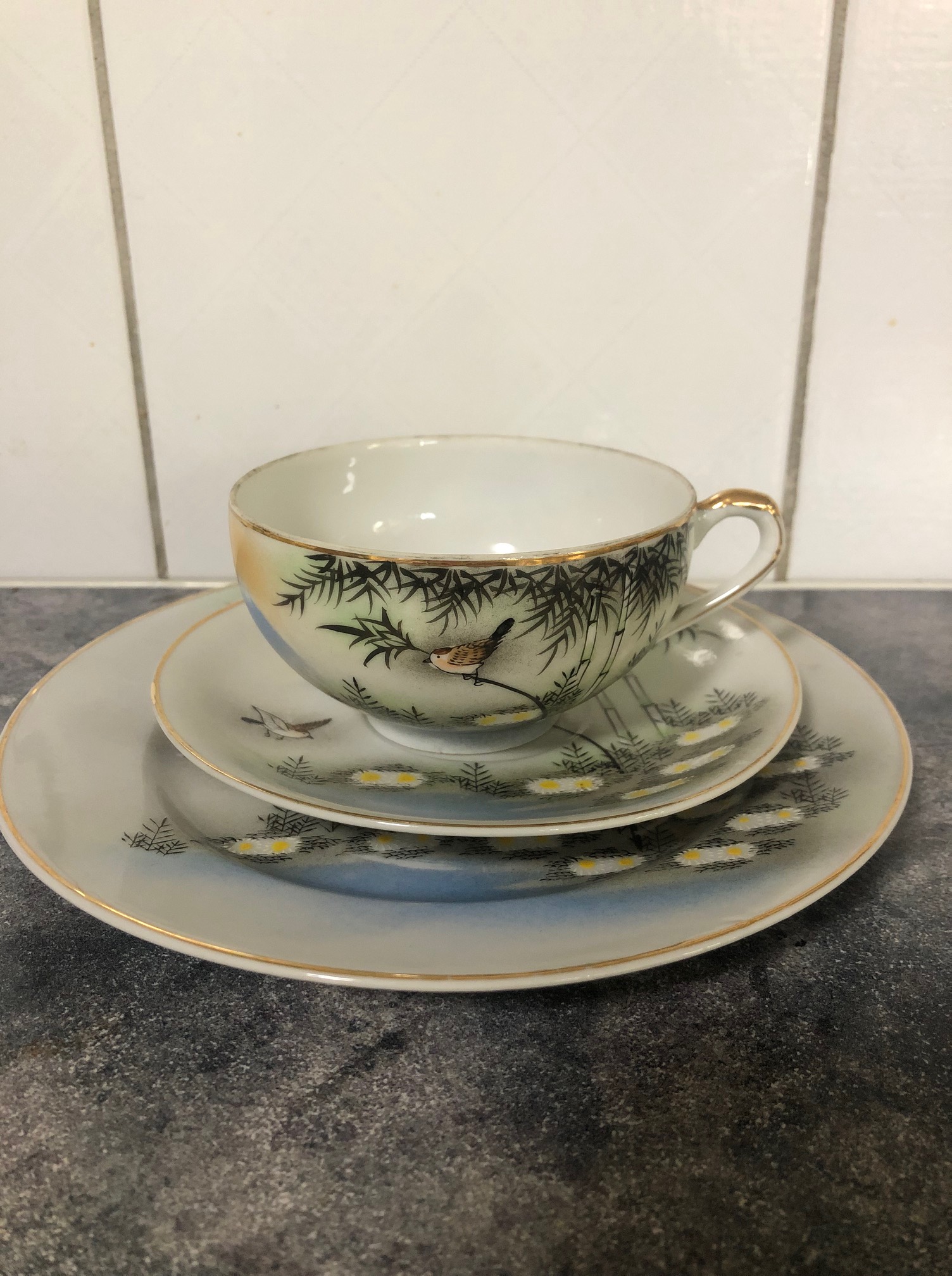
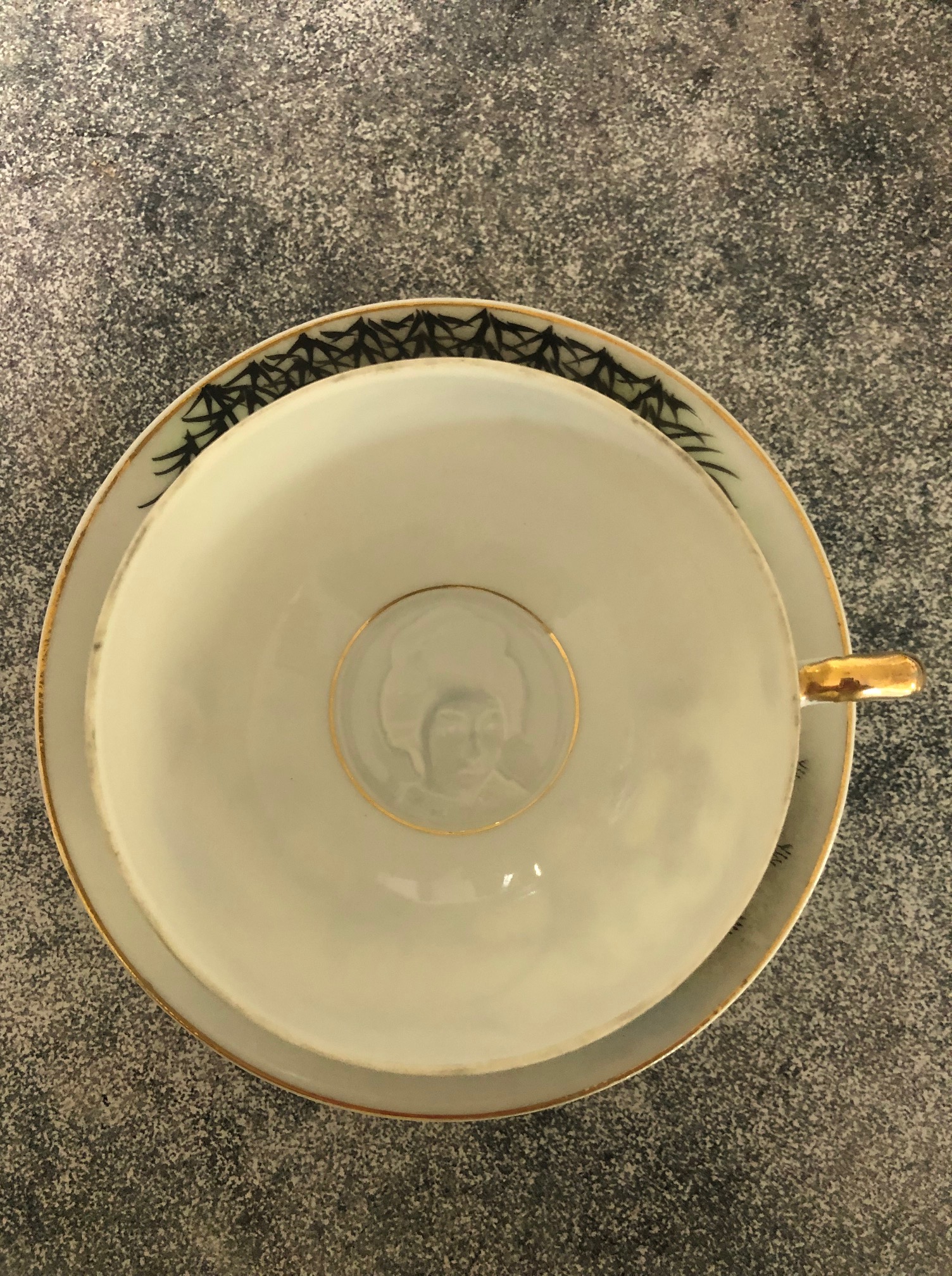
We begin our journey with Karen Thompson’s exquisite collection of bone china which is nestled in a beautiful, vintage cabinet and is a testament to the craftsmanship and elegance of past generations. Each shelf tells a different story, but it is the lower shelf that captures the essence of family history. The green and white china on display belonged to Karen’s great-grandmother, Violet Edwards (née Rutter) and Violet’s collection has been meticulously cared for and passed down through her family and reflects the quiet grace of an era long past. But perhaps the most enchanting piece in Karen’s collection is a tea set that carries an even deeper historical significance. This set was brought home by Karen’s grandfather, Lucas, who acquired it during his travels to Japan before the outbreak of the Second World War. The set itself is elegant—fine porcelain, with delicate gold accents—but it’s the hidden detail that makes it truly remarkable. When held up to the light, the bottom of each cup reveals an intricate picture of a Geisha lady, subtly captured in the porcelain’s design. It’s a feature that isn’t easily visible at first glance, making it all the more magical when discovered.
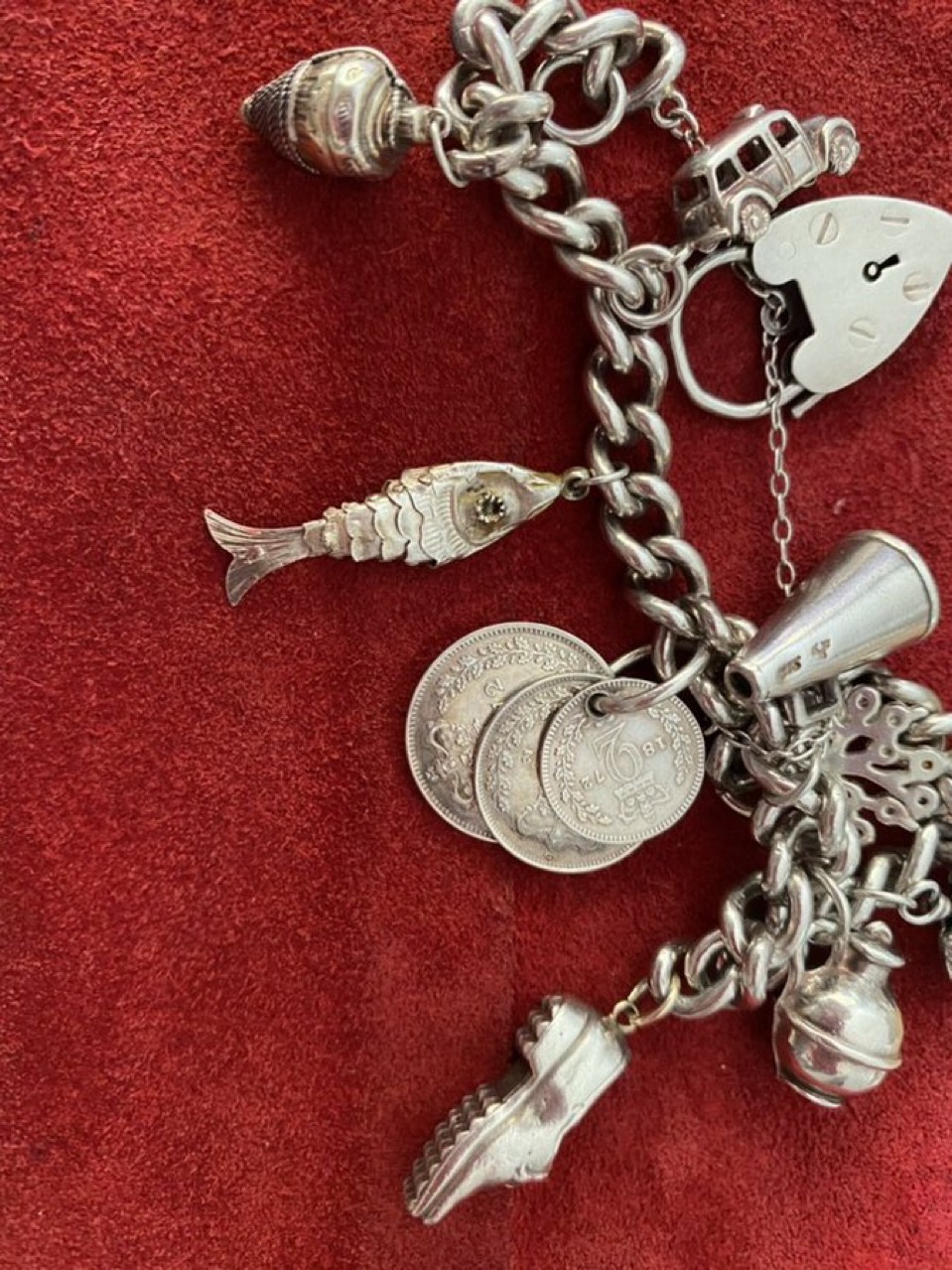
Jewellery has always held a unique and precious place in our hearts. While the monetary value of a piece may fluctuate over time, it’s the sentimental and emotional worth that truly makes these items special. One such example is the beautiful Victorian charm bracelet owned by Natalie Mayhew, a cherished gift from her great-grandmother.
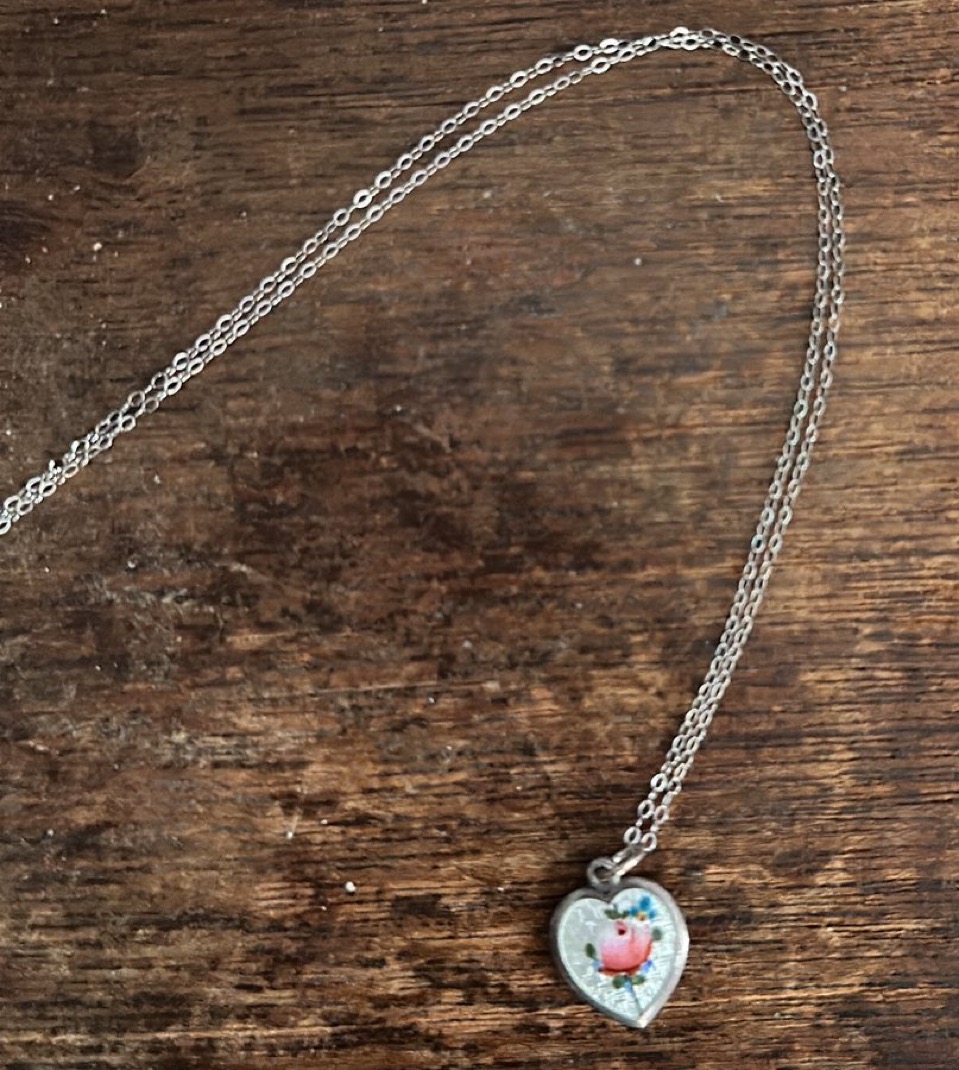
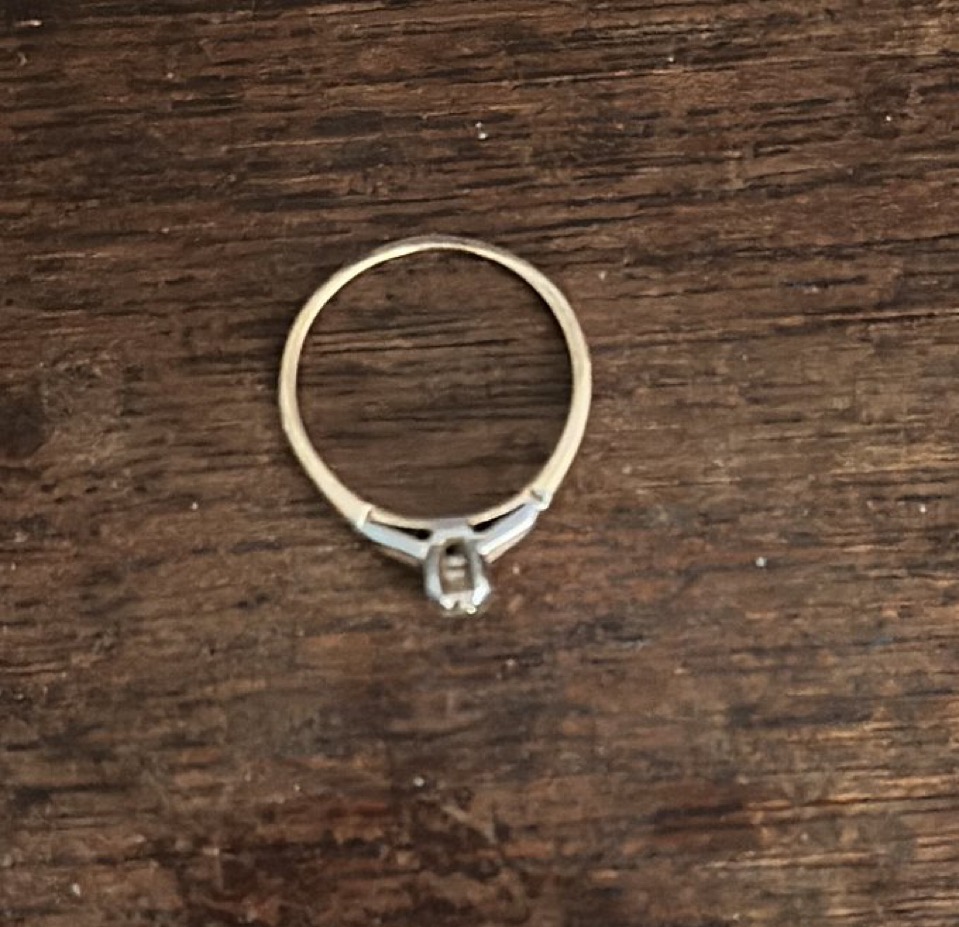
Patricia Bruhn also has some beautiful items of jewellery in her collection, a heart necklace and wedding ring from her grandmother.
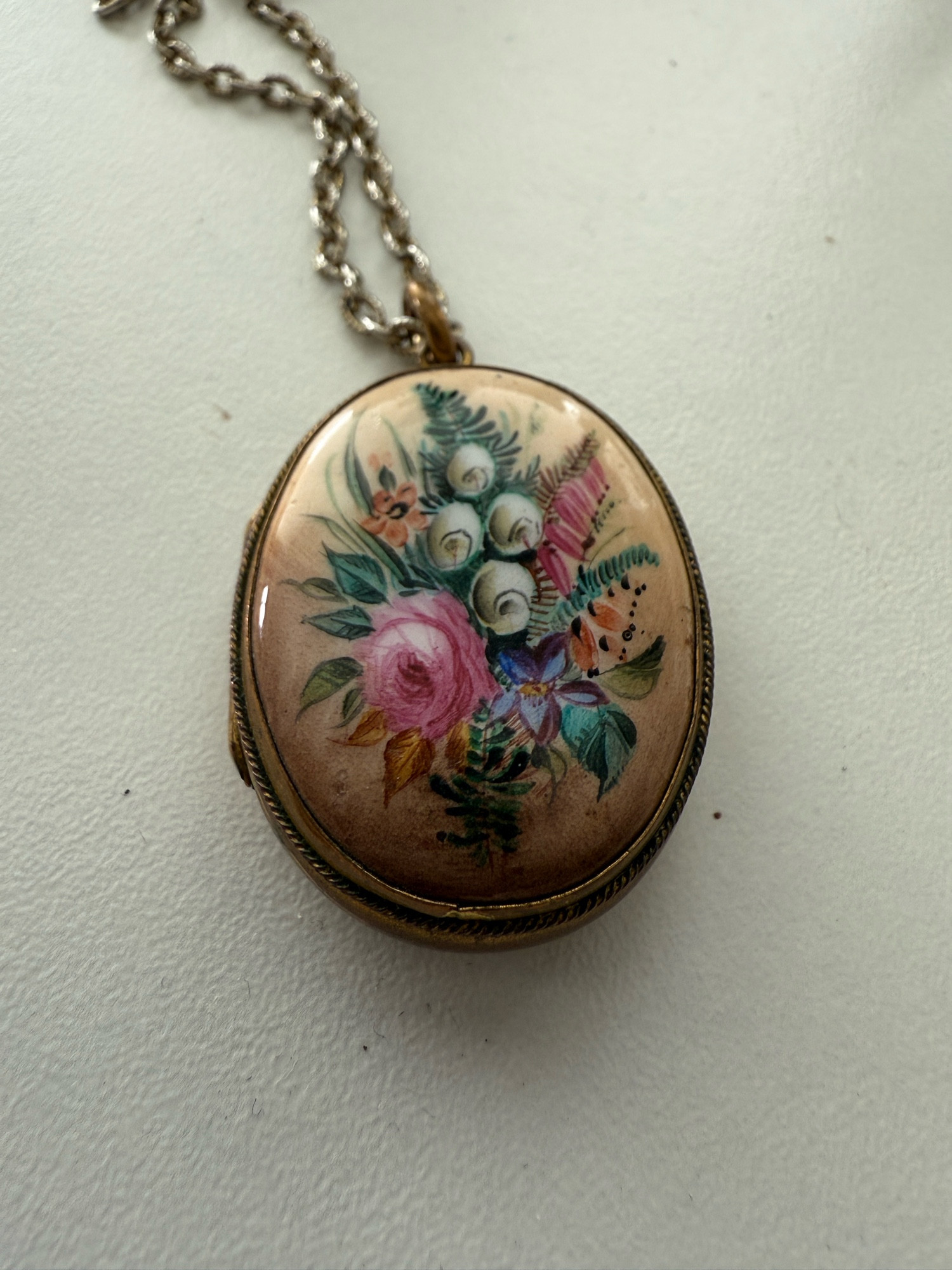
Simon Young has this stunning locket that was hand-painted by his 2x great-aunt. Inside were photos of her grandfather and her father who was lost, presumed murdered at the age of 29 in 1880, a precious keepsake and one that has a hidden story within.
When we think of family heirlooms, images of sparkling jewellery or antique silverware often come to mind. But the truth is, heirlooms can be anything—a favorite chair, a picture, or even a hand-carved table. Take, for example, a little table owned by Laura Hedgecock’s husband—a piece crafted by a cabinetmaker named Richard Falkinham. It’s more than just a quaint piece of furniture; it carries a history that’s as rich and complex as the wood it’s made from. Richard Falkinham made his way from New York to Wisconsin, like so many others seeking new opportunities in the early 19th century. However, Falkinham’s craft took an unexpected turn when the harsh winters of Wisconsin led to a somber but necessary shift in his work. With the growing number of people succumbing to the brutal cold, Falkinham began crafting coffins for the local residents who didn’t survive the winter. In a way, his craft became a dual-purpose—creating both functional, beautiful pieces of furniture and offering comfort to grieving families in a difficult time.

One of the more unusual heirlooms that you have sent me is a whisky flask that belonged to the great-grandfather of Roger Pryor, a man named Hugh Fleming Robertson. Hugh’s story began in Airdrie, Scotland, where he was born in 1851. In search of new opportunities, he made the courageous decision to leave his homeland and migrate across the pond to the United States, a decision that would shape not only his life but also the generations that followed. Hugh was a coal miner by trade, and this flask was something that would accompany him through the long hours at work. What stories could it tell if it could speak?
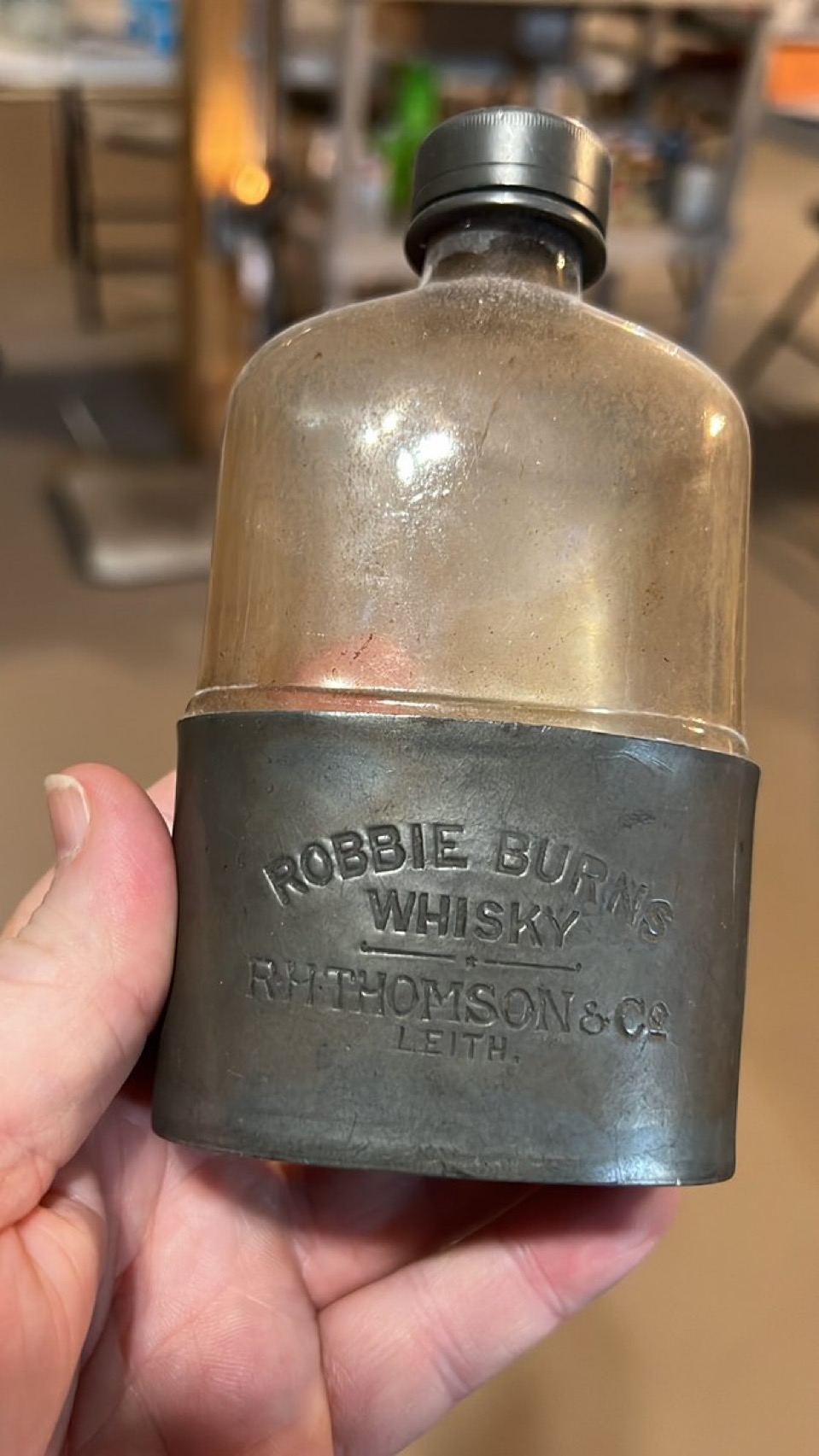
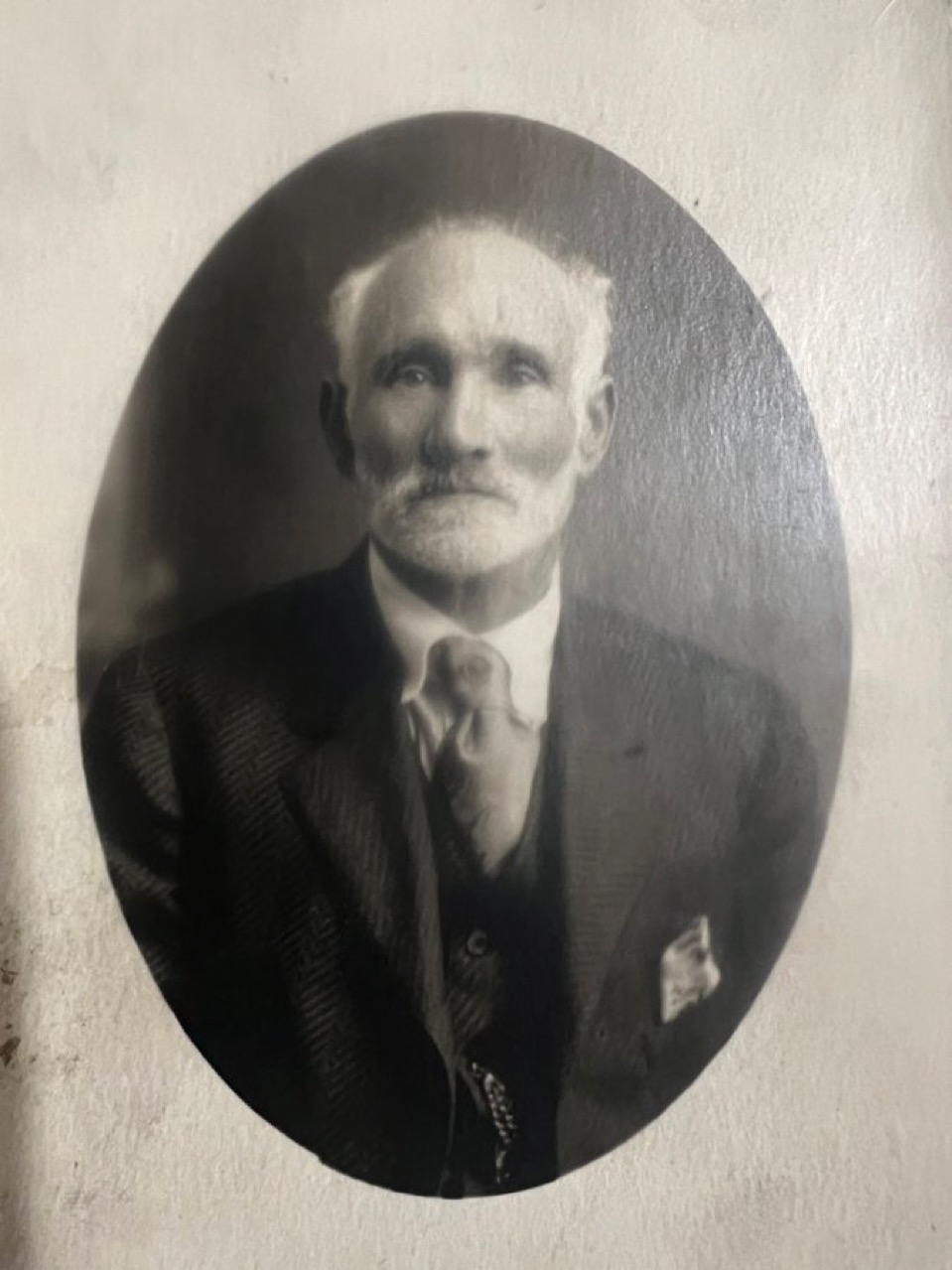
(Hugh Fleming Robertson)
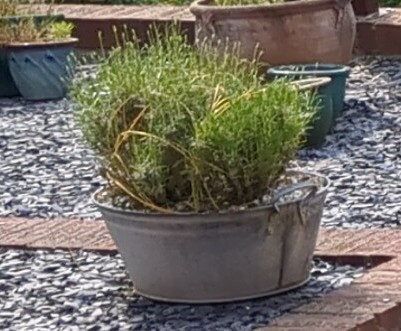
Whilst we are on the subject of the more unusual family keepsakes, Lorna has shared with me a family baby bath that was used in the 1940’s and 50’s that now sits pride of place in Lorna’s garden. This brings a smile to her face every day, looking out from her kitchen window, thinking about so many fond family memories.
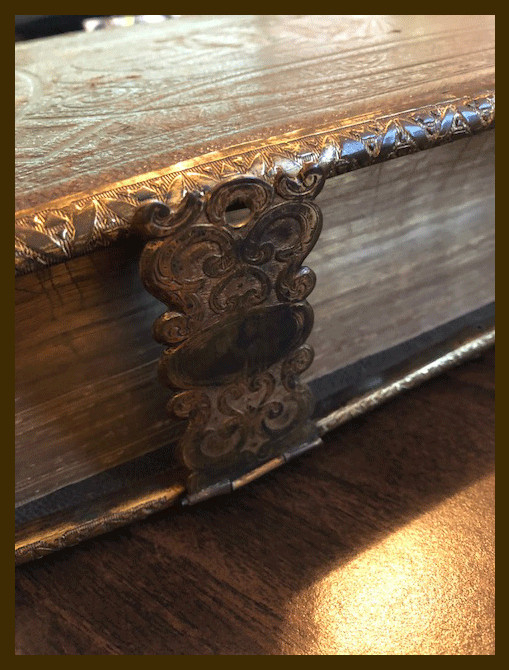
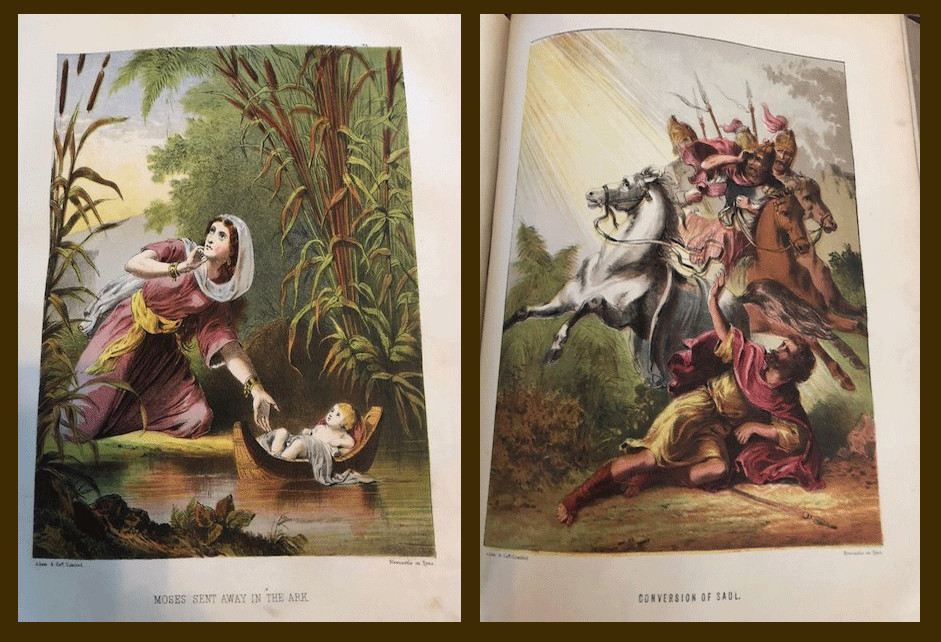
Some family keepsakes are well travelled and one such treasured heirloom is the Thomas family Bible, now in the possession of Sue McNelly. The Bible, once belonged to Sue’s great-grandfather, James Thomas of County Durham. From its origins in England, to a spell in South Africa, this well-traveled heirloom has finally found its way home to Sue in the United States. This family Bible tells a remarkable story of heritage, love, and the enduring bonds that tie families together.
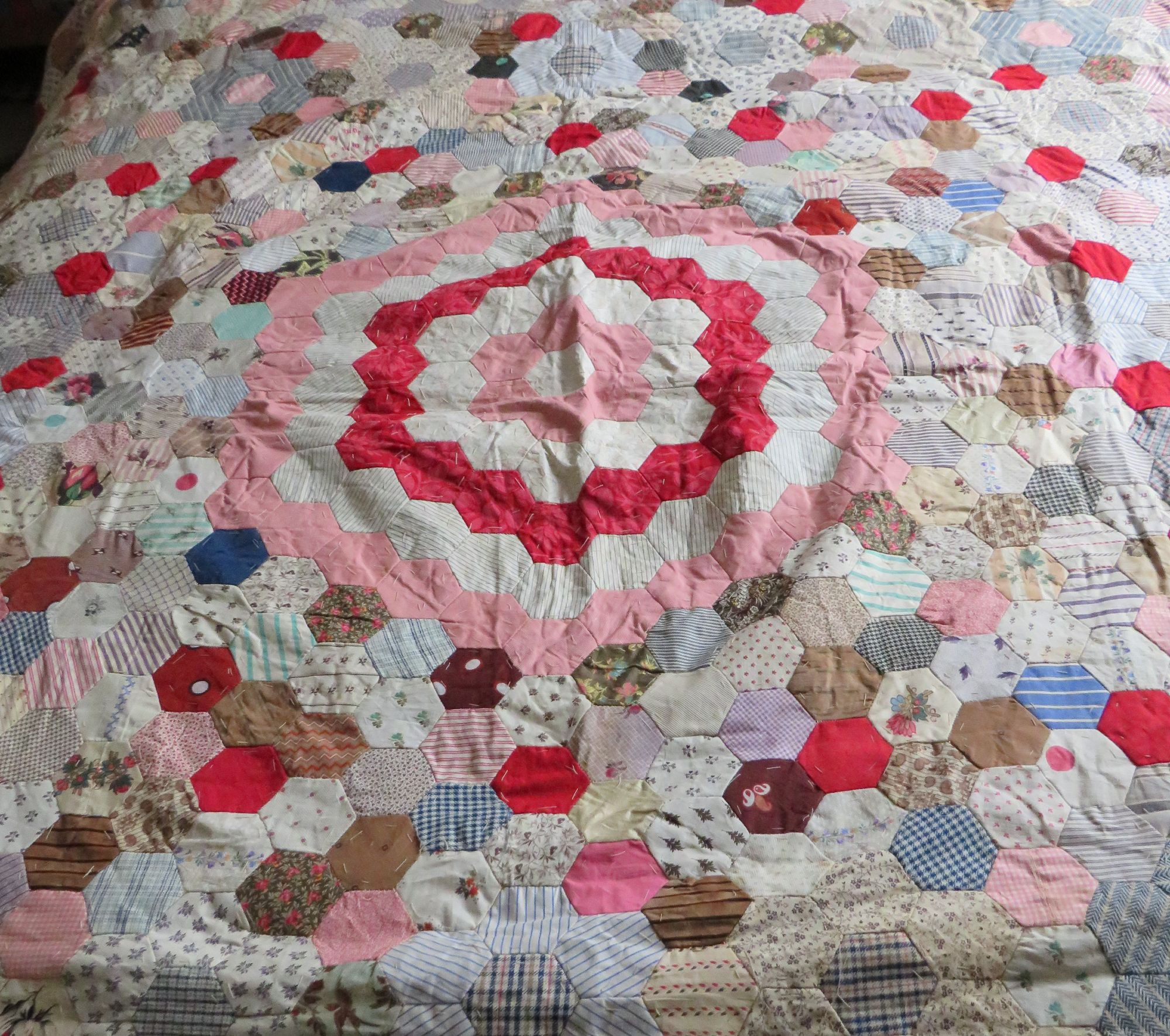
Sometimes it’s impossible to pick out just one special item to share and Janet Few found it extremely difficult to choose just one item to share with us. Janet has an incredible collection of heirlooms, each with its own deep story and meaning, but she’s chosen to share one very personal treasure—her great-grandmother Clara’s quilt. If you follow Janet’s blogs, you’ll understand just how difficult it must have been to choose only one item from her many cherished keepsakes. But why Clara’s quilt? To learn more about Clara’s quilt and discover why it’s such a special heirloom, click on the link below.
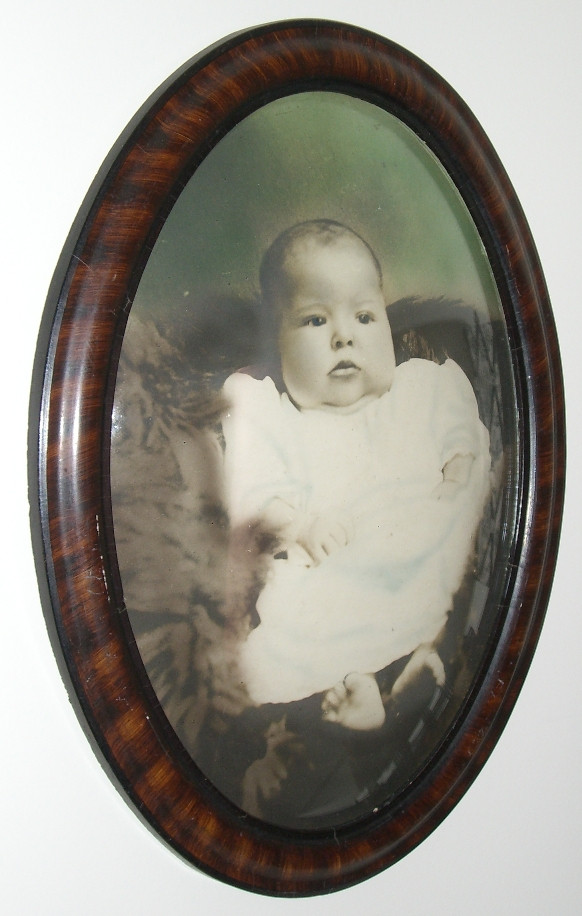
As family historians, photographs are at the heart of everything we do. They are not just pictures; they are precious links to the past, offering a glimpse into the lives of our ancestors. Each photograph holds a story, a memory, a moment frozen in time. Aine Donnghaile shared with me a particularly special photograph—her mother’s baby portrait, taken in 1919. The image itself, though a humble black-and-white print, is so much more than just a photo; it’s a cherished piece of her family’s history. What makes it even more meaningful is the scale: this photo is over two feet tall. . It’s a symbol of her family’s history, a physical reminder of the women who came before her, their strength, resilience, and love.
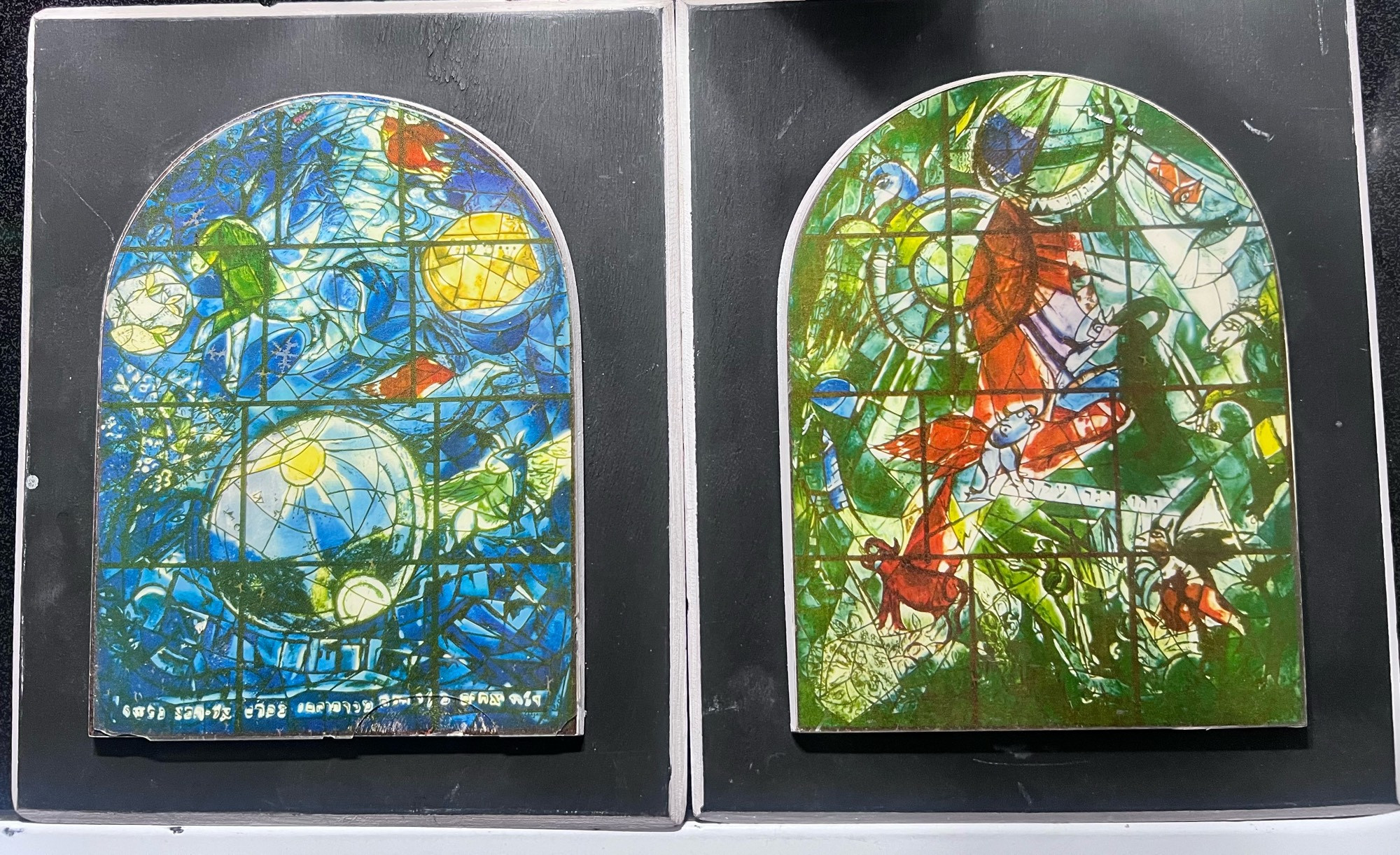
We have already seen that family heirlooms come in many shapes and sizes, from old furniture and jewellery to beloved photographs. For Robyn Mooney, that unique heirloom is a pair of stained glass window replicas created by Marc Chagall, who was one of the most iconic artists of the 20th century. These stunning works of art came into Robyn’s life sadly after the passing of her great aunt, and have since become a treasured possession.
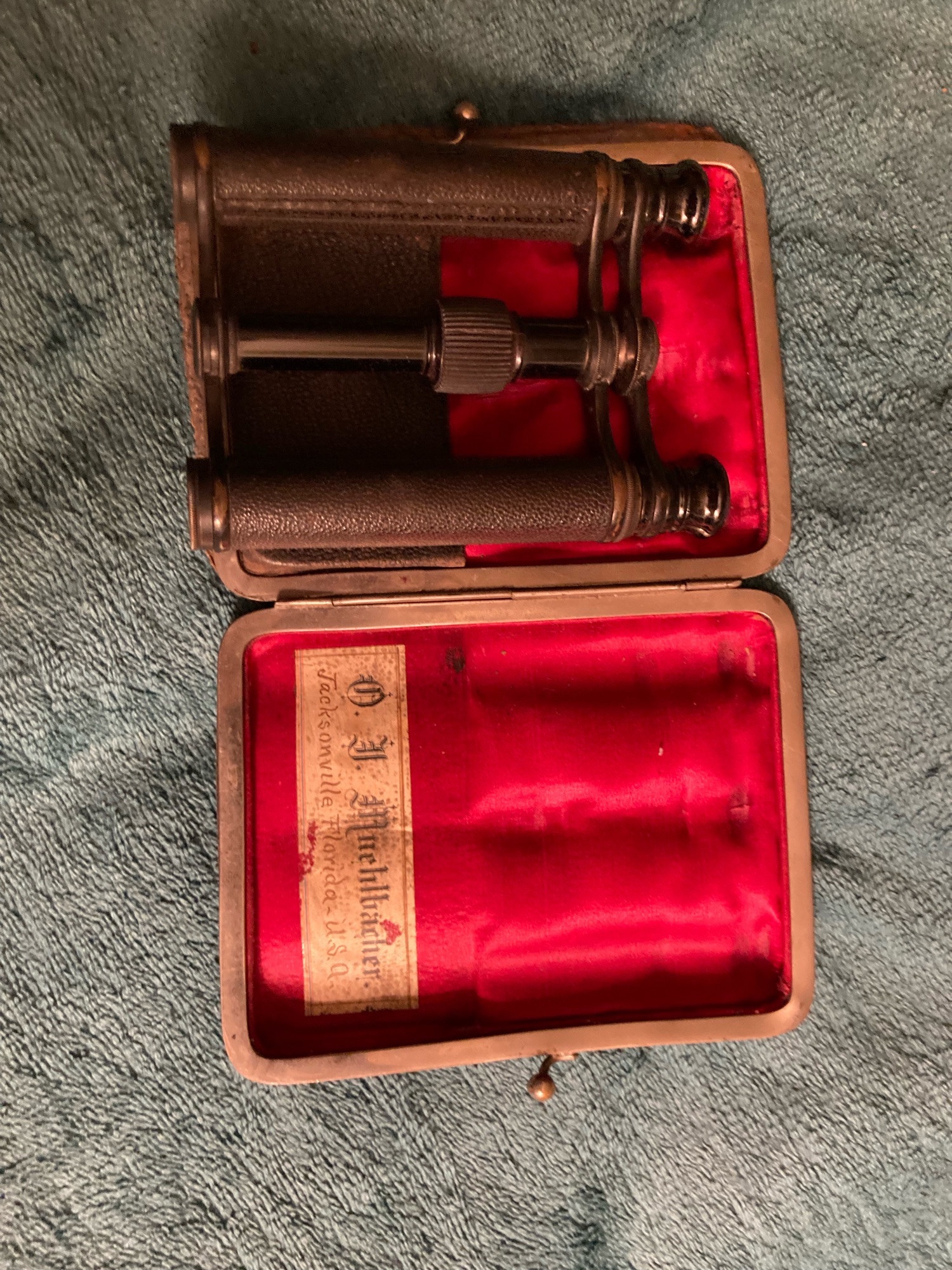
G. Oosterhout also shared a rather unusual family heirloom, his 2x great uncle’s Paris made opera glasses. Otto Joseph Muehlbacher (1861-1940) married into the family when he met his grandmother’s sister, Bertha Mae Branning. Uncle Otto sold concert pianos as well as being an accomplished musician himself – he played the piano and organ. These are a really unique keepsake and they have stood the test of time extremely well.
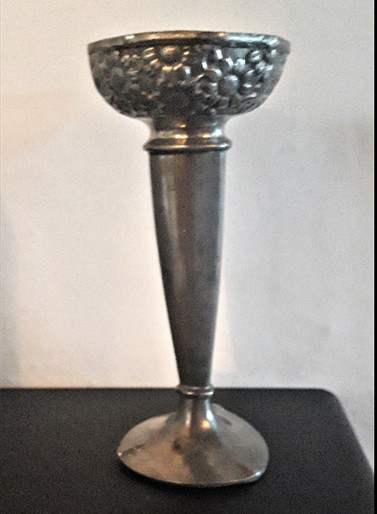
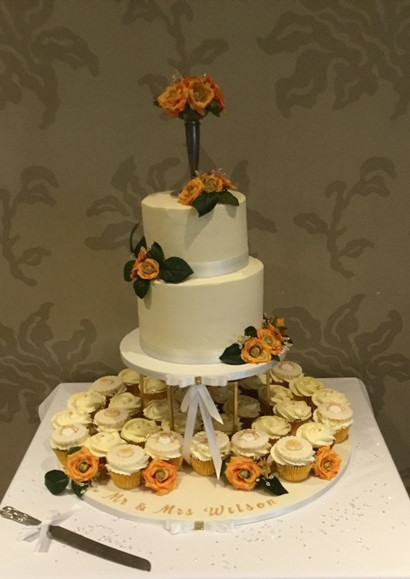
Keepsakes and heirlooms have a way of capturing the essence of family, love, and tradition and for my dear friend Margaret Roberts, her treasured heirloom is a cake topper that has played a central role in over 40 family weddings. Beginning with her grandparents’ special day, this small, yet symbolic figurine, perched atop their cake, marked the beginning of a family tradition. But what makes this particular cake topper truly extraordinary isn’t just its age or craftsmanship; it’s the enduring role it has played in each subsequent wedding in the family. As the years passed, the topper made its way from one wedding to the next, adorning the cakes of children, grandchildren, and now great-grandchildren. Over four decades, it has become much more than just a decoration—it’s become a symbol of family continuity, love, and the bonds that keep them together. In fact, the topper made its most recent appearance at the wedding of Margaret’s niece, where it was proudly displayed on a cake that Margaret herself made for the occasion.
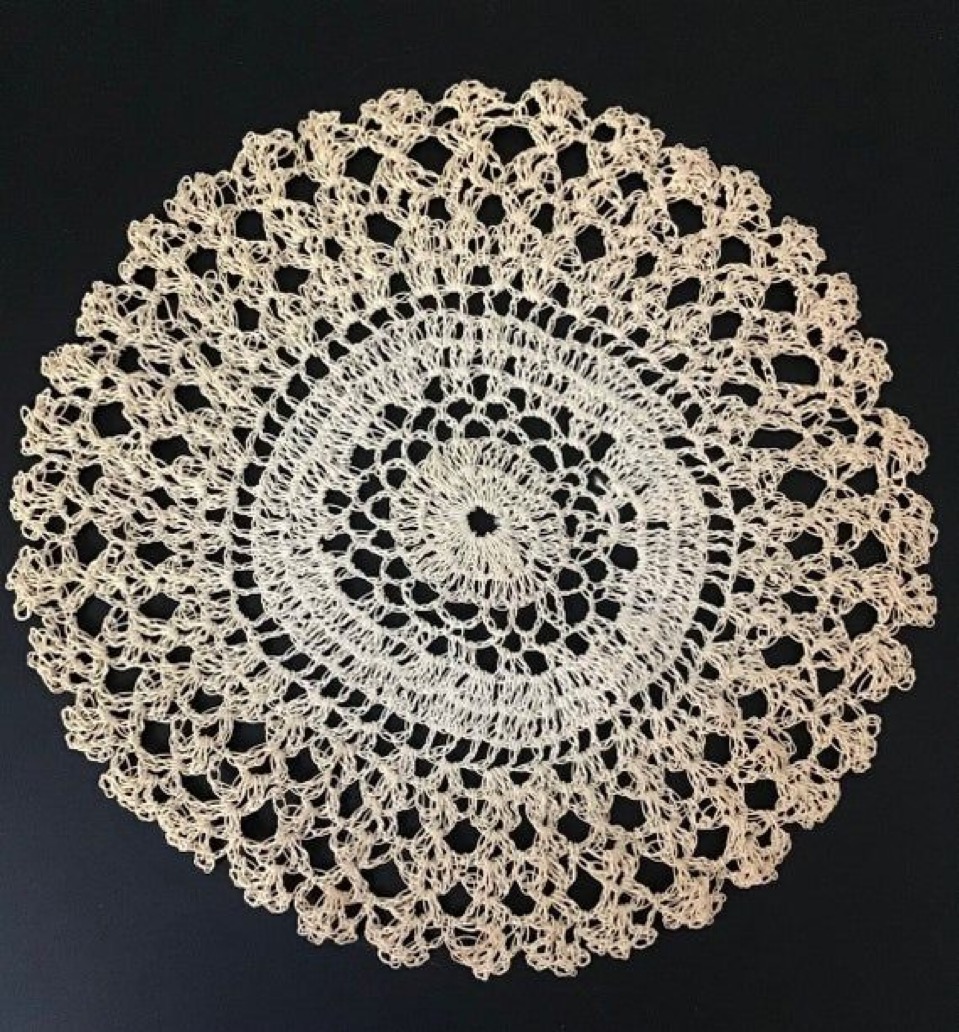
When you inherit something that has actually been handmade by your ancestor that makes it all the more special. This wonderful crocheted table centre was made by my good friend Vivienne’s great-grandmother. These beautiful tiny stitches all hand crafted with a silky cotton thread. Usually found on a dressing table to display a vanity set, this is another beautiful heirloom that connects the past to the present.
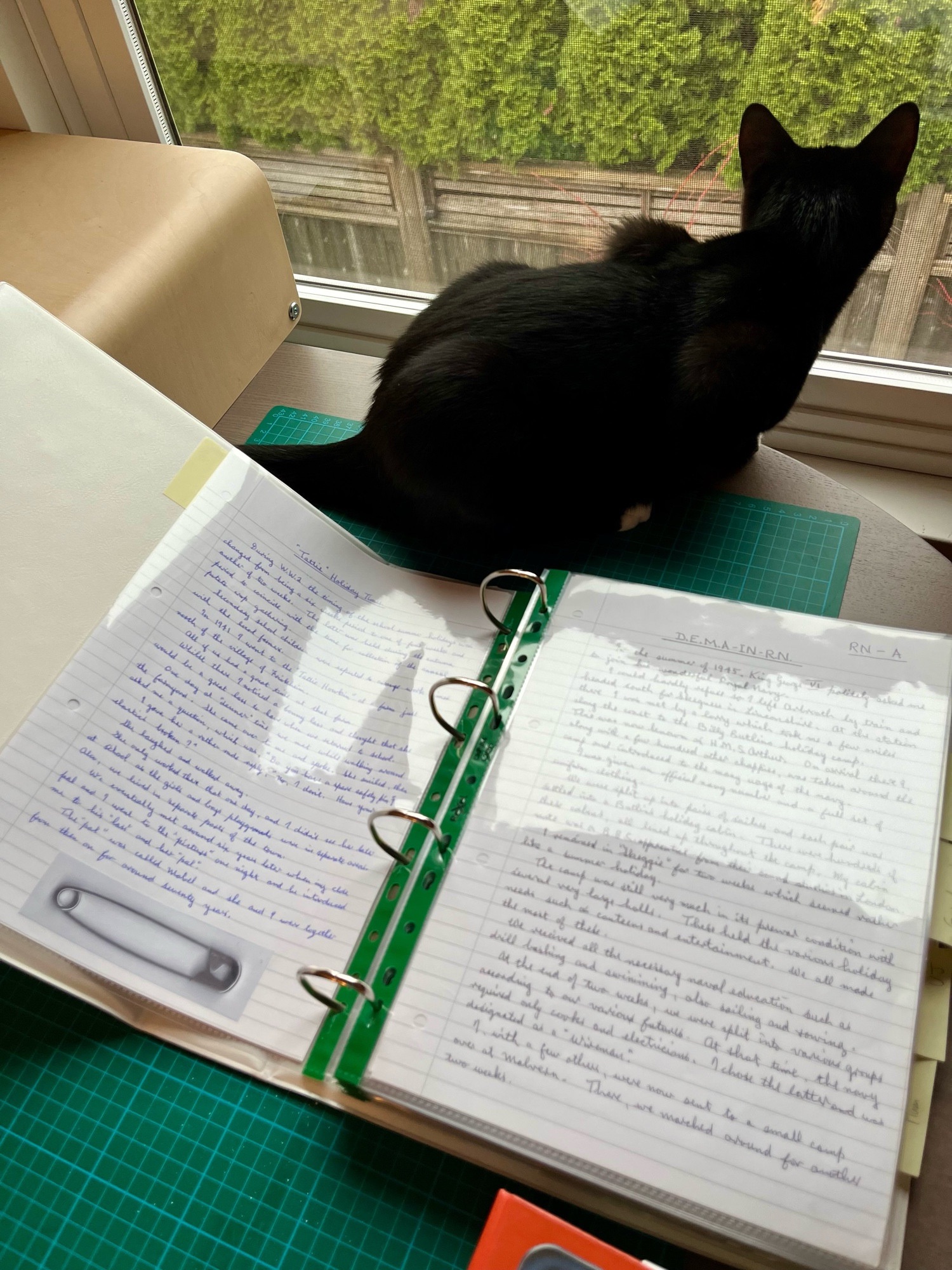
Jen Eggleston’s heirlooms immediately resonated with me because they reflect the same kind of treasures I look forward to passing down to my own family. These objects aren’t just material possessions; they offer a glimpse into the lives of those who shaped our families and our histories. One of the most poignant pieces Jen shared with me was a picture of her grandpa’s writing—a treasure Jen only discovered after her mum sadly passed away earlier this year. This writing, which chronicles her grandpa’s life, spans from his childhood memories to his time in the Navy, and even the story of how he met Jen’s grandma. For Jen, finding this writing after the loss of her mother added a layer of comfort—a sense of connection to both her mum and her grandpa, long after they’ve passed. These written words are now a cherished piece of her family history, a legacy she’ll one day pass on to her children.
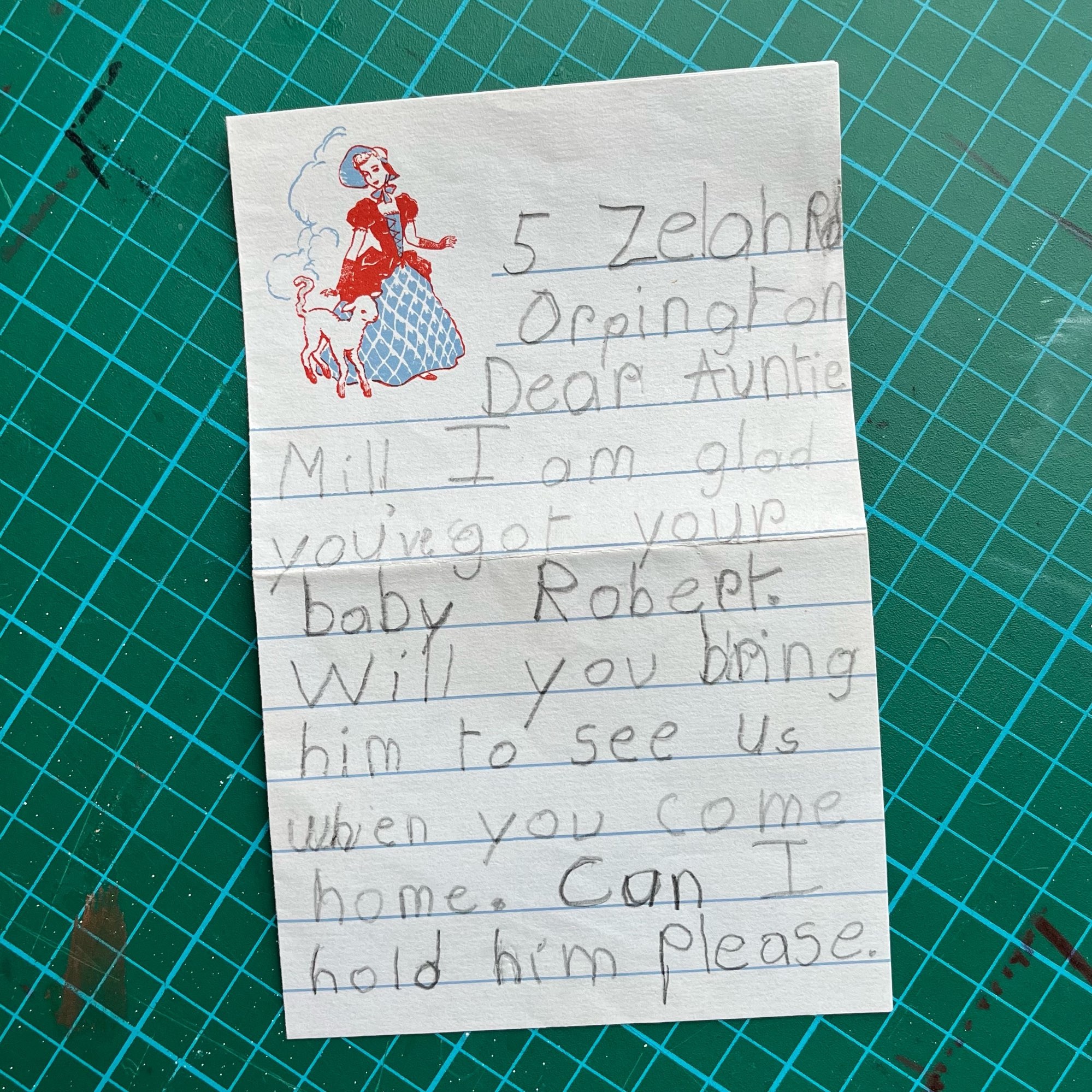
Jen’s collection also includes an endearing letter she discovered, written when her dad was born. It’s not just any letter—it’s written on children’s notepaper, with a childlike innocence that echoes the excitement of a new arrival. The words read;
“Dear Auntie Mill. I am glad you’ve got your baby Robert. Will you bring him to see us when you come home . Can I hold him please”
Although brief, the words capture the joy and hope that only the birth of a child can bring. Jen treasures this letter, as it’s a glimpse into her father’s early days—something that will one day hold great meaning for her own children.
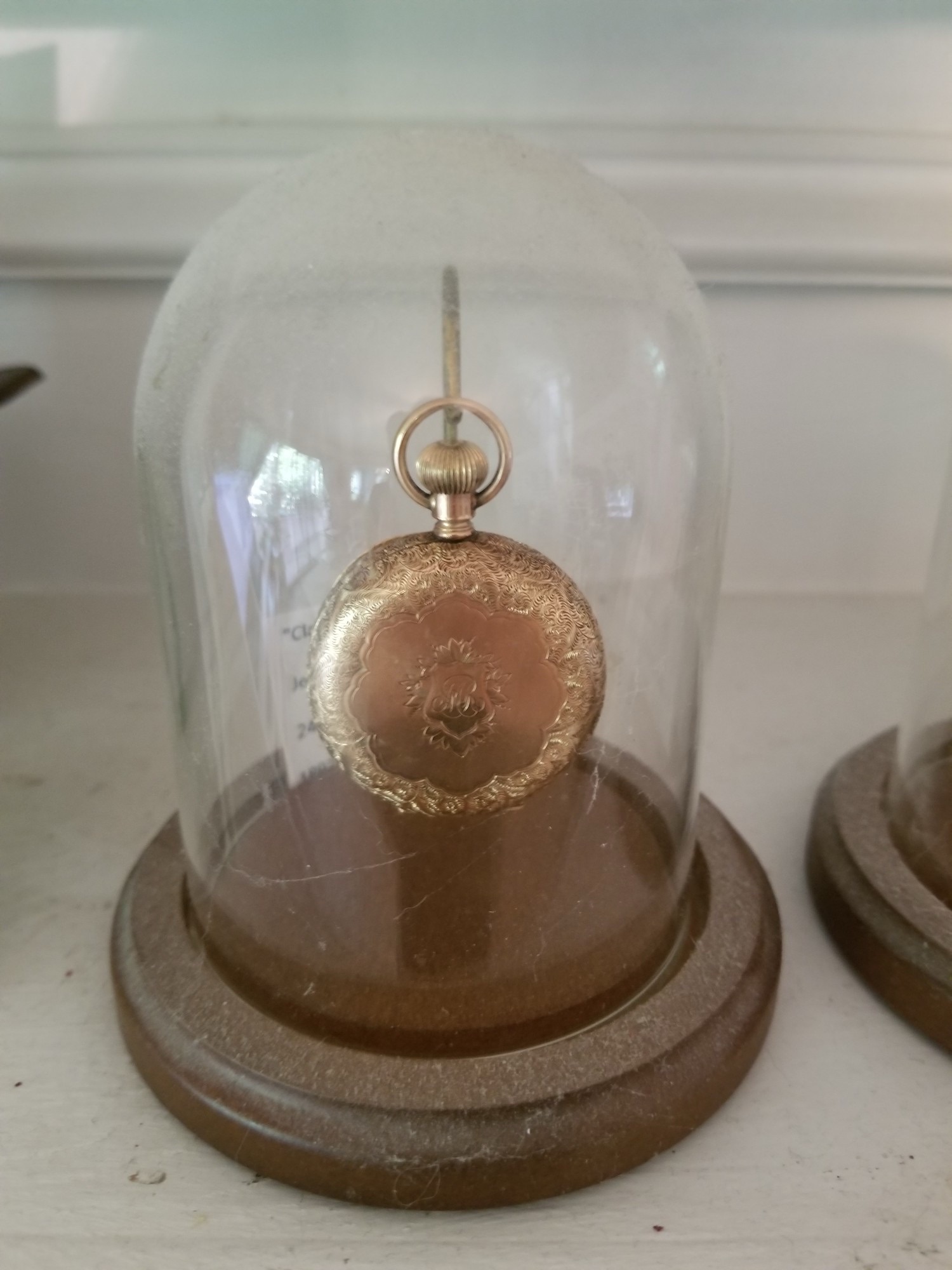
In an effort to preserve her family’s legacy, Mary Stanford Pitkin has come up with a unique and thoughtful way of sharing her heirlooms with future generations: a beautifully crafted PDF book that details each item’s story, its previous owner, and how it came to be a part of her family. Mary’s heirloom collection includes a variety of cherished items, each with its own fascinating history. But among all these treasures, one item stands out for her, a timeless watch that once belonged to her great-grandmother. This watch, which Mary estimates was given to her great-grandmother around 1900 and despite being over a century old, still works, a testament to the craftsmanship and enduring quality of its design. The watch also carries a story, a piece of her great-grandmother’s life, an engraving of her married initials, marking it as a very personal treasure.
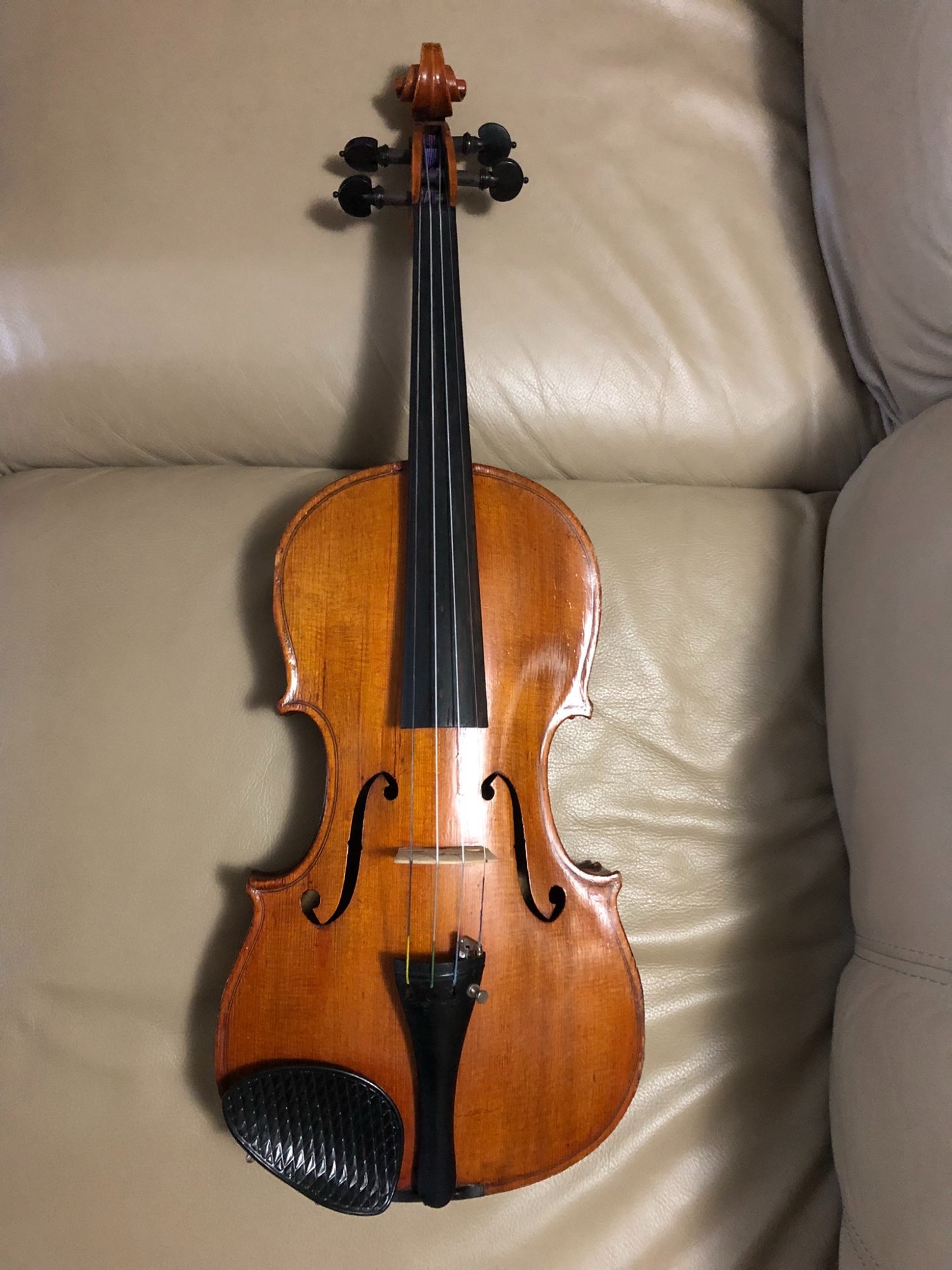
When we think of family heirlooms, musical instruments, despite their connection to family history, don’t always come up as often as one might expect. That’s why I was delighted when Stephanie Glotfelty shared with me a truly special family heirloom: a violin that belonged to her 3x great-grandfather. This violin carries not just the legacy of its maker, but of the generations that have carefully preserved it.
Stephanie, though unsure of the exact age of the violin, knows that her 3x great-grandfather—who lived between 1842 and 1931—was a keen musician. Although its maker’s name may be lost to time, the violin’s very existence tells a story—of music passed down through the generations. Musical instruments like violins offer something unique: the possibility of sound, of life being breathed into the object once more. Imagine the music that flowed from this violin in the hands of its original owner—perhaps in small family gatherings, or at local events, where music was heard by Stephanie’s ancestors and friends.
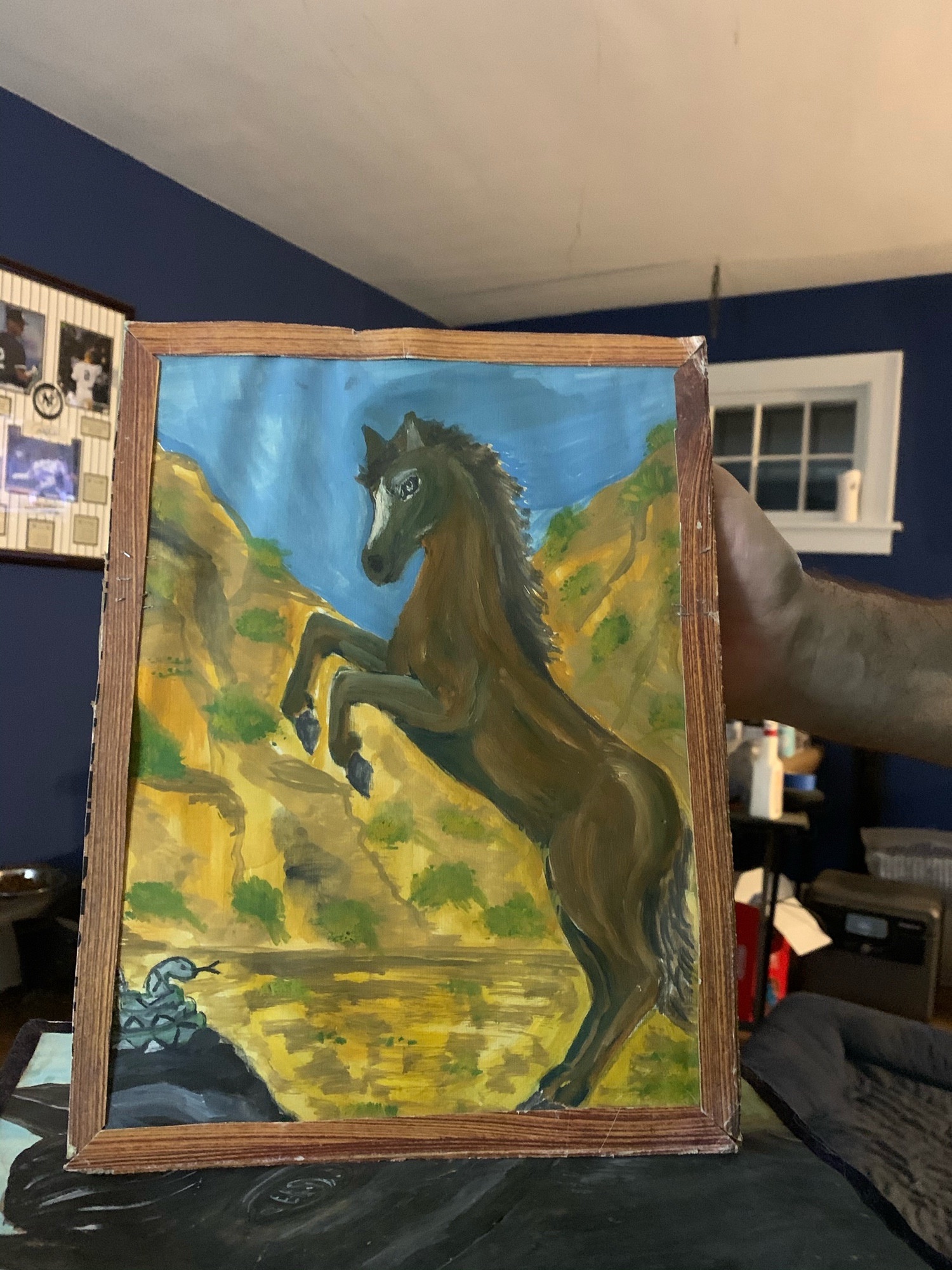
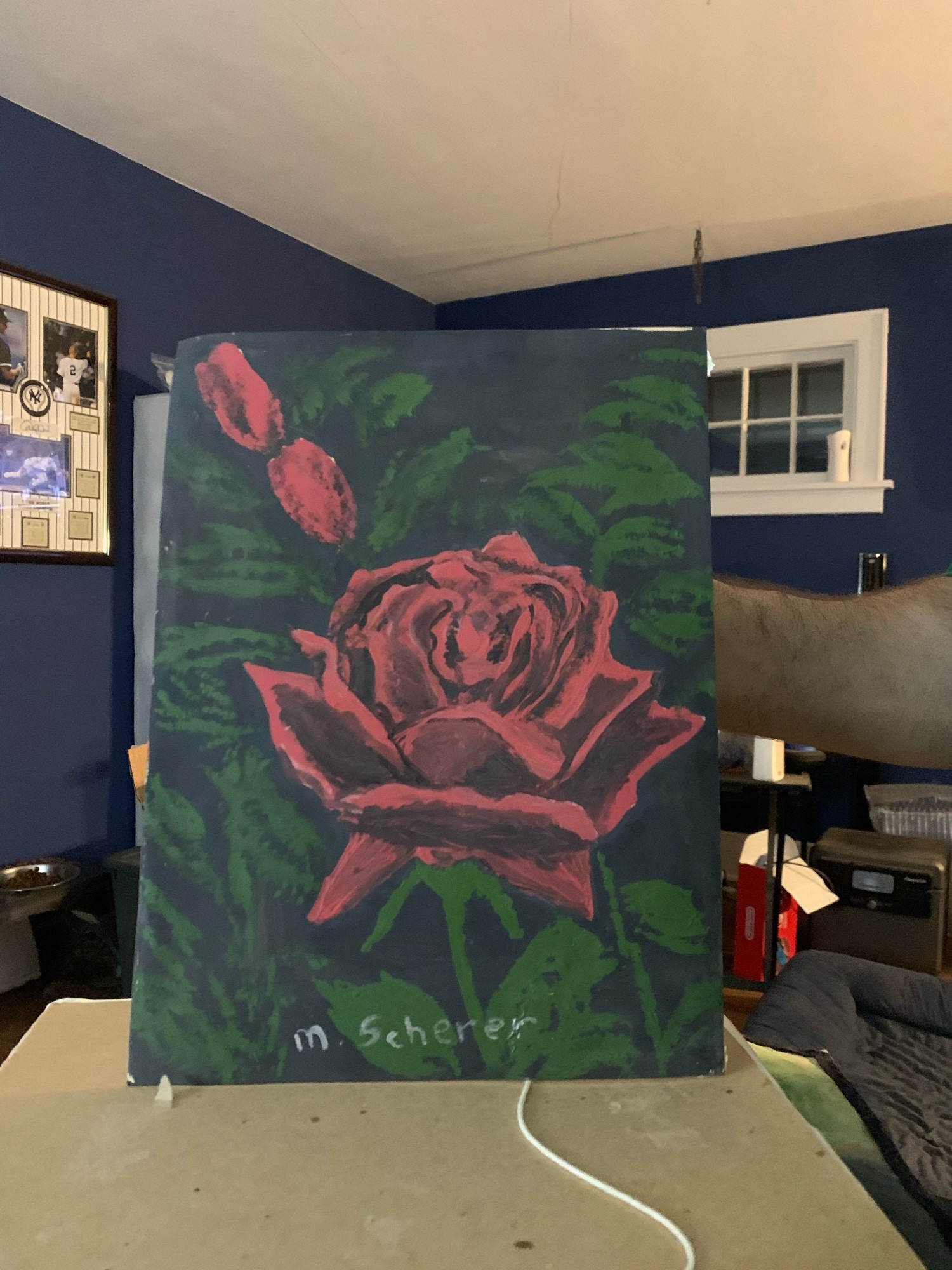
Stephanie Cutter has sent me two wonderful paintings that were painted by her grandmother, sadly a woman she never had the chance to meet. Her grandmother passed away just one month after Stephanie was born, but these paintings, in their vibrant colours and delicate brushstrokes, help to keep her memory alive.
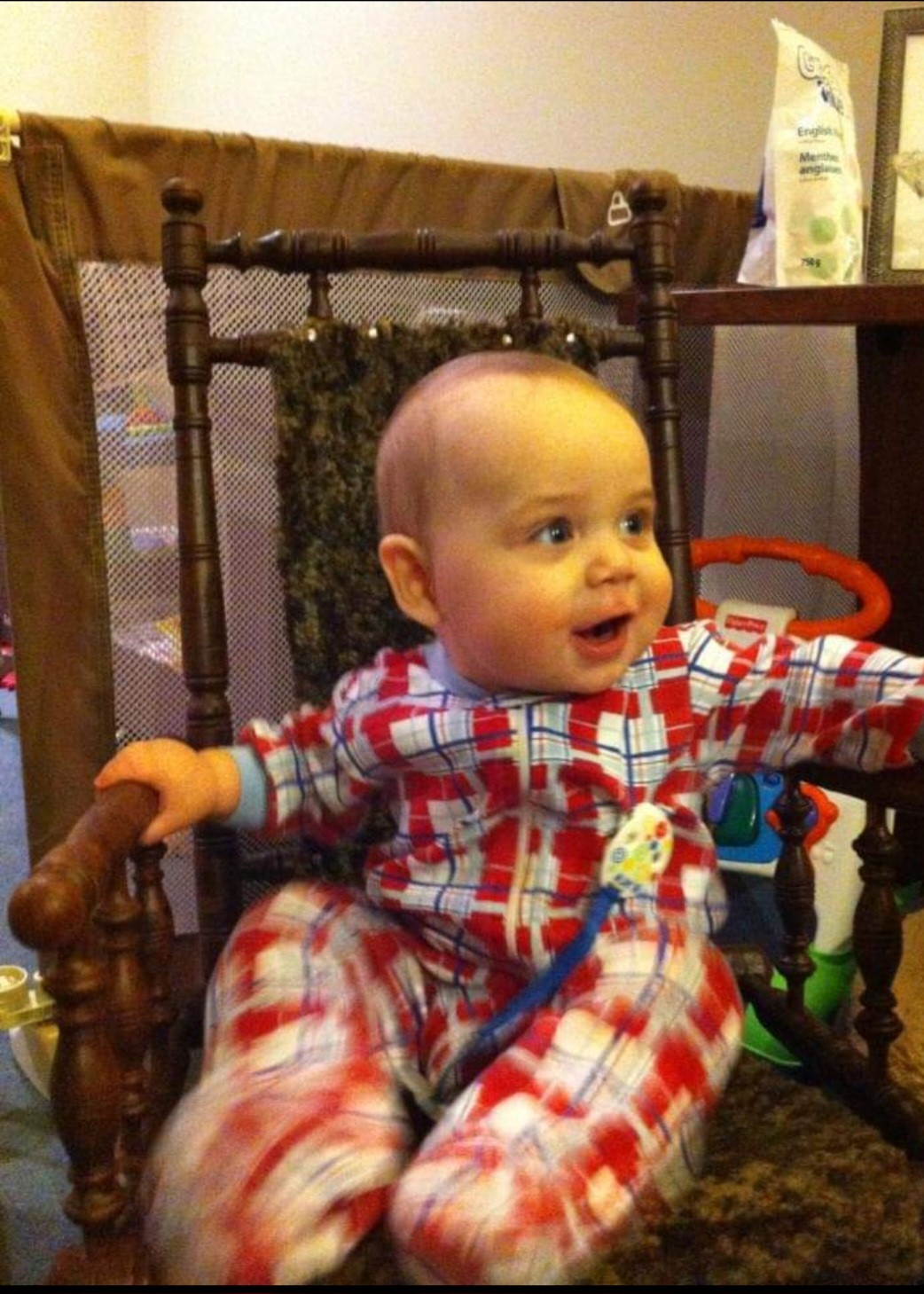
Sometimes, it’s the unexpected treasures—the ones that carry with them a story, a personal touch—that truly capture our hearts. One such heirloom is a delightful rocking chair that Heather shared with me. At first glance, it’s easy to see why this particular piece of furniture has become so cherished by her family. Made by Heather’s uncle for her grandmother when she was a toddler, this rocking chair has witnessed over a century of family history. It’s traveled across the ocean, stood the test of time, and been passed down through four generations.
The story of this rocking chair began in England, where Heather’s uncle crafted it for his young niece—Heather’s grandmother. Imagine the care and thoughtfulness that went into creating a chair for a child, it was not just a piece of furniture; it was a gesture of love and a gift that would one day become a family heirloom. As the family eventually left England for Canada, the rocking chair made the journey with them, a constant through the changes and challenges of migration. For families who emigrate, their most cherished belongings often carry a great deal of emotional weight. This chair wasn’t just a physical object; it was a connection to the past, a piece of home that helped them navigate the unknown and establish new roots in a foreign land. What makes this rocking chair so extraordinary is not just its craftsmanship or its sentimental value, but the fact that it has stood the test of time. A piece of furniture that’s over a hundred years old and has been used and loved through multiple generations is not only a testament to the quality of its construction, but to the strength and resilience of the family who’s cared for it.
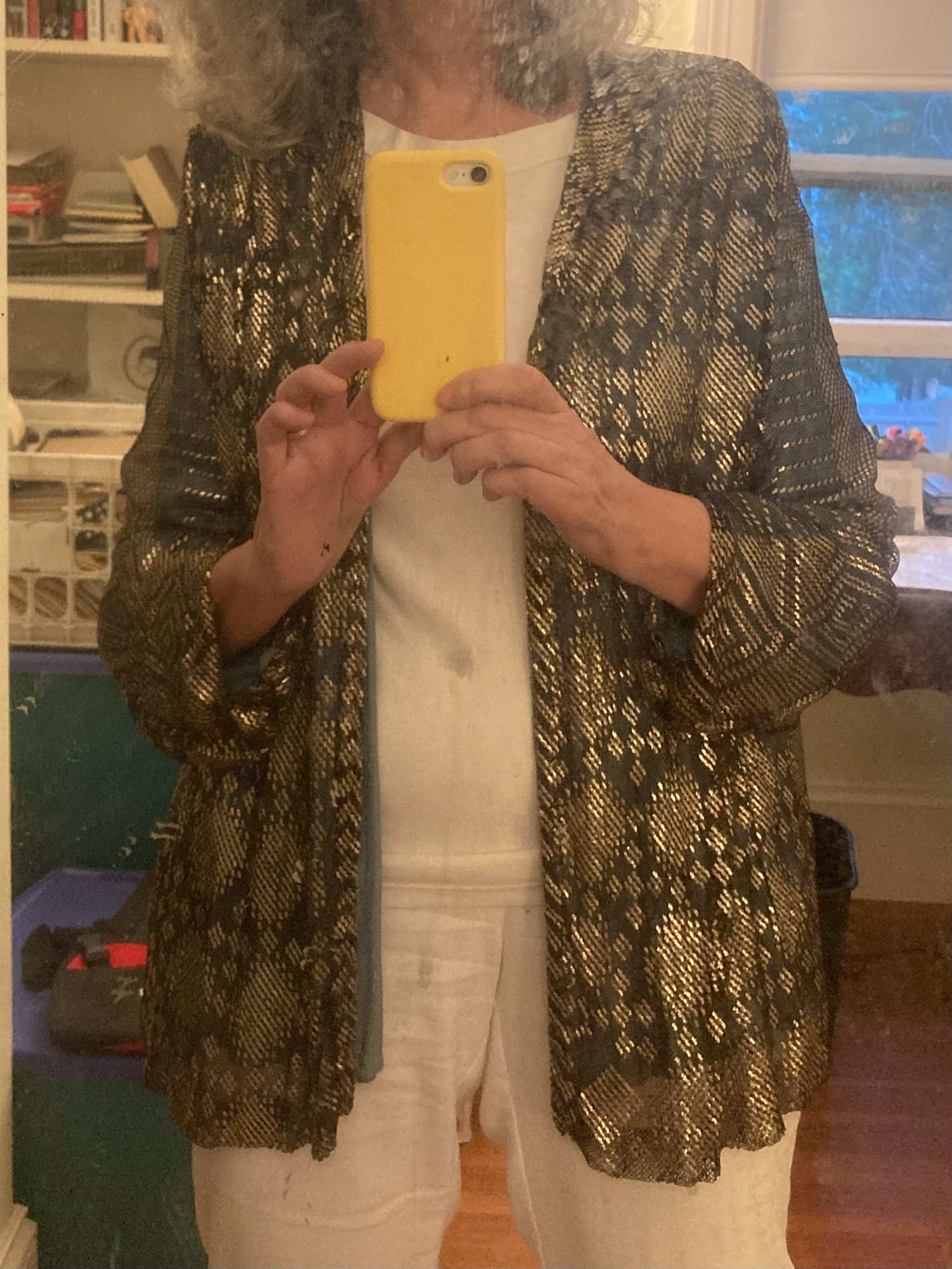
Another rare item amongst our family keepsakes are items of clothing and this truly beautiful jacket has been sent to me by Kim Brengle, which belonged to her grandmother, Elise (Mills) Oliver. Most likely made in Lebanon where Kim’s grandfather was raised, it really is a beautiful handcrafted jacket.
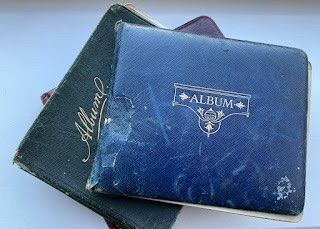
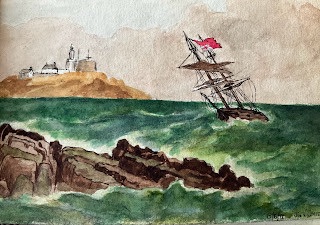
Another tough choice from so many wonderful family keepsakes, Debbie Cameron has chosen her husband’s grandparents autograph books. These contain sketches, poems and signatures from the 1910s. It must have been so wonderful to see examples of an ancestor’s handwriting and drawings contained in these delightful books.
As many of you will know, my personal connection to the Great War runs deep, and there is something especially meaningful about heirlooms that date back to this pivotal moment in history. World War I shaped countless lives, and the keepsakes passed down from that time carry with them not only the stories of the people who lived through it, they also carry stories of resilience, bravery, and sacrifice.
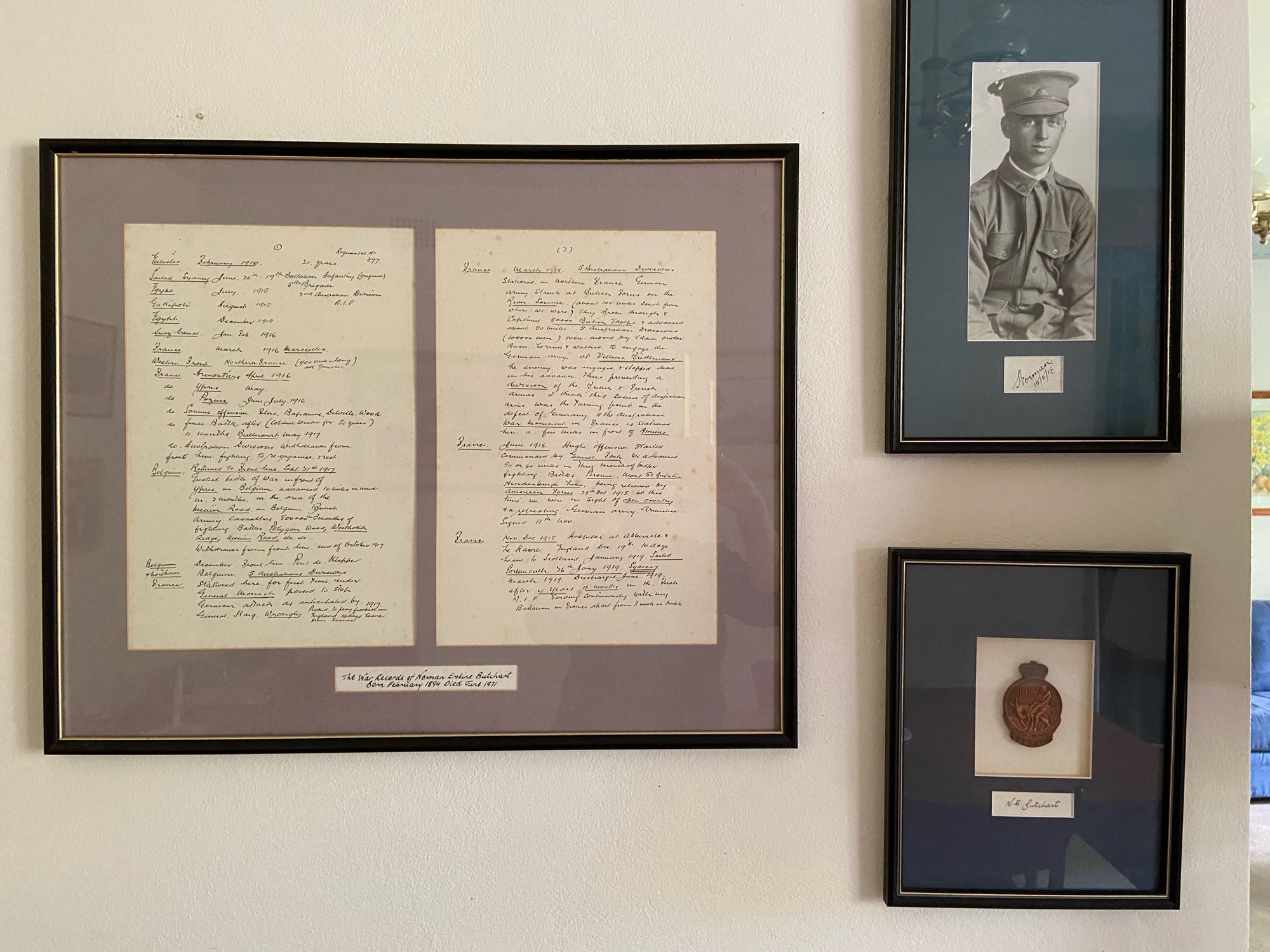
To finish off this truly wonderful collection of family heirlooms, I’m honoured to share three collections connected to the Great War. The first comes from Jenny Hart, who has generously sent me a beautiful display of her grandfather’s World War I memorabilia. This collection, filled with personal artefacts, offers a glimpse into one soldier’s journey during the war and the lasting impact it had on his family. At the heart of Jenny’s collection is her grandfather’s Anzac medal—a cherished symbol of his service and a reminder of the sacrifices made by so many during the war.
In addition to the medal, Jenny has preserved a summary of all the places her grandfather visited during World War I—an incredible testament to the breadth of his service. The list of locations offers a glimpse into the immense scale of the war and the ways in which soldiers were dispersed across Europe and beyond. For many soldiers, the war was not just a series of battles but a constant movement from one place to another. Jenny’s grandfather’s journey would have taken him from the shores of Gallipoli to the Western Front, experiencing first-hand the devastation of war and the toll it took on all who were involved. The summary of places serves as a reminder, chronicling not only the military campaigns but the personal experiences of a soldier far from home. The final part of Jenny’s collection is a picture of her grandfather taken in 1915, a striking image of a young man before the horrors of war would forever change him. Photographs like these carry an immense weight, as they freeze a moment in time, capturing the youthful optimism that soldiers once carried with them, often unaware of the brutal realities they were about to face.
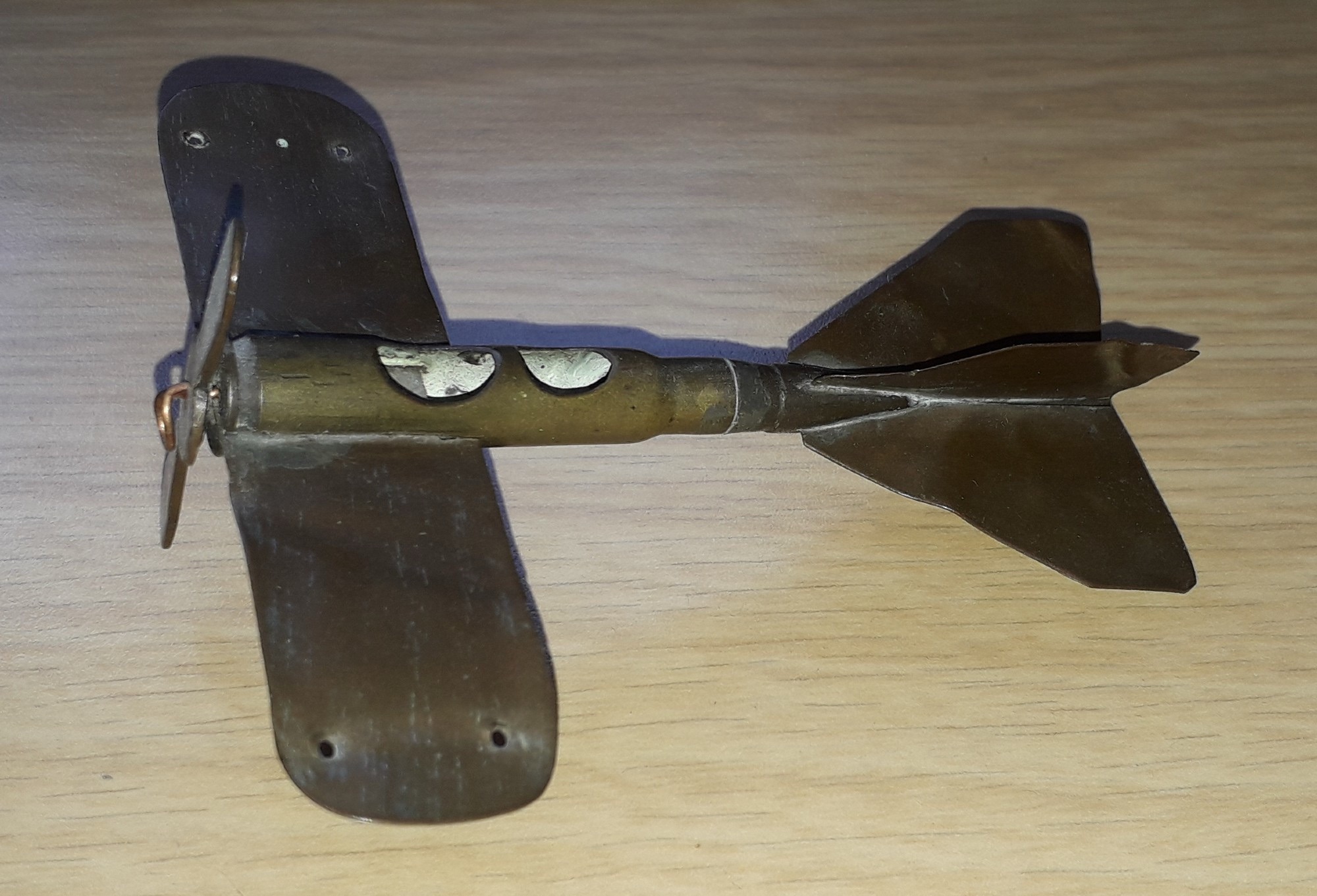
Some family heirlooms are small in size but enormous in significance. Antony Marr’s keepsake—a tiny plane made from a .303 bullet casing—carries with it not just the memory of a soldier but the legacy of a family’s enduring connection to the past.
The plane was made by Antony’s great-uncle, John William Lord, or ‘Uncle Jack’, as Antony knew him, during his service in World War I. It’s a piece of history that continues to take pride of place in Antony’s study, reminding him of the man who made it and the experiences that shaped his life.
‘Uncle Jack’ was born in Blackburn in 1895, and like so many young men of his generation, he enlisted in the army at the start of the Great War. In November 1914, he joined the King’s Shropshire Light Infantry, and by 1915, he found himself fighting in the brutal trenches of France. The conditions were unimaginable: mud, lice, and the constant threat of death from enemy fire. But for many soldiers, it was the unspoken camaraderie and resourcefulness that helped them endure the harsh realities of war. After his time on the Western Front, ‘Uncle Jack’s’ battalion was sent to Salonica, a campaign often referred to as the “Forgotten Front”, due to its relative obscurity in the broader narrative of World War I. It was here where the soldiers battled not just the enemy but also malaria. The disease plagued many of the men, including ‘Uncle Jack’, forcing them into military hospitals for recovery. It was likely during one of his recuperation periods in the hospital that ‘Uncle Jack’ crafted the small plane that would become a cherished family keepsake. Though he told Antony that he made it in the trenches, it’s more probable that it was created while he was resting and recovering, as many soldiers found solace in crafting small mementos during their time away from the front lines.
The plane, ingeniously fashioned from a .303 bullet casing, reflects the resourcefulness of soldiers who, even in the most dire of circumstances, found ways to express their creativity. Bullet casings, which were abundant in the trenches, became a way for many soldiers to make personalised keepsakes. These small keepsakes served as both a way to pass the time and as a tangible connection to the world outside the war. For ‘Uncle Jack’, creating this plane wasn’t just about making something out of metal; it was about creating something lasting, something that could survive the ravages of war and continue to tell his story long after the guns had fallen silent.

Uncle Jack
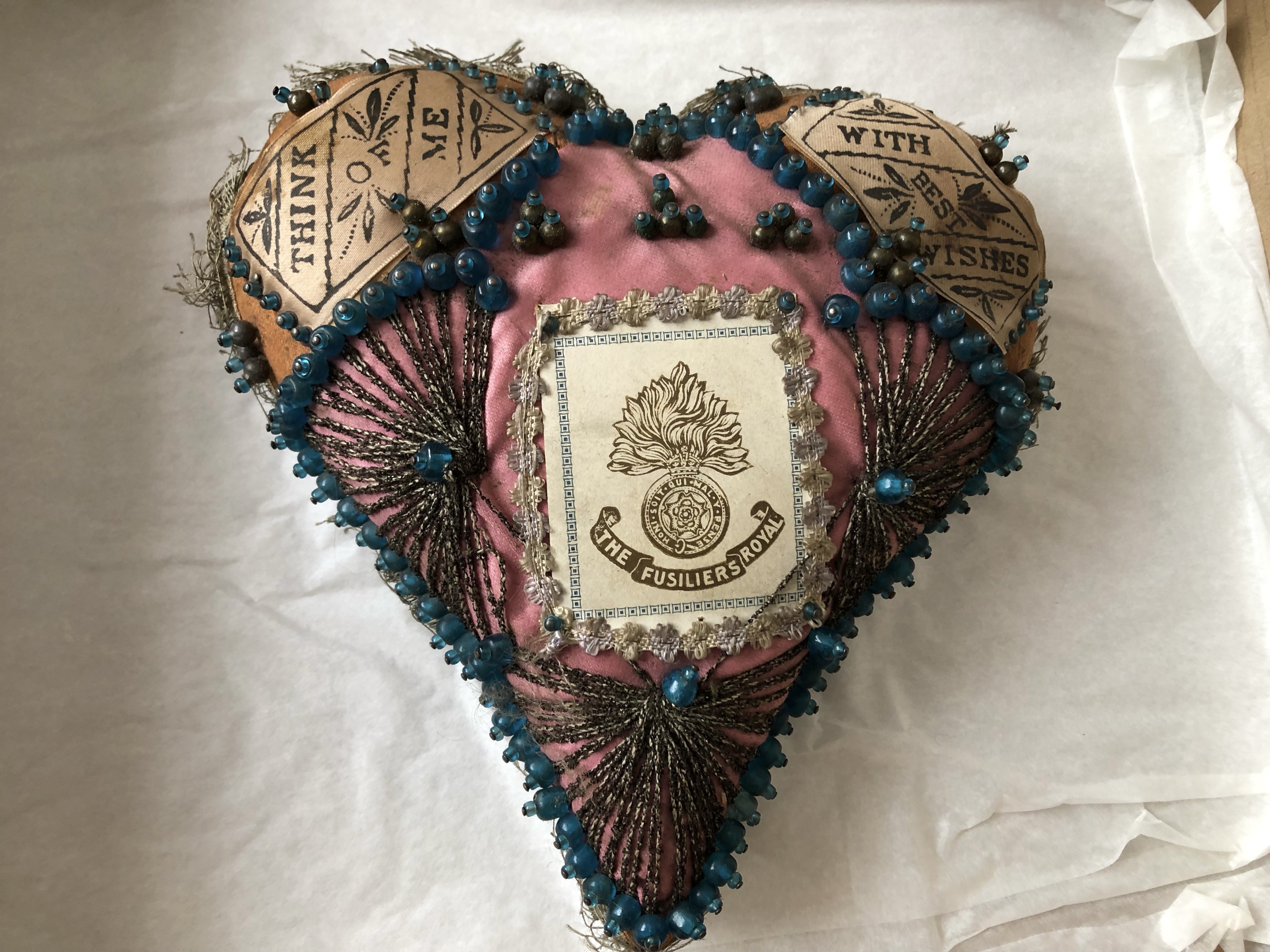
As we’ve journeyed through the remarkable collection of heirlooms, we’ve witnessed some wonderful keepsakes, but like all good stories, there’s always room for one more. The final heirloom in this collection, was sent by my very good friend, Ann Larkham. Ann has shared with me a truly beautiful sweetheart pin cushion, but alongside this treasured object comes a mystery: a soldier’s photograph.
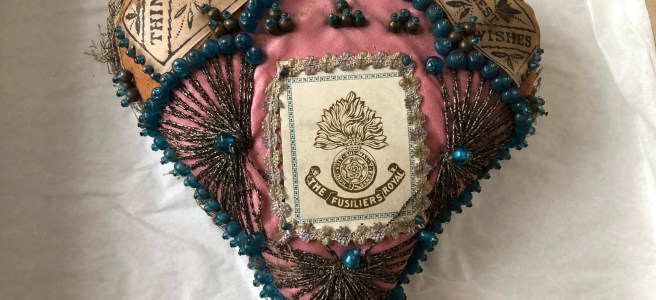
Sweetheart pin cushions were a popular craft among British soldiers during World War I, often made from materials found at the front, such as cloth from their uniforms. These handcrafted items were then sent back to wives, sweethearts, or mothers as tokens of love, affection, and remembrance. It was a way for soldiers to stay connected with their loved ones, even while separated by miles and the horrors of war. Ann’s pin cushion is a stunning example of this tradition. The piece is beautifully embroidered, and prominently displayed on its surface is the insignia of The Royal Fusiliers. This small, yet significant detail tells us not only that the soldier who made it was part of this regiment, but also that it was likely intended as a gift for someone dear to him.
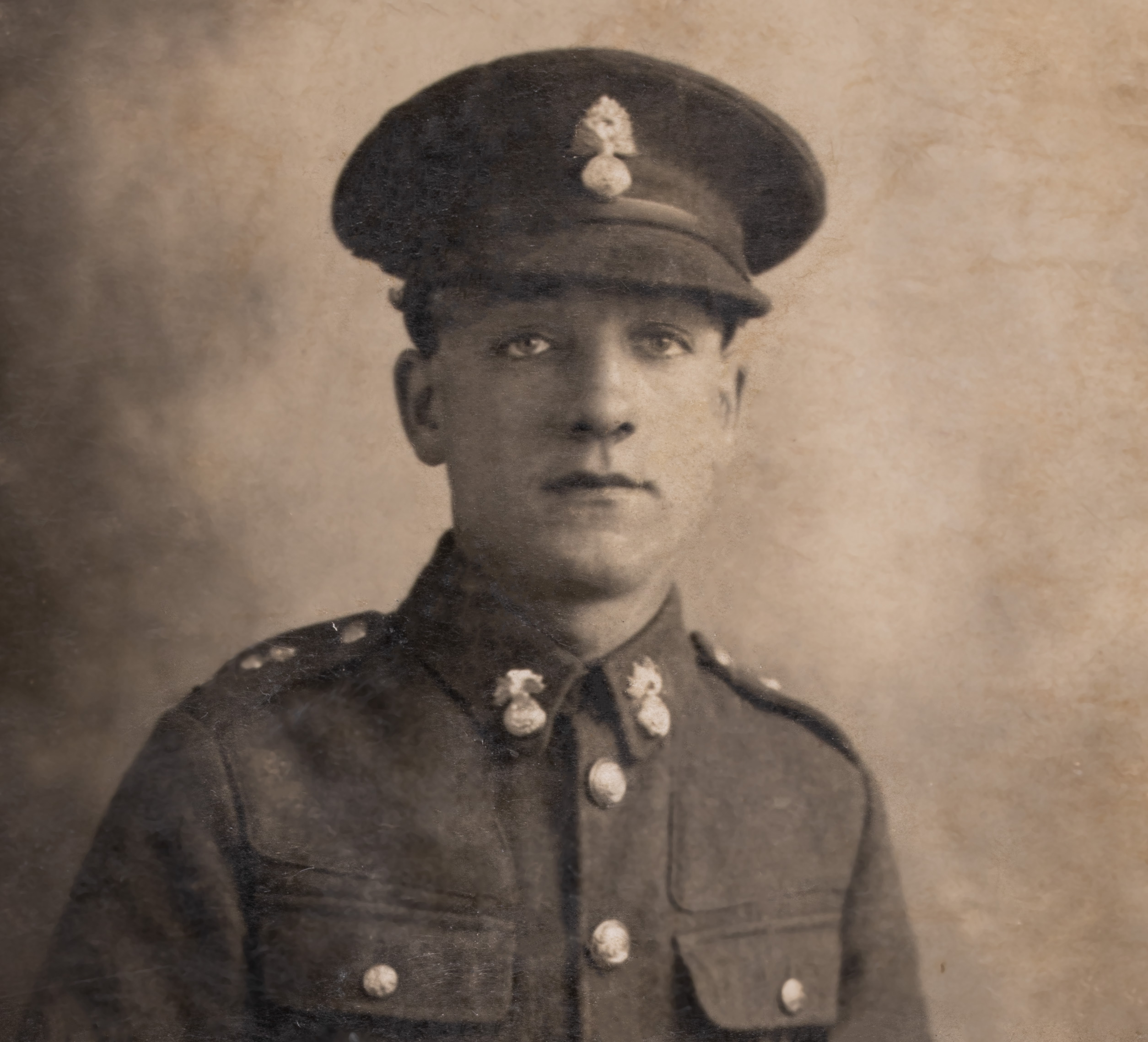
Accompanying the pin cushion is a photograph of a serving soldier of the Royal Fusiliers—a man who likely crafted the cushion with his own hands, while far from home. For Ann, the most puzzling part of this is the identity of the soldier in the photograph. While the pin cushion tells a clear story of love and service, the photograph offers no definitive clues as to who the soldier was or how he was connected to Ann’s family. This mystery has baffled Ann for some time. The soldier may have been a relative, a friend, or simply a stranger who, for a brief moment, became part of her family’s story. Yet despite hours of research, Ann has not been able to uncover the truth behind the soldier’s identity. The mystery of the soldier is an intriguing reminder of how easily stories can be lost to time. The family keepsakes we hold dear often come with deep personal meaning, but sometimes, the most precious parts of these stories remain hidden. And that is the case with this pin cushion—a beautiful, tangible link to a moment in history, yet one whose full story remains unknown.
Family heirlooms are much more than mere objects passed down through generations; they are living links to our past and those who came before us. These treasures, whether it’s a grandfather’s watch, an embroidered quilt, or a faded photograph, carry with them the memories and emotions of ancestors we may never have met, yet, through these items, we feel connected to them. Every heirloom tells a story, a deeply personal one. They capture moments in time that are so much more than just dates and facts; they help to tell the stories of those who came before us and they serve as a bridge between the past and the present.
What makes each heirloom truly special is its uniqueness. It’s not just a piece of furniture or a piece of jewellery; it’s a living testament to an individual’s life. Even the smallest items carry this significance. A simple pocket watch, passed down from father to son, doesn’t just tell the time—it marks a moment in history, a generational passage, and perhaps a rite of passage for the person receiving it. As we inherit these items, we don’t just become the custodians of history; we become part of a legacy. And when we pass these treasures on to future generations, we’re not just passing down objects—we’re sharing stories, emotions, and a connection to our ancestors. Even though many of us may never meet the ancestors who owned these items, there is something incredibly powerful about holding something that your ancestors has touched.
Family heirlooms remind us of where we’ve come from and who we are. As we grow increasingly focused on the present, these objects offer us a moment to pause, reflect, and appreciate the sacrifices and triumphs of those who have gone before us. By sharing these items and the stories behind them, we ensure that the stories of our ancestors lives are not forgotten, but passed on, for generations to come.
I spend a lot of time researching and sharing these family connections, so if this post helped you uncover part of your family story, you can support my ongoing research here:
Why not visit my new website:
All My Blogs For Family Tree Magazine in one handy place
Copyright © 2024 Paul Chiddicks | All rights reserved

 The Chiddicks Family Tree
It’s very important to retain provenance
LikeLiked by 3 people
I completely agree Sheree
LikeLiked by 2 people
These are all treasured heirlooms and the stories make them even more special. So many different types of keepsakes and yet the common thread is the emotions we feel when we see or hold each one, remembering loved ones somewhere in our family tree.
LikeLiked by 2 people
Thank you Marian the key part in all of this is telling the stories of what these wonderful heirlooms were, who they belonged to and where they came from
LikeLiked by 1 person
This a wonderful collection of treasured heirlooms. I have a very large tablecloth that my great grandmother crocheted with very fine thread. It’s stunning and means a lot to me. I just hope that the generation that comes after us has an appreciation for these family heirlooms.
LikeLiked by 2 people
I think if we share the stories of where these wonderful heirlooms came from and who they belonged to then we have a good chance of them continuing within our family
LikeLiked by 1 person
Meaningful family treasures keep us connected to our ancestors. Lovely post.
LikeLiked by 1 person
Thank you for taking the time to read my post Mary
LikeLike
Many delightful items showcased here. It’s extra special when a story goes with the item. Sad when it’s missing.
LikeLiked by 1 person
Thanks Eilene that’s why it’s so important that we share the stories behind the keepsakes
LikeLiked by 1 person
What a wonderful collection of family heirlooms! Great post! And thank you for including our precious Thomas family bible!
LikeLiked by 2 people
Thanks so much Sue! It was an absolute pleasure to include your wonderful Thomas family bible.
LikeLike
The only thing better than an heirloom is an heirloom with a story.
The ones I cherish most are the telegrams notifying them that two sons were KIA during WWII and that another had been killed in training. I’m also the keeper of the Purple Hearts for the ones killed in combat.
I have two quilts my great grandmother Laura Goff pieced by hand, but I did the hand quilting to finish them!
LikeLiked by 1 person
I would love to see some pictures of those when you get a moment Joy
LikeLiked by 1 person
https://joynealkidney.com/2019/04/05/medals-of-the-dallas-county-iowa-wilson-brothers/
https://joynealkidney.com/2020/03/23/lauras-periwinkle-quilt/
https://joynealkidney.com/2020/03/30/nine-patch-quilt-laura-jordan-goff/
LikeLiked by 1 person
Amazing I will
Have a good read of these Joy thank
You
LikeLiked by 1 person