

About Forgotten Ancestors
Every family tree holds stories lost to time — distant relatives whose lives passed quietly, leaving barely a mark, but whose experiences shaped the generations that followed. In this series, I explore the lives of those forgotten ancestors, bringing their names, stories, and voices back into the light.
“History remembers only the celebrated, genealogy remembers them all.” ~ Laurence Overmire
When you start researching your family history, you don’t expect to uncover challenging stories about your ancestors, but the truth is that the past is often marked by struggles, hardships, and difficult decisions that our ancestors had to face. Many families have stories of loss, conflict, and separation, whether brought on by war, poverty, or personal circumstances. Some ancestors may have endured discrimination, forced migration, or suffered tragic accidents, that left lasting scars on future generations. While these stories may be painful to uncover, they are an essential part of understanding where we come from. They serve as a reminder that resilience and survival are just as much a part of our family life as love and joy. The story of Henry William Chiddicks is a deeply tragic and harrowing tale and we can only hope that had the incident occurred today, the outcome would have been significantly different.
A Life Shaped by Industry and Hardship
Henry William Chiddicks was born on February 27, 1884, in Barking, Essex, one of eight children of Samuel and Elizabeth Chiddicks (née Johnson). His early years were spent in a bustling household, alongside his siblings, with his father having also fathered eight children in a previous marriage to Harriett Chiddicks (née Burt). The Chiddicks family home, located at 21 Back Lane, would have been cramped and bustling, yet full of life. It’s hard to imagine how such a large family could live in such a small terraced house. The pictures below provide a glimpse into what Back Lane looked like when the Chiddicks family called it home.
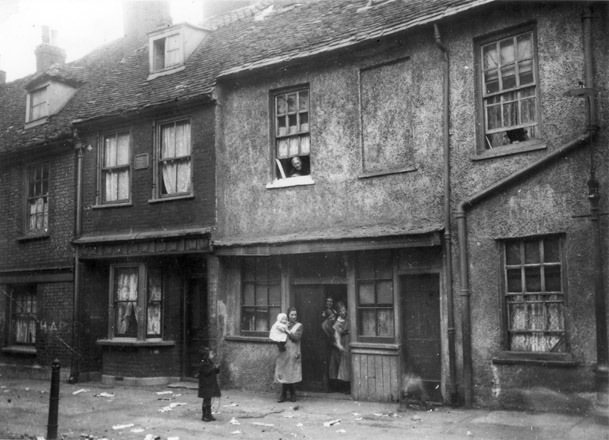
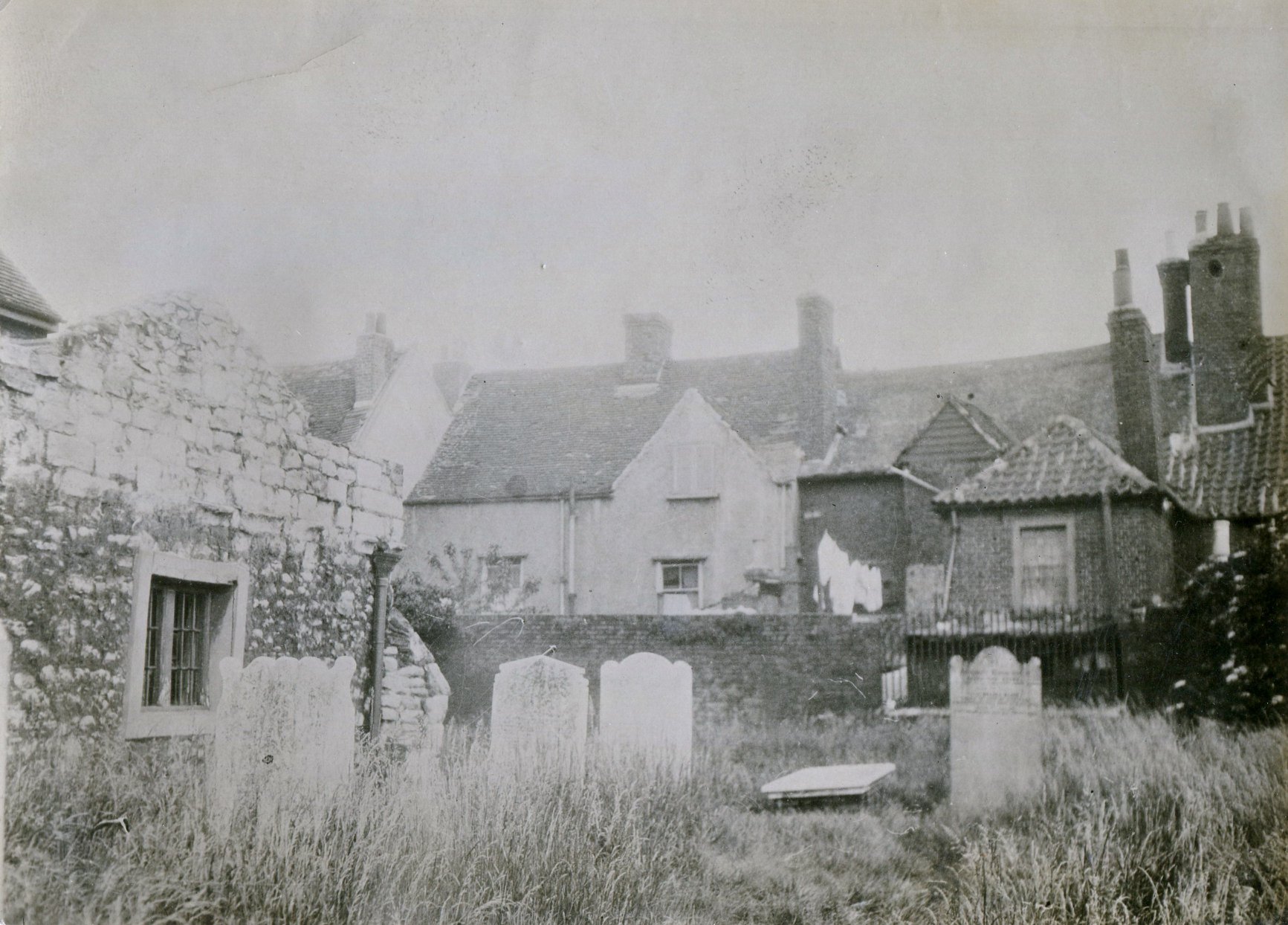
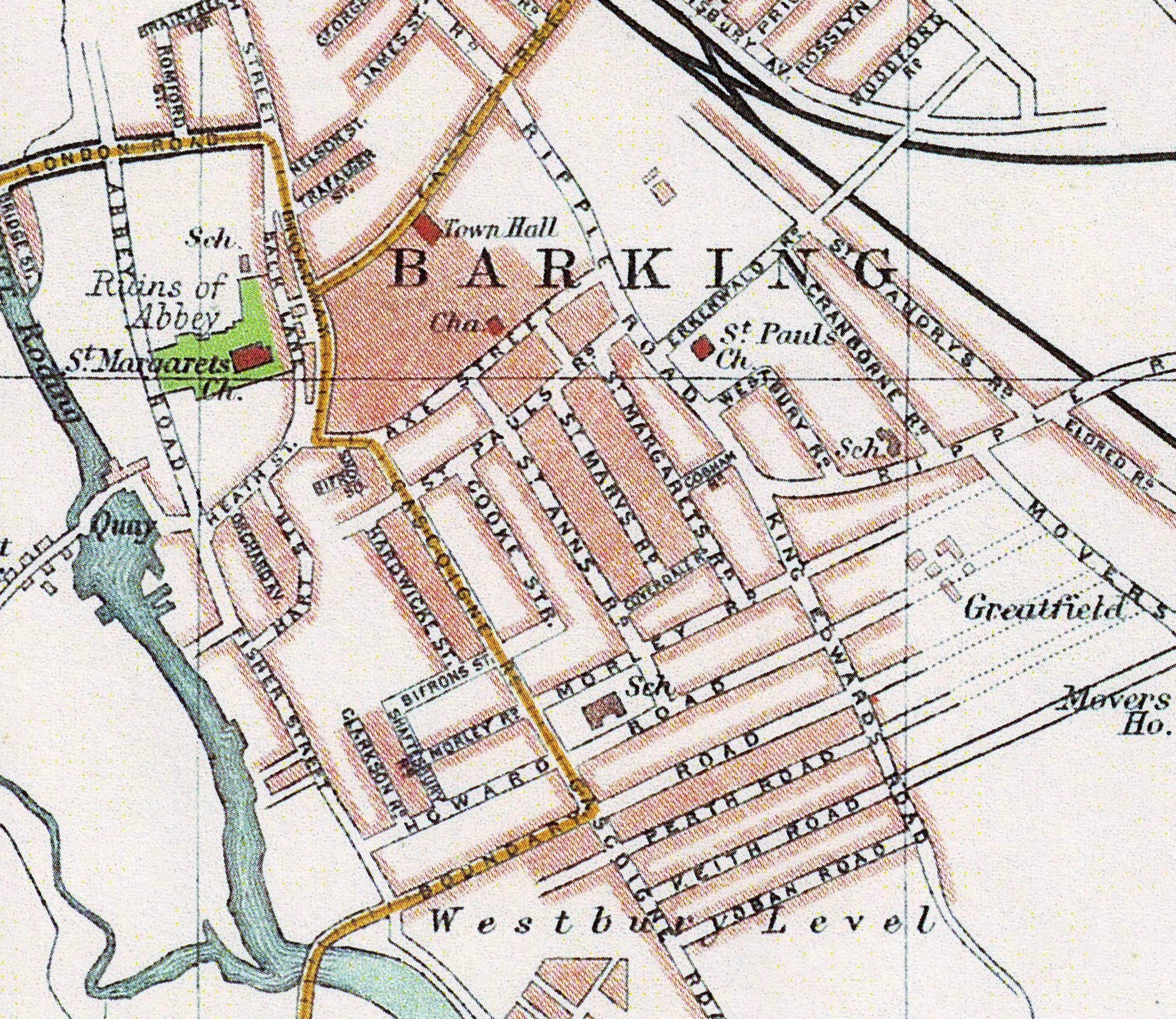
(Pictures of Back Lane Courtesy of the Barking and District Historical Society)
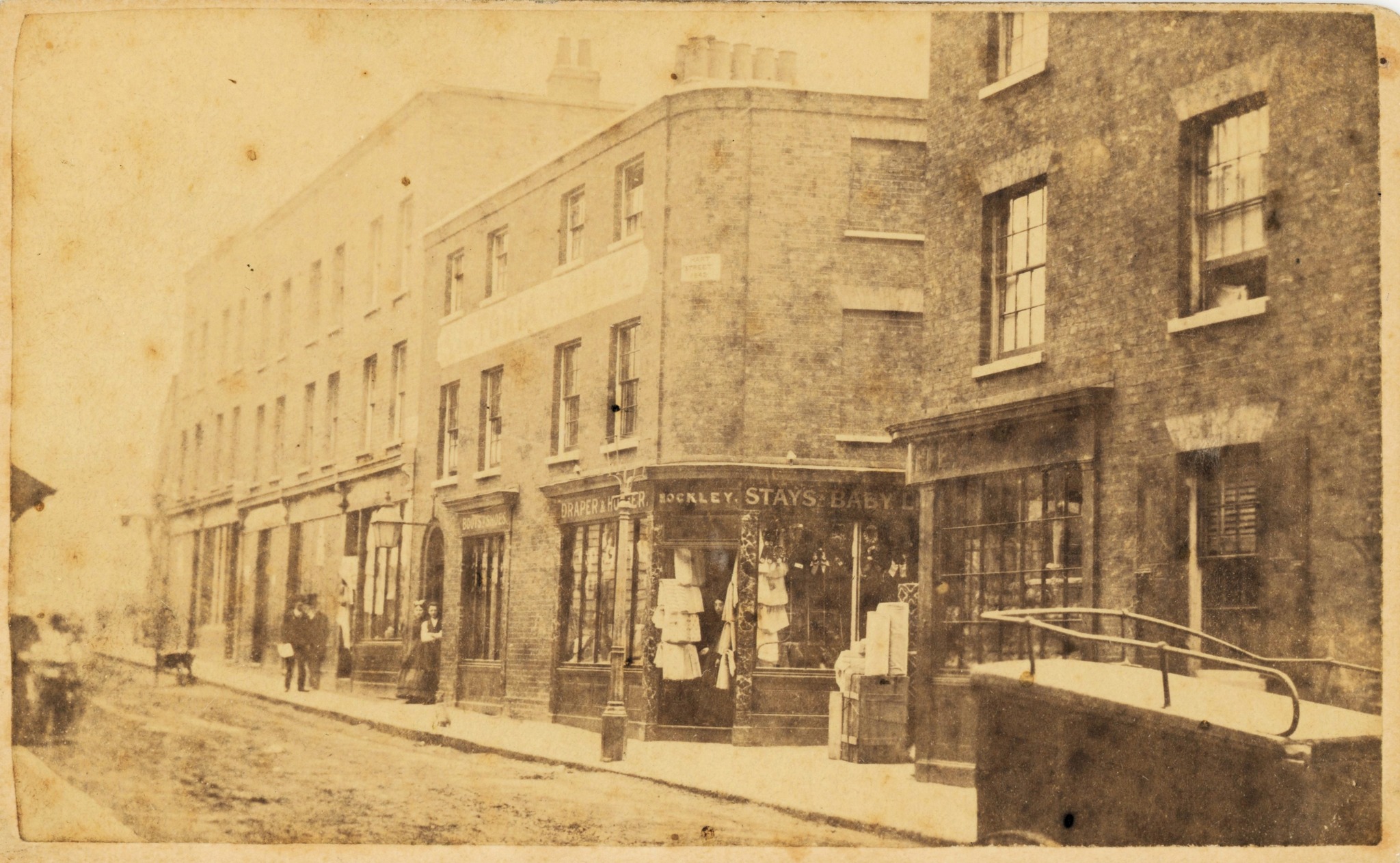
The Chiddicks family had originally migrated from a small hamlet called South Fambridge in Essex to South Ockendon, where the majority of the men worked as farm labourers. Sometime in the late 1870s, Samuel Chiddicks decided to leave South Ockendon and relocate to Barking, likely in search of better job opportunities. Barking was, at the time, a rapidly growing and congested area, shaped by the pressures of the Industrial Revolution. The family’s move to the area mirrored the transformation that was taking place throughout the East End of London, where factories, docks, and gas works dominated the skyline.
Samuel secured employment at the Beckton Gas Works, where he worked for many years. Beckton, located in East London, was a densely populated and impoverished area, shaped by the industrial boom. Unfortunately, shortly after moving, tragedy struck, and Samuel’s first wife, Harriett Burt, passed away on 10th November 1878. With a large family to care for and plenty of mouths to feed, Samuel remarried two years later. On 15 February 1880, he wed Elizabeth Johnson, a lifelong resident of Barking, at The Barking Parish Church.
The Grueling Reality of Industrial Labor
The industrial era in London was not kind to the working class. As Samuel and Henry found out, the work was gruelling, the conditions harsh, and the pay meagre. By 1911, both Henry and his younger brother Alfred were employed at the local Chemical Works, and their father, Samuel, still working well into his seventies, continued his labour at the Beckton Gas Works.
Beckton itself had grown into a sprawling industrial area dominated by coal-powered industries. The toxic fumes from chemical works, bitumen producers, and gas works turned the air heavy with soot and oil, while the noise from factories and the docks made the area feel almost claustrophobic. Henry’s work at the Chemical Works and his father’s long shifts at the Beckton Gas Works were emblematic of the many sacrifices working-class families made to ensure their survival.
Jobs in such factories were grueling and often dangerous. With limited safety regulations, workers were subjected to harsh, physically demanding labor. Long hours, low pay, and exposure to hazardous conditions were the reality for men like Henry, whose lives were consumed by their work in this expanding industrial complex.
The Tragic End
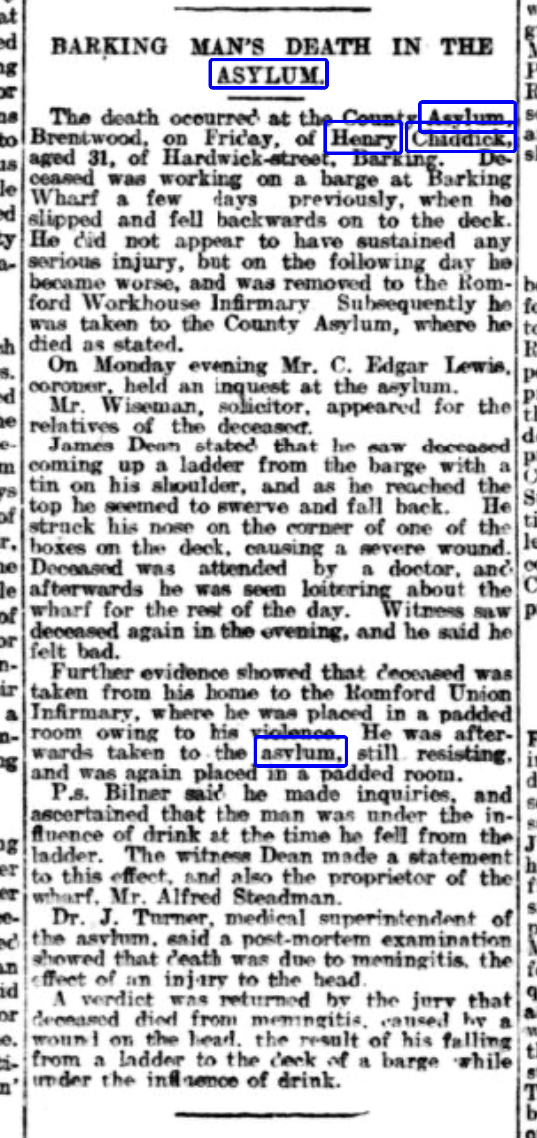
Like so many of our ancestors, Henry Chiddicks left behind only a small footprint in the official records—a modest paper trail that scarcely reflects the full measure of his life. Yet, despite this limited documentation, it’s clear that his role within his large family and his local community must have been both significant and deeply felt. The next mention I was able to find of Henry, heartbreakingly, came in the form of a newspaper article: a harrowing report detailing his untimely death, published in the Essex Times on 23 October 1915.
BARKING MAN’S DEATH IN THE ASYLUM.
The death occurred at the County Asylum on Friday of Henry Chiddick aged 31, of Hardwick Street, Barking. Deceased was working on a barge at Barking Wharf a few days previously, when he slipped and fell backwards onto the deck. He did not appear to have sustained any serious injury, but on the following day, he became worse and was removed to the Romford Workhouse Infirmary. Subsequently he was taken to the County Asylum, where he died as stated. On Monday evening Mr. C. Edgar Lewis, Coroner, held an inquest at the asylum. Mr. Wiseman, solicitor, appeared for the relatives of the deceased. James Dean stated that he saw deceased coming up a ladder from the barge with a tin on his shoulder, and as he reached the top he seemed to swerve and fall back. He struck his nose on the corner of one of the boxes on the deck, causing a severe wound. Deceased was attended by a Doctor, and afterwards, he was seen loitering about the wharf for the rest of the day. Witness saw deceased again in the evening, and he said he felt bad. Further evidence showed that deceased was taken from his home to the Romford Union Infirmary, where he was placed in a padded room owing to his violence. He was afterwards taken to the asylum, still resisting, and was again placed in a padded room. PC. Bilner said he made inquiries and ascertained that the man was under the influence of drink at the time he fell from the ladder. The witness Dean made a statement to this effect, and also the proprietor of the wharf, Mr. Alfred Steadman.
Dr. J. Turner, medical superintendent of the asylum, said a post-mortem examination showed that death was due to meningitis, the effect of an injury to the head. A verdict was returned by the jury that deceased died from meningitis, caused by a wound on the head, the result of his falling from a ladder to the deck of a barge while under the influence of drink.
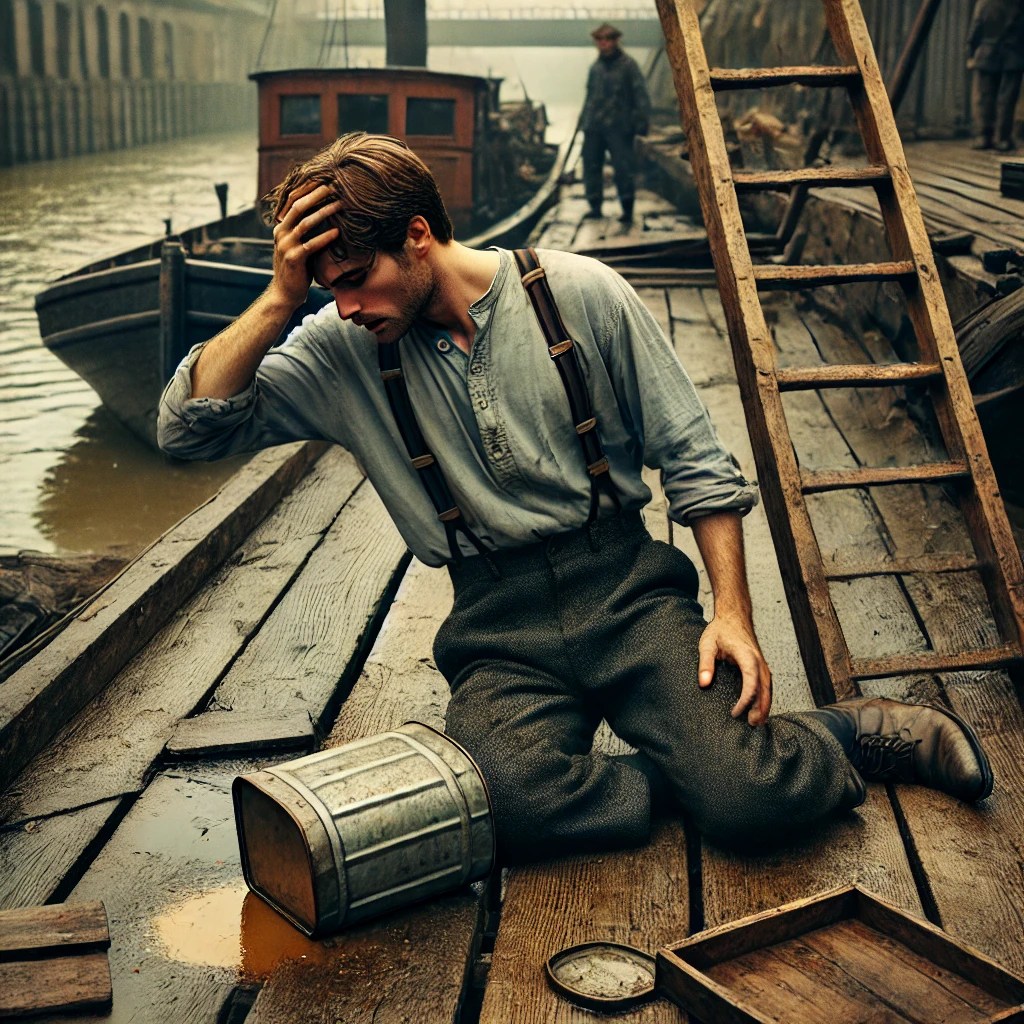
(Image created by AI via ChatGPT)
This newspaper article, although very thorough, doesn’t really go into the full range of symptoms or specifics of what Henry may have experienced after hitting his head and developing meningitis. From my conversation with Clare Kirk, I understand that post-traumatic meningitis can lead to symptoms such as clumsiness and behavioural changes, which are consistent with the witness testimonies. Therefore, it’s quite possible that Henry’s symptoms led the witnesses to assume that he was intoxicated or violent, when in reality, those behaviours were likely a result of his illness, rather than any drunkenness. Of course, this is all purely speculative.
Henry’s story is, unfortunately, not uncommon. Many working-class individuals of his time faced tragic and untimely deaths as a result of accidents at work, dangerous living conditions, and inadequate medical care. What makes Henry’s story particularly poignant is how it reflects not only the fragility of life but also the resilience of those who endured such hardship.
Though Henry was taken too soon, it’s clear that his legacy lives on, not just through the genealogical records but through the countless other lives touched by his story. In a time when families were stretched thin and life was often defined by struggle, Henry’s family would have had no choice but to carry on, much like generations before and after them.
A Tragic Parallel
What adds another layer of sorrow to Henry’s story is the echo of a similar tragedy within his family. Elizabeth Chiddicks, his first cousin, also met a tragic end after falling from a height. While Henry’s death was likely due to the unfortunate accident at work, Elizabeth’s death remains a mystery — did she fall, or was it something more sinister? Both stories leave us with questions that remain unanswered.
You can read Elizabeth’s story here;
Was She Pushed? Did She Jump? Or Did She Fall?
A Forgotten Ancestor Remembered
Henry William Chiddicks was buried at Rippleside Cemetery on October 22, 1915, leaving behind family, friends, and loved ones who would have been devastated by the loss. His passing at such a young age, under such tragic circumstances, is a reminder of how quickly life can change.
As we reflect on his story, we’re reminded of the challenges our ancestors faced and the resilience they displayed in the face of hardship. While we may never have known them personally, their lives continue to shape us in ways we may never fully understand.
Though his time was cut short, Henry will never be forgotten. His story serves as a poignant reminder of the fragility of life, the importance of remembering those who came before us, and the incredible resilience that carried them through the hardships of their time.
In Memory of Henry William Chiddicks (1884–1915)
You were here. You are remembered.
Have you found a ‘forgotten ancestor’ in your own tree? If so I would love to hear their story.
I spend a lot of time researching and sharing these family connections, so if this post helped you uncover part of your family story, you can support my ongoing research here:

(Note: The header image is an AI generated image via ChatGPT)
Why not visit my new website:
All My Blogs For Family Tree Magazine in one handy place
Copyright © 2025 Paul Chiddicks | All rights reserved

 The Chiddicks Family Tree
What a sad story – thank goodness for genealogists to document these lives. I have been researching and writing about my great grandmother’s lives. Having completed the lives of two Irish great grandmothers, I am now working on one of my English great grandmothers.
LikeLiked by 1 person
I think its so important that we remember every one of our ancestors, they are all equally as important. It’s our duty to be their voice.
LikeLike
Such a tragic end to this man’s story. You are honoring his memory by chronicling his life in as much detail and context as possible.
LikeLiked by 1 person
Thanks Marian a man cut down in his prime, but he will be forever remembered now
LikeLike
I am especially cognizant of those who died without leaving descendants (as I will be one of those someday). This was a moving story of a life lost to soon, and in the harshest of living conditions. Hard to imagine the early industrial life.
LikeLiked by 1 person
Thank you Eilene as somebody that worked in a similar industry all my life I have to be grateful for health and safety law which made my workplace a much safer environment
LikeLiked by 1 person
Paul, I remember you posting about this tragic accident in social media. It made me appalled that he had been locked up after suffering a serious head injury.
I think it’s an excellent idea to honour your ancestors whose lives were cut short by writing about them in this way.
I appreciate you mentioning me, although I’m no expert! I think when I saw your post I had recently read about different types of meningitis because my 2x great grand uncle died of tubercular meningitis just after his second birthday.
LikeLiked by 1 person
It’s always good to talk to others and share experiences and knowledge with each other and your insight was absolutely invaluable to the story. He will be forever be remembered now.
LikeLike