
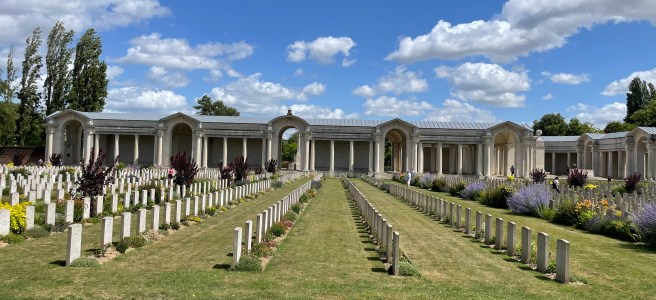
The land is silent now, peace prevails where once there was chaos. There was a time when the earth here was ripped apart by bombs and tanks, when men were torn apart by machine guns, shrapnel, bayonets and barbed wire. Today, crops and trees grow once more on soil that was once barren, a landscape pitted by trenches and churned by the ceaseless machinery of war. Armies once gained ground by yards here, halted again and again by rain, mud and misery.

To walk these fields in the summer of 2025 was to step into a place where history feels impossibly close. Visiting the battlefield sites of the Great War is a sobering experience in itself; to finally stand in the places that had long been only words on a map or names in a family story is something altogether different. The photographs, the books, the films, none of them prepare you for the sheer, numbing scale of what happened here. Nothing prepares you for the realisation that these quiet lanes and peaceful farmlands once witnessed unimaginable devastation and loss.
Everywhere in France and Flanders, reminders of the fallen cling gently to the landscape: cemeteries, memorials, statues, and plaques marking the names of the millions who never returned home. Each is a testament to sacrifice, each carries its own silence.
The Somme
The Somme has a gravity that is hard to put into words. The battle began on a warm July morning in 1916 and dragged on until snow fell nearly five months later. In that span, the British Army endured its blackest day, 57,000 casualties on 1 July alone, yet the Somme also marked a turning point: new tactics, the first use of tanks, and a grinding realisation that the war would not be won quickly.
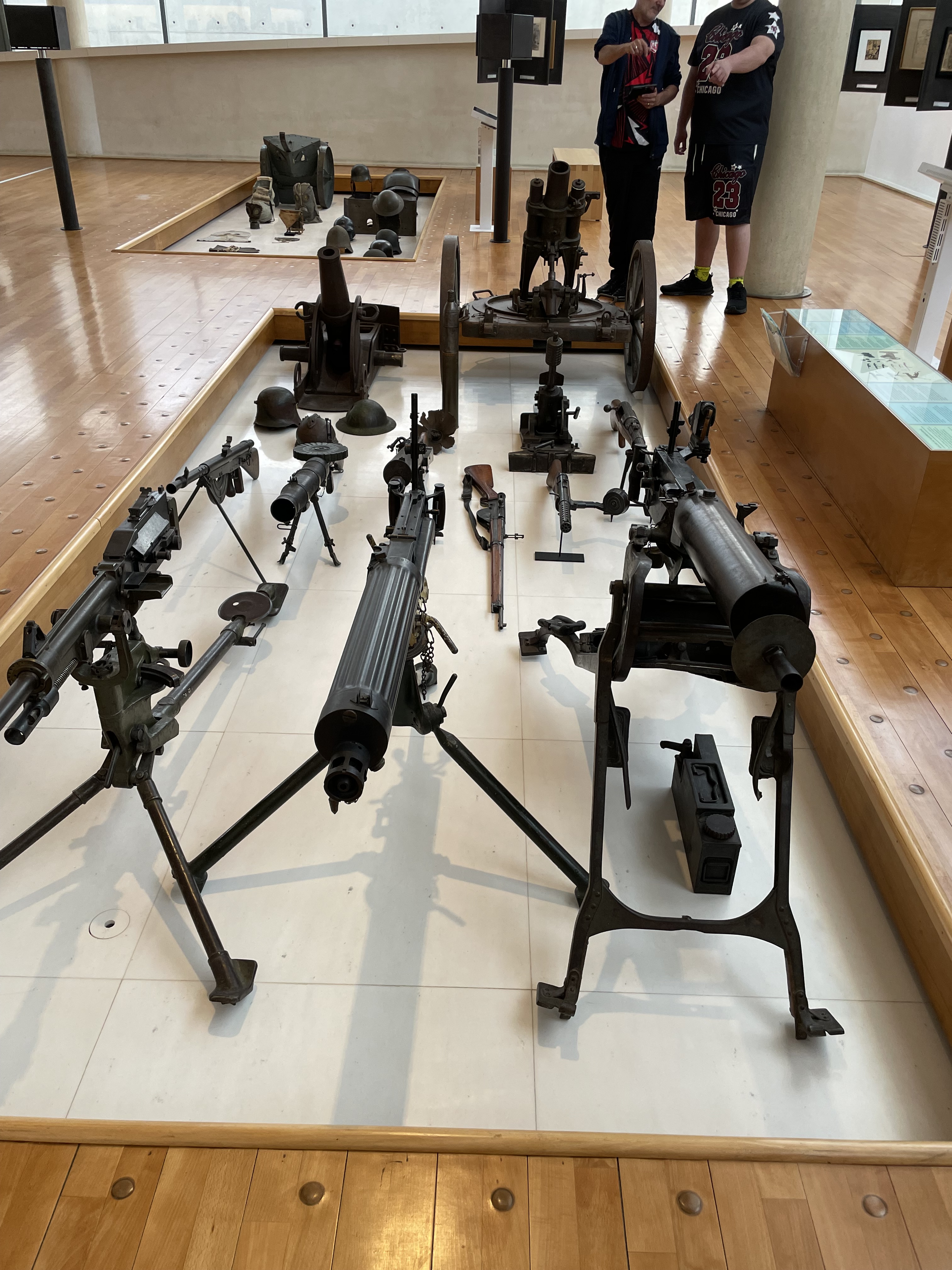
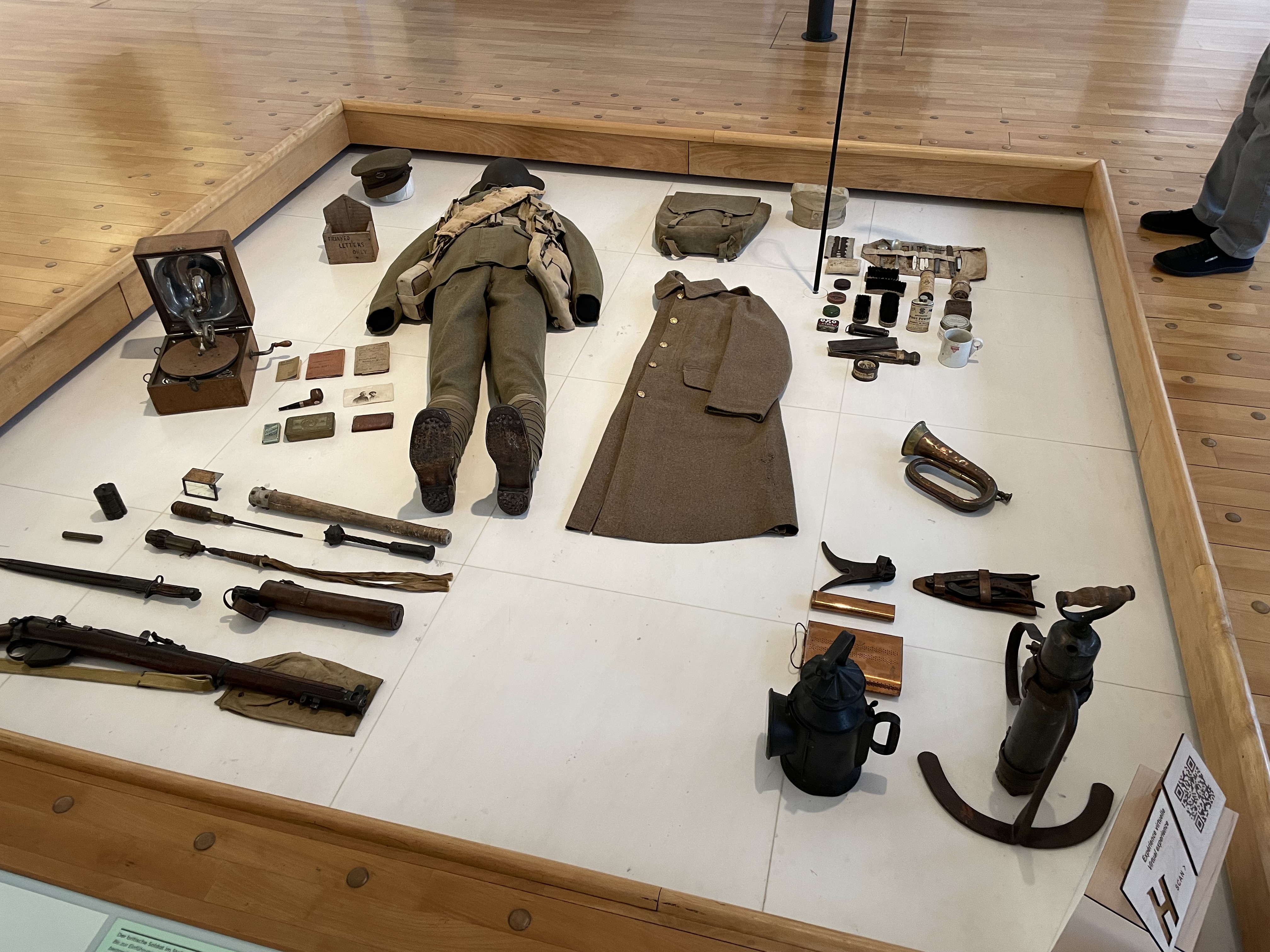
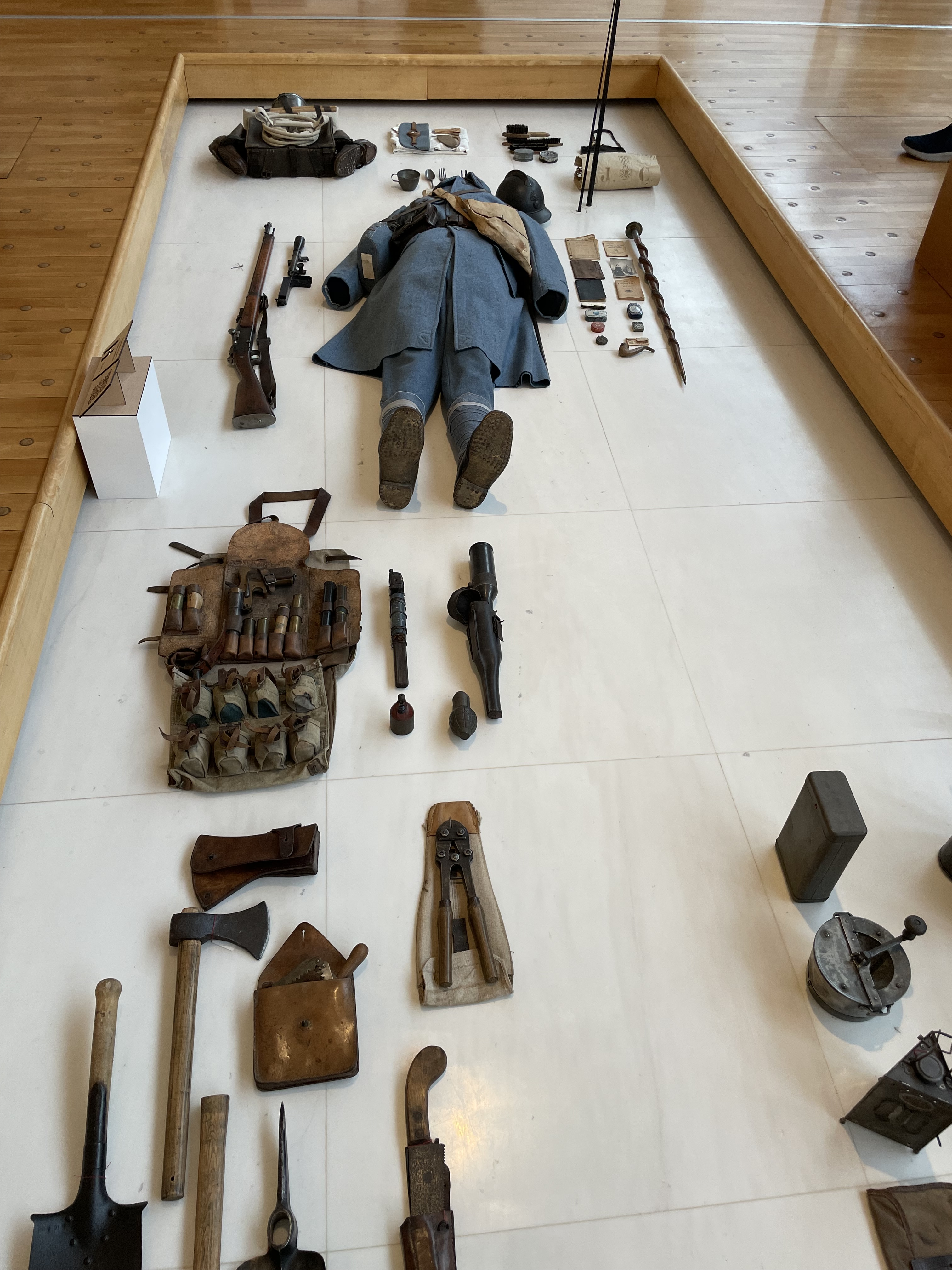
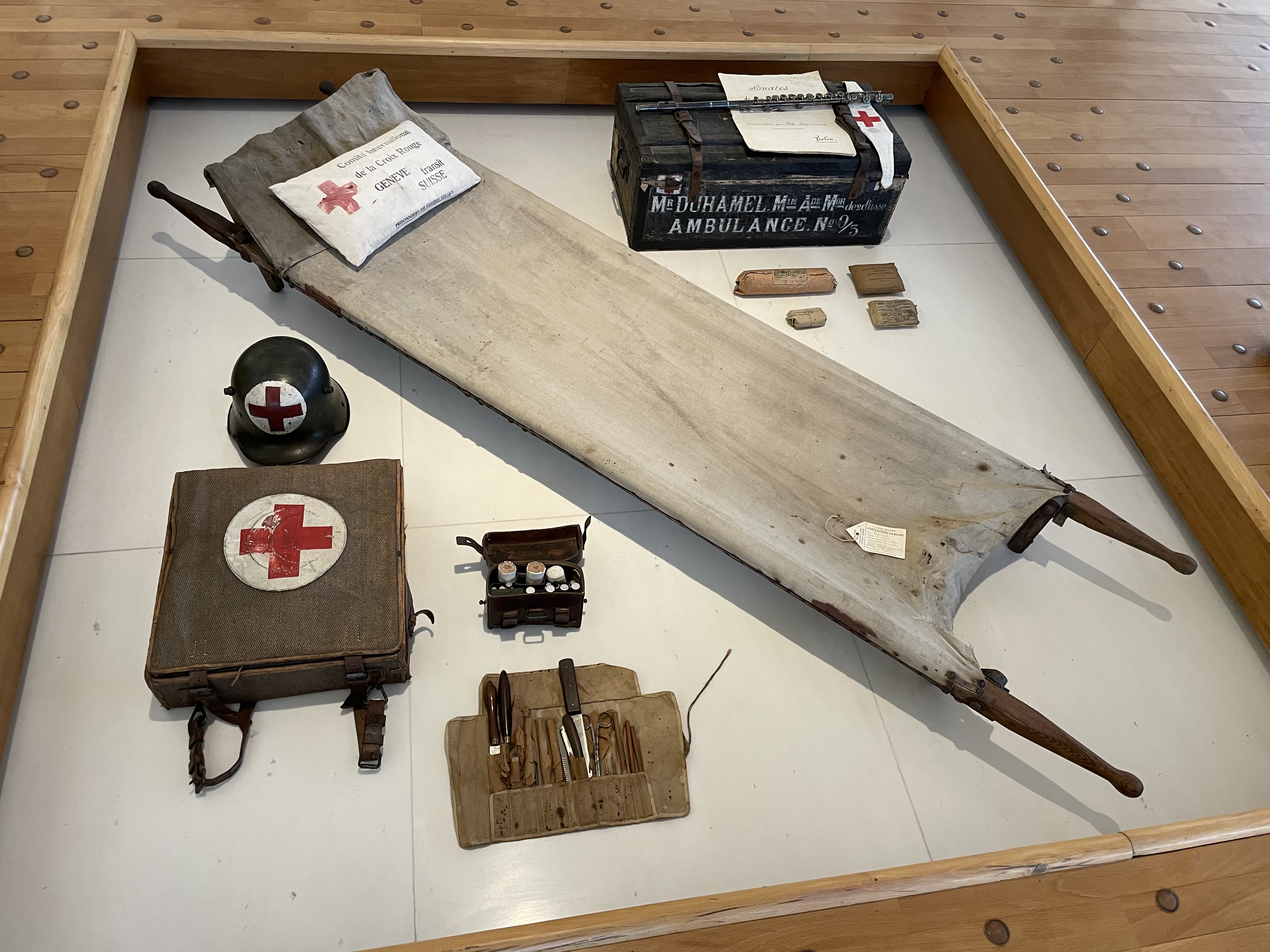
We began the first day of our tour by exploring the exceptional Historial de la Grande Guerre. Its exhibits provided context not only for the Somme but for everything we would see in the days ahead, stories of soldiers, civilians, and the colossal forces that shaped the war.
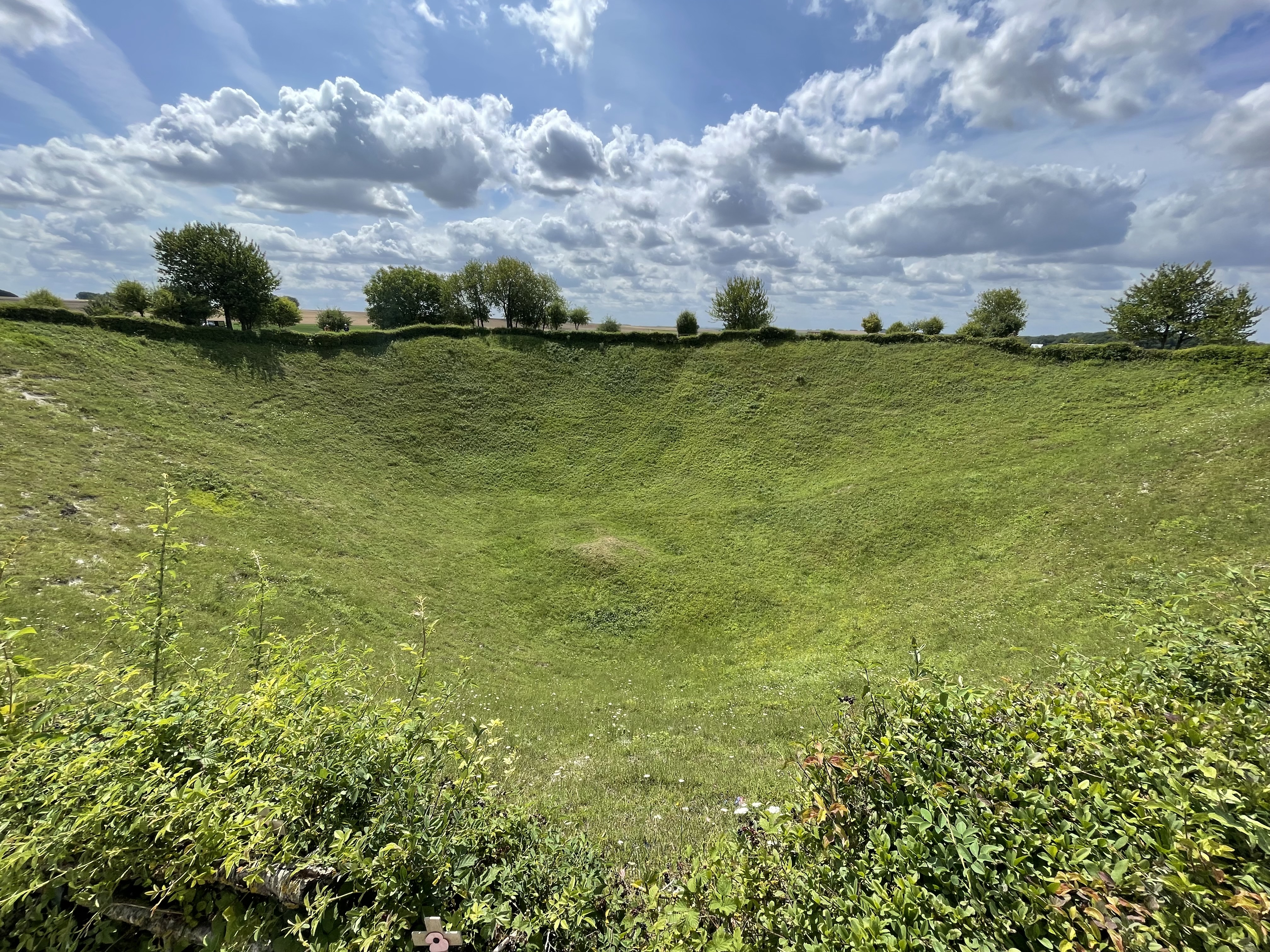
From there, we travelled to La Boisselle to stand at the edge of the Lochnagar Mine Crater, the largest surviving British mine crater on the Western Front. It’s a place you read about in history books, but nothing quite prepares you for seeing it in person. The explosion that created it, set off at 7:28 a.m. on the first day of the Battle of the Somme, was intended to shatter the German defences before the infantry advanced. Today, the crater remains as an enormous, silent wound in the earth, its scale almost defying belief. Standing on its rim, it’s impossible not to feel the weight of what happened here, more than a century later.
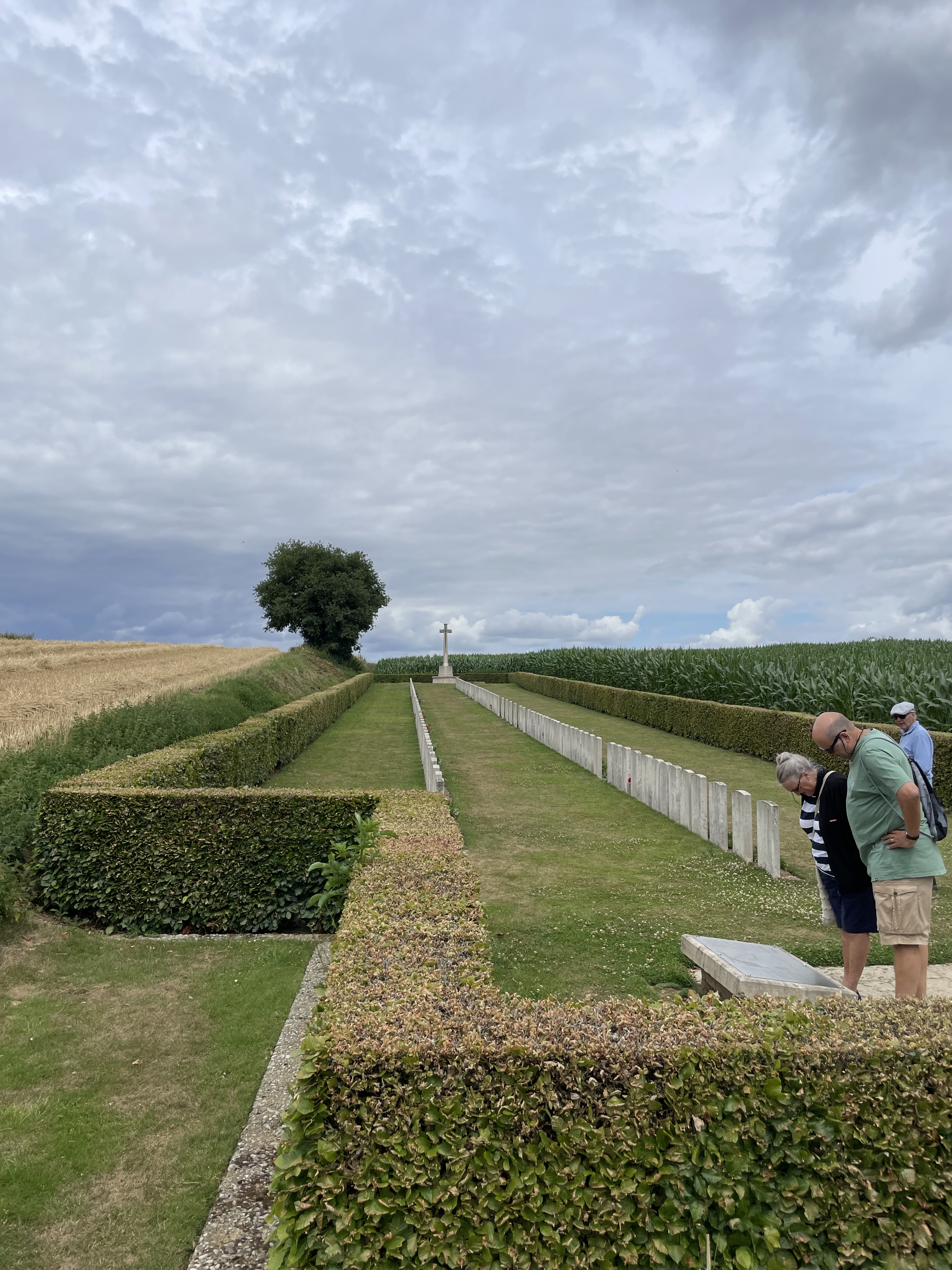
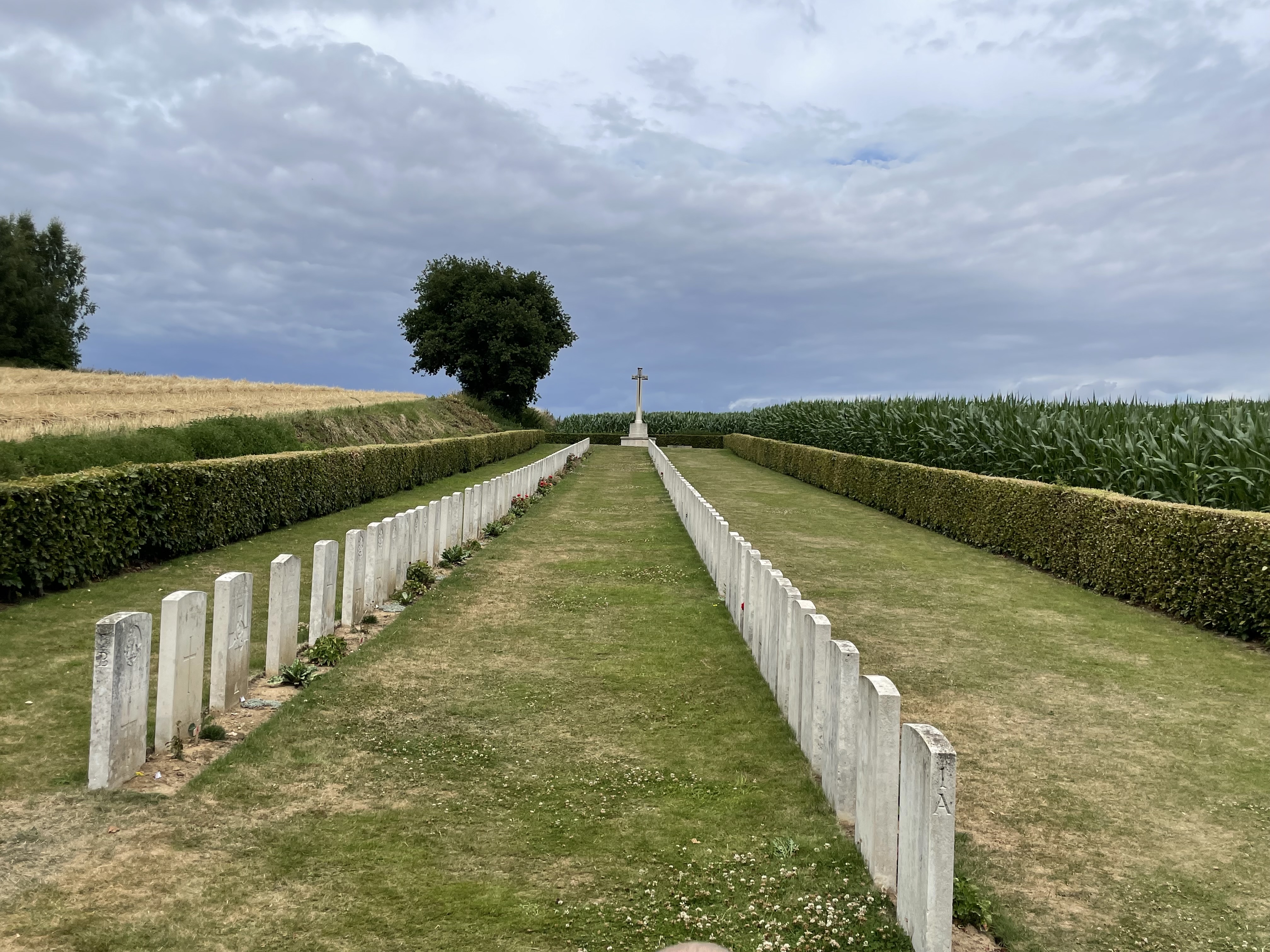
As we walked through Beaumont-Hamel British Cemetery, the scale of loss became impossible to ignore. Beneath the gentle sweep of the landscape lie the men who fell here during the Battle of the Somme, soldiers from regiments across Britain and the Commonwealth, many of them killed on that catastrophic first day, 1 July 1916. Some headstones carry names and ages; many others are marked simply “A Soldier of the Great War”, their identities lost to the chaos of the battlefield. Standing among them, reading the regiments etched in stone, Lancashire Fusiliers, Royal Warwickshire, Highland battalions, Irish and Canadian units, you feel the weight of the stories that ended here. It’s a quiet place, but one that speaks powerfully of sacrifice, courage, and the enduring need to remember.
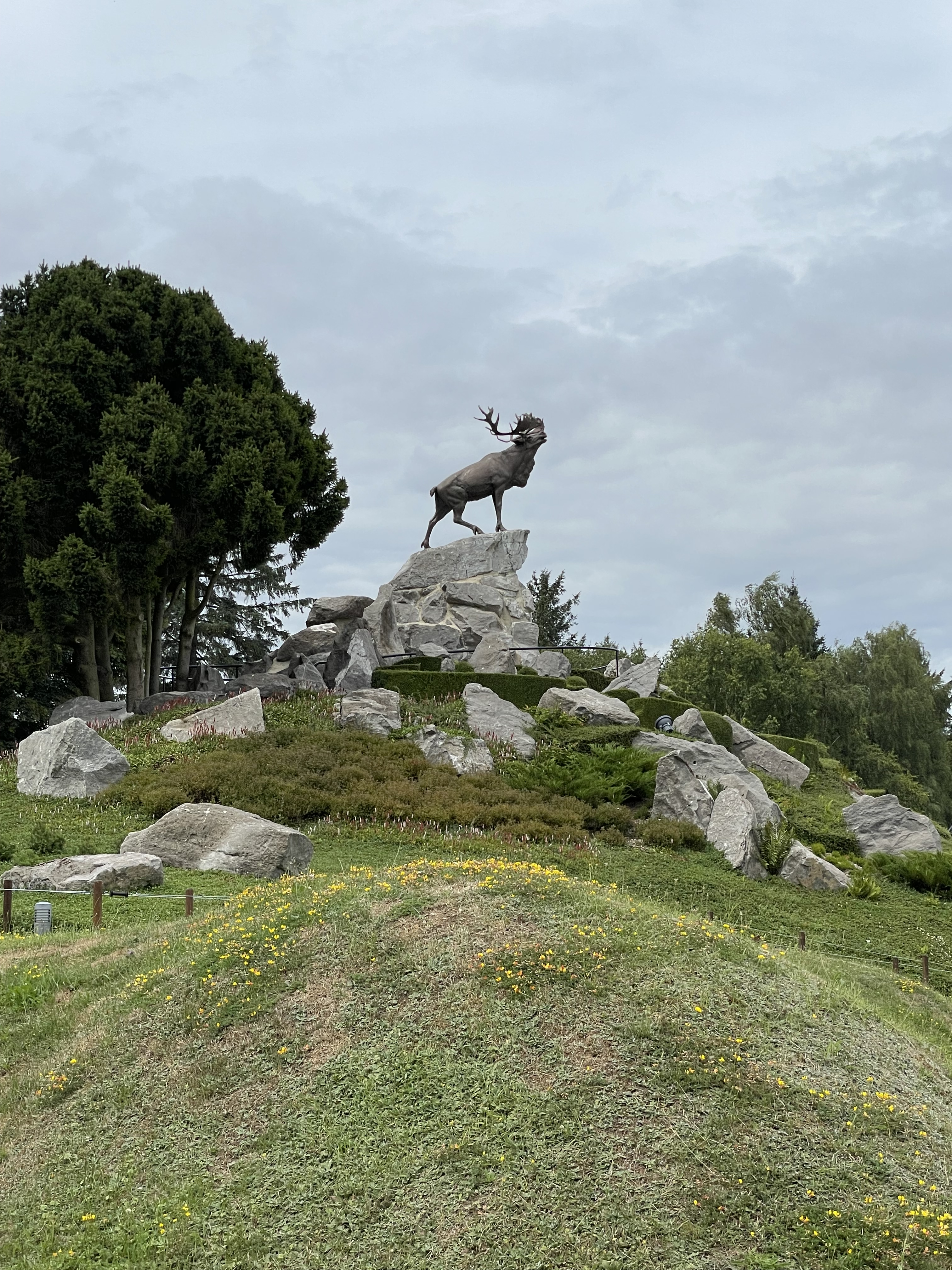
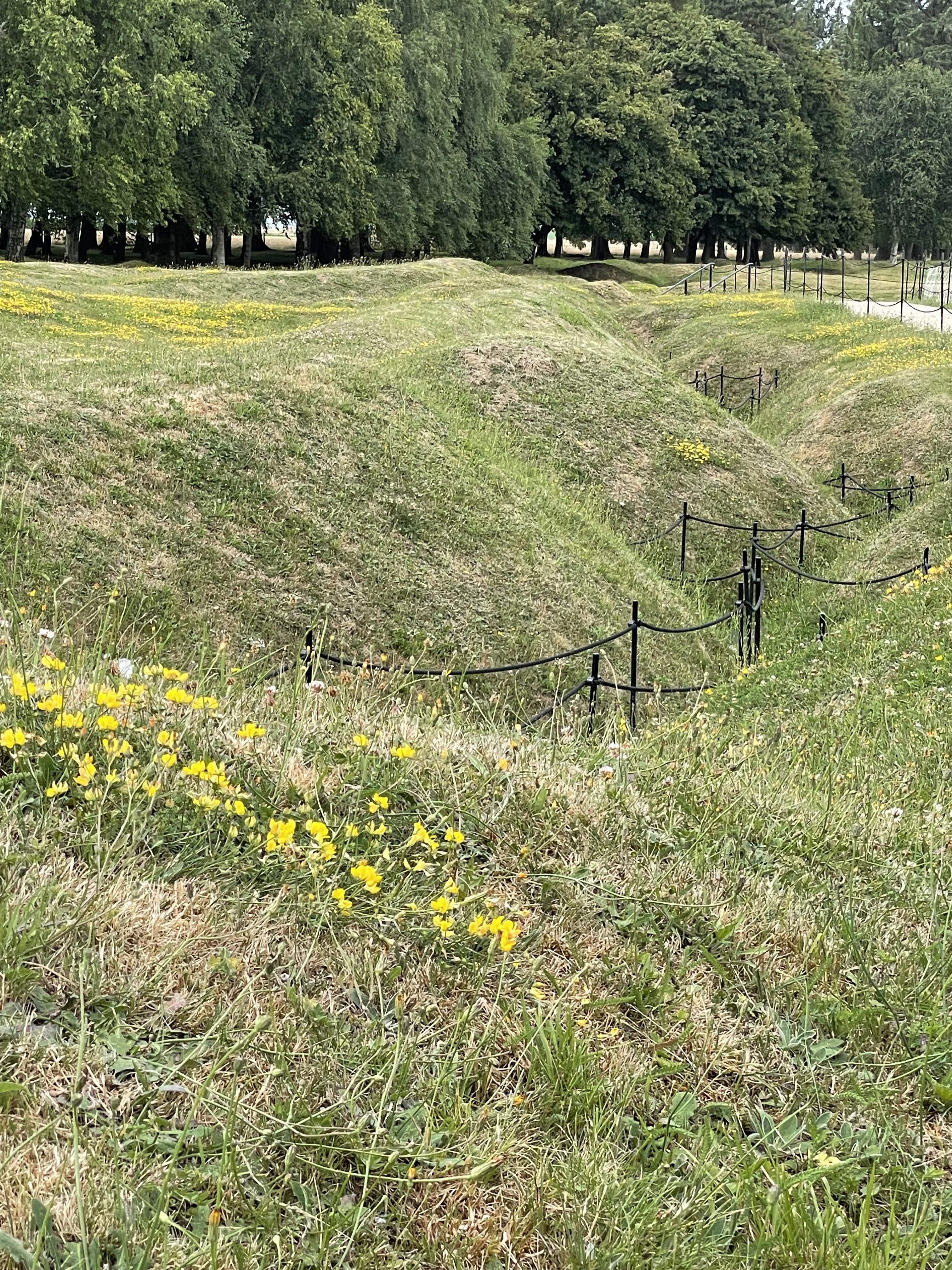
At the Newfoundland Memorial Park, the past rises almost physically from the ground. The preserved trench lines, still visible after more than a century, wind across the landscape like scars. Here, on the first day of the Battle of the Somme, the Newfoundland Regiment was almost completely wiped out. Today, the statue of the great caribou stands proudly atop its granite mound, gazing out across the battlefield where so many of its soldiers fell. Standing beneath it, you cannot help but feel the deep grief of that day and the astonishing courage.
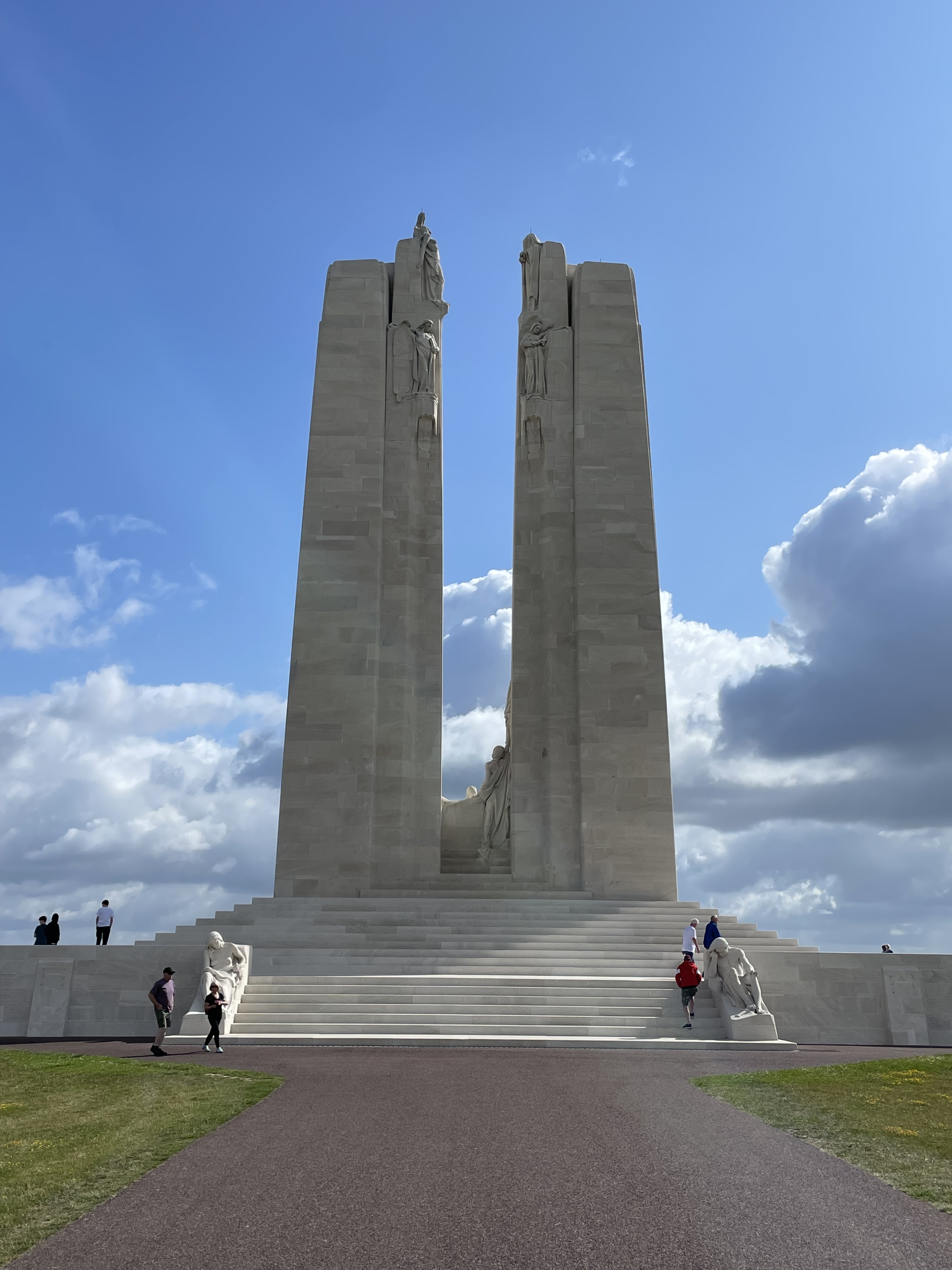
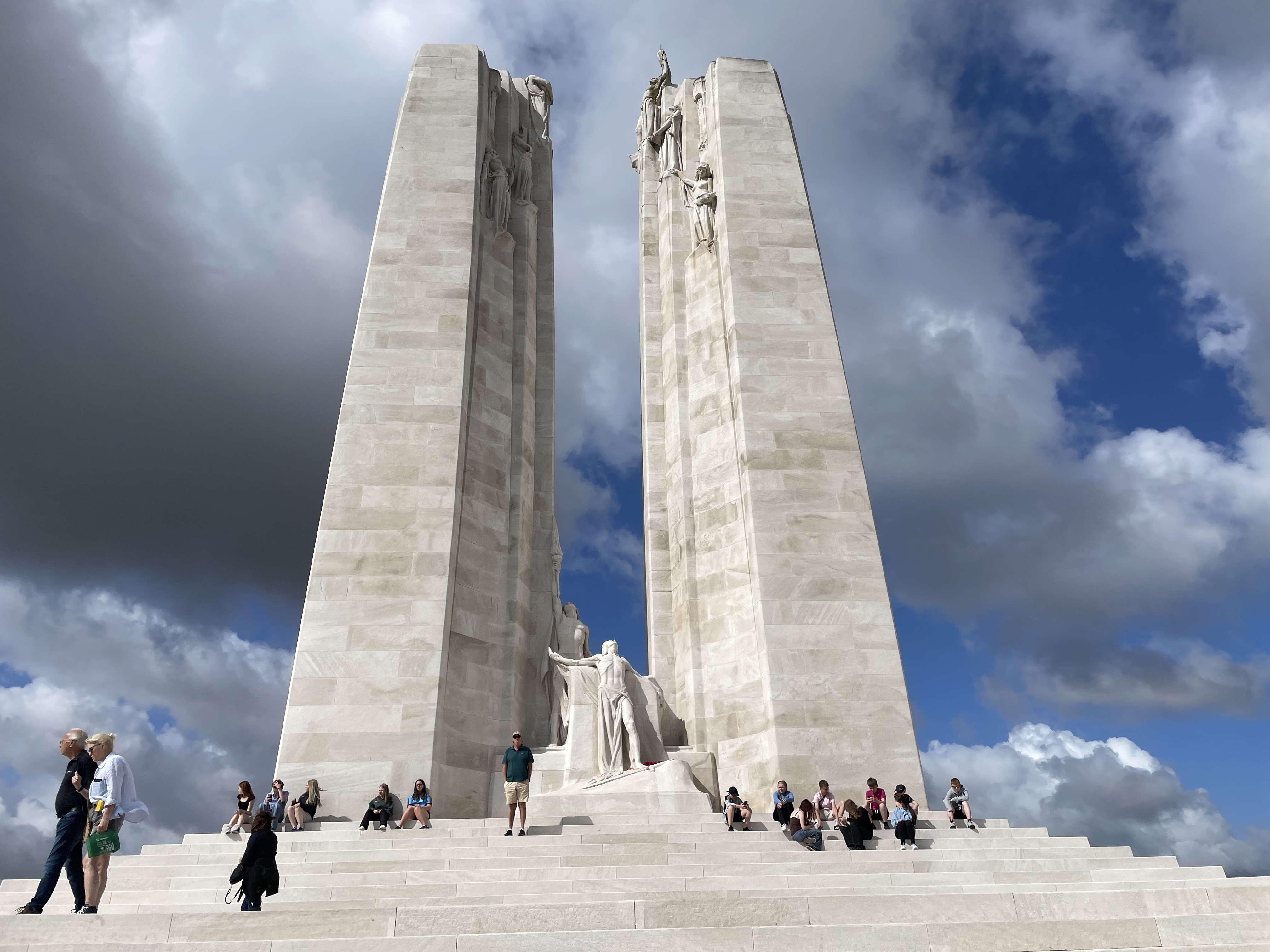
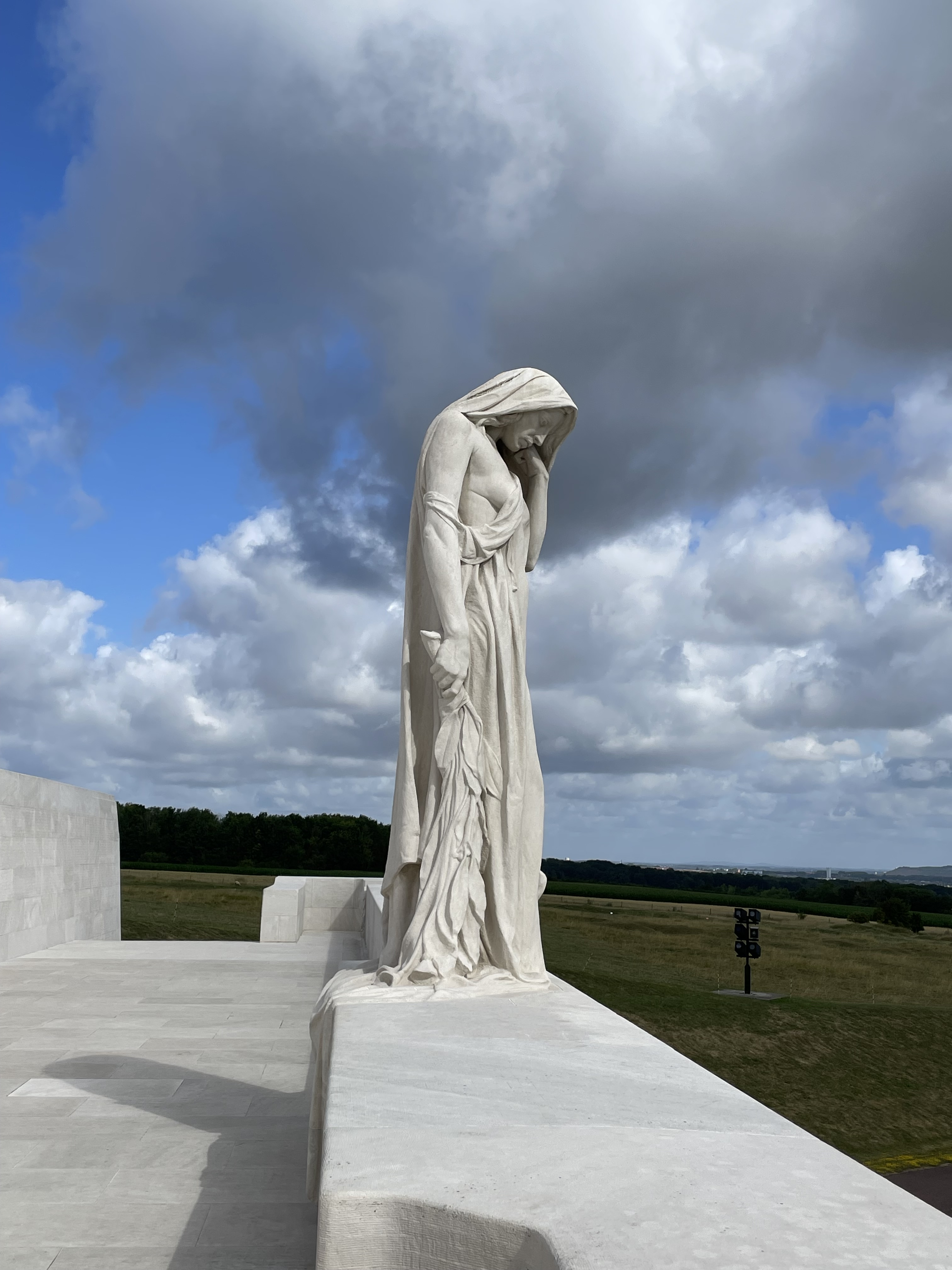
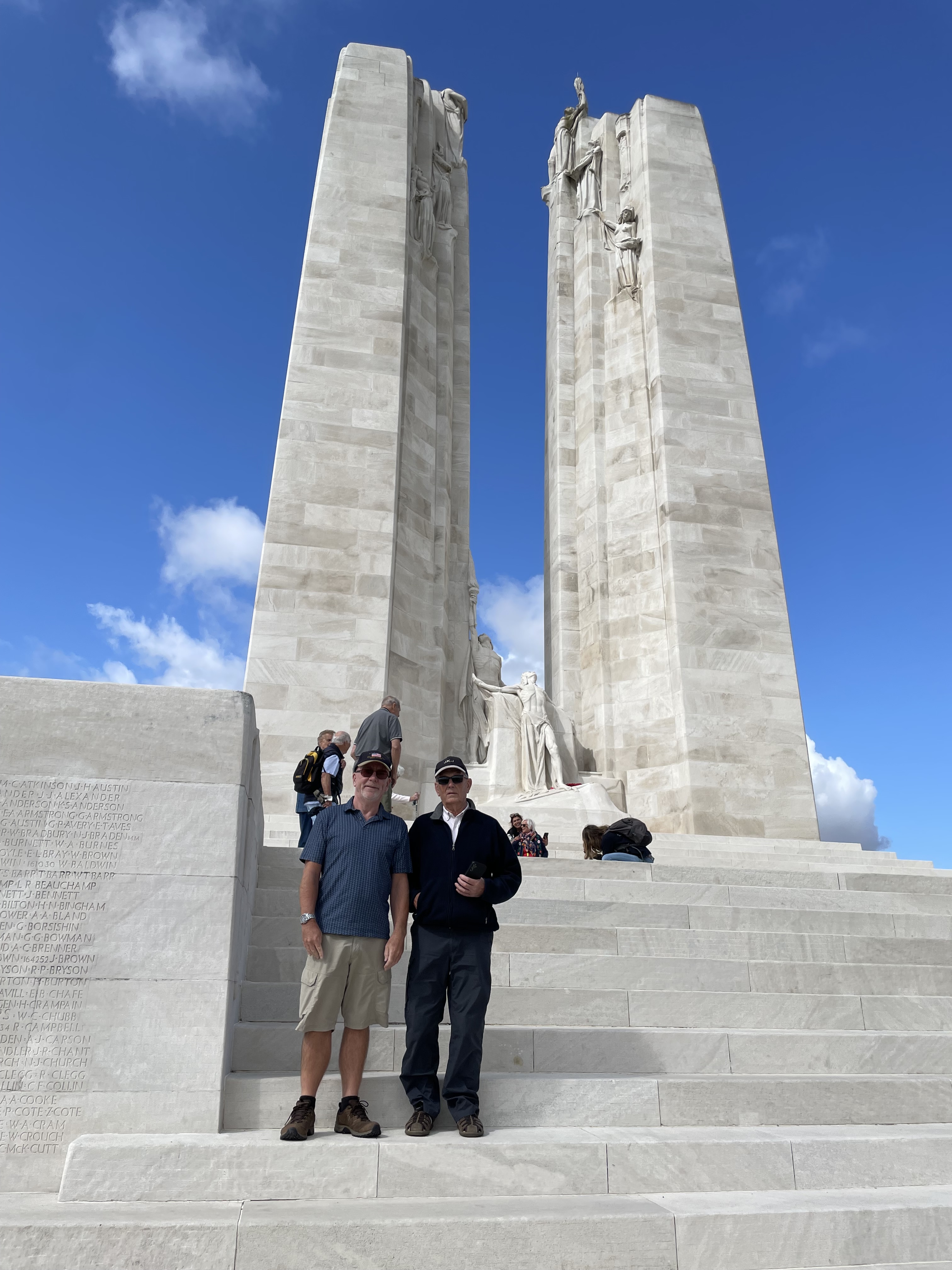
Further south, at the crest of Vimy Ridge, stands Canada’s National Memorial on Hill 145. The twin limestone towers stretch skyward, pale and solemn, visible for miles. The sculptures that adorn the monument are breathtaking, but none more moving than “Mother Canada,” head bowed, shoulders curved with grief as she looks down upon the symbolic tomb of the nation’s dead. It is a place where silence feels not only natural but necessary.
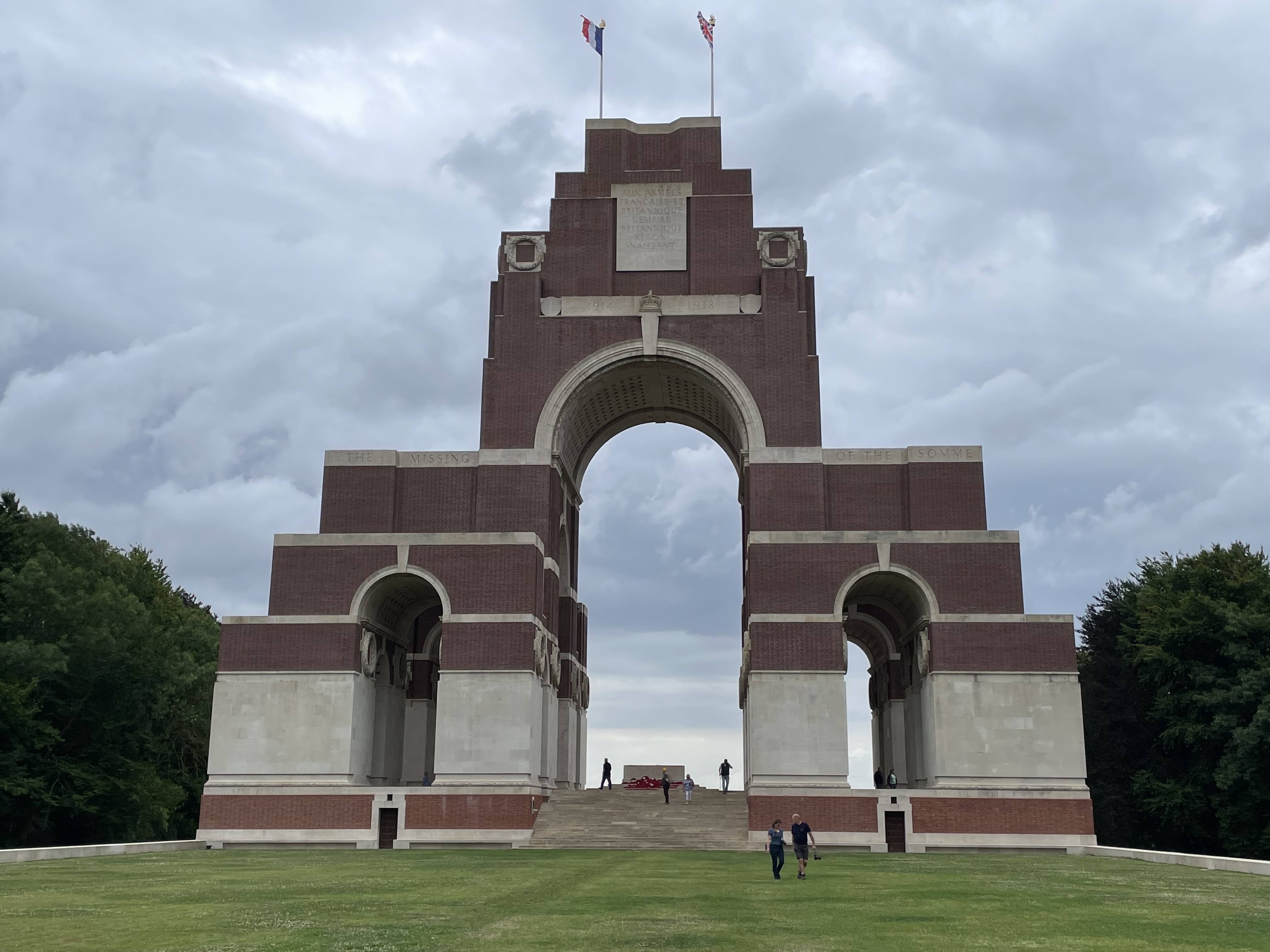
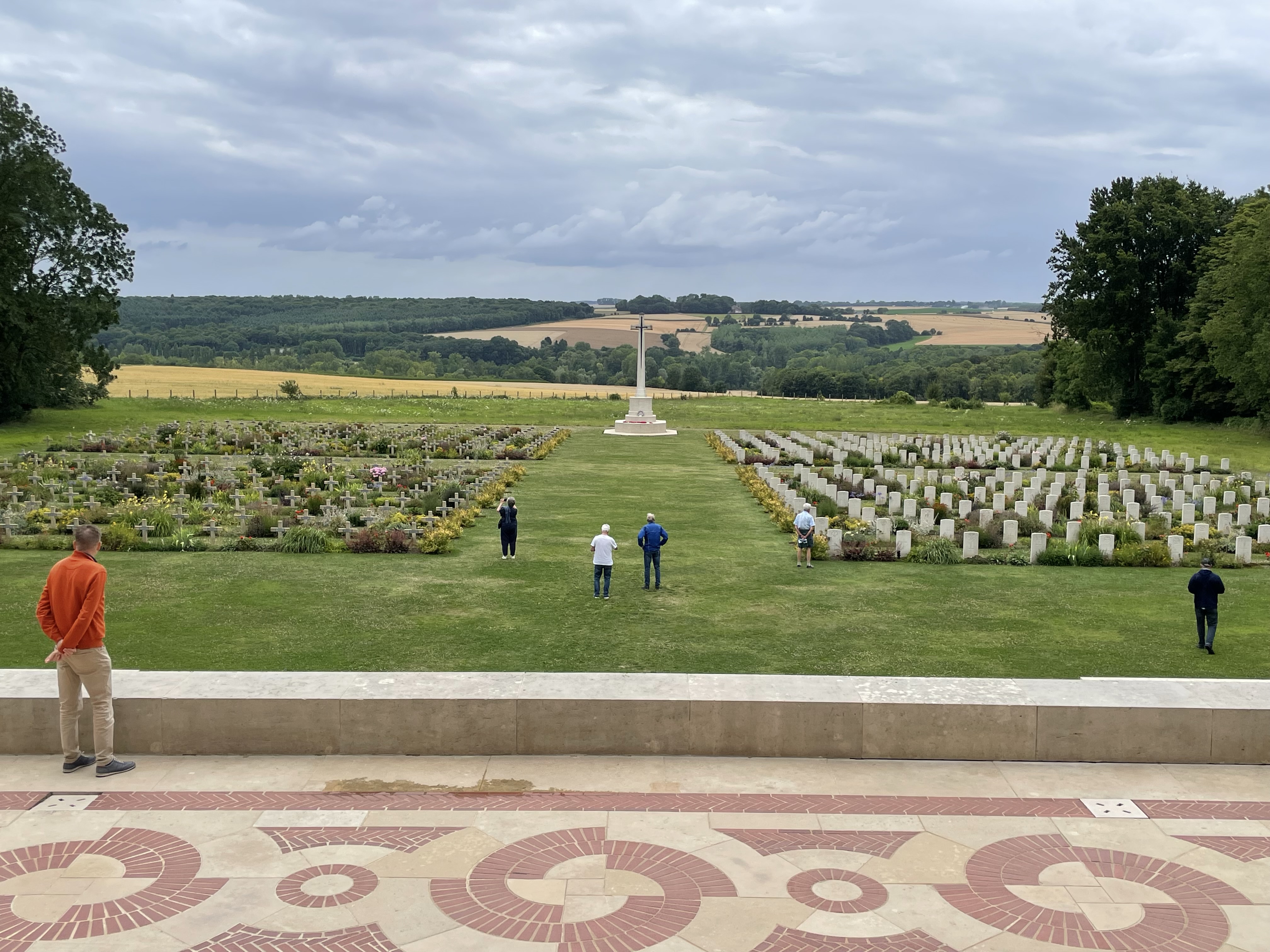
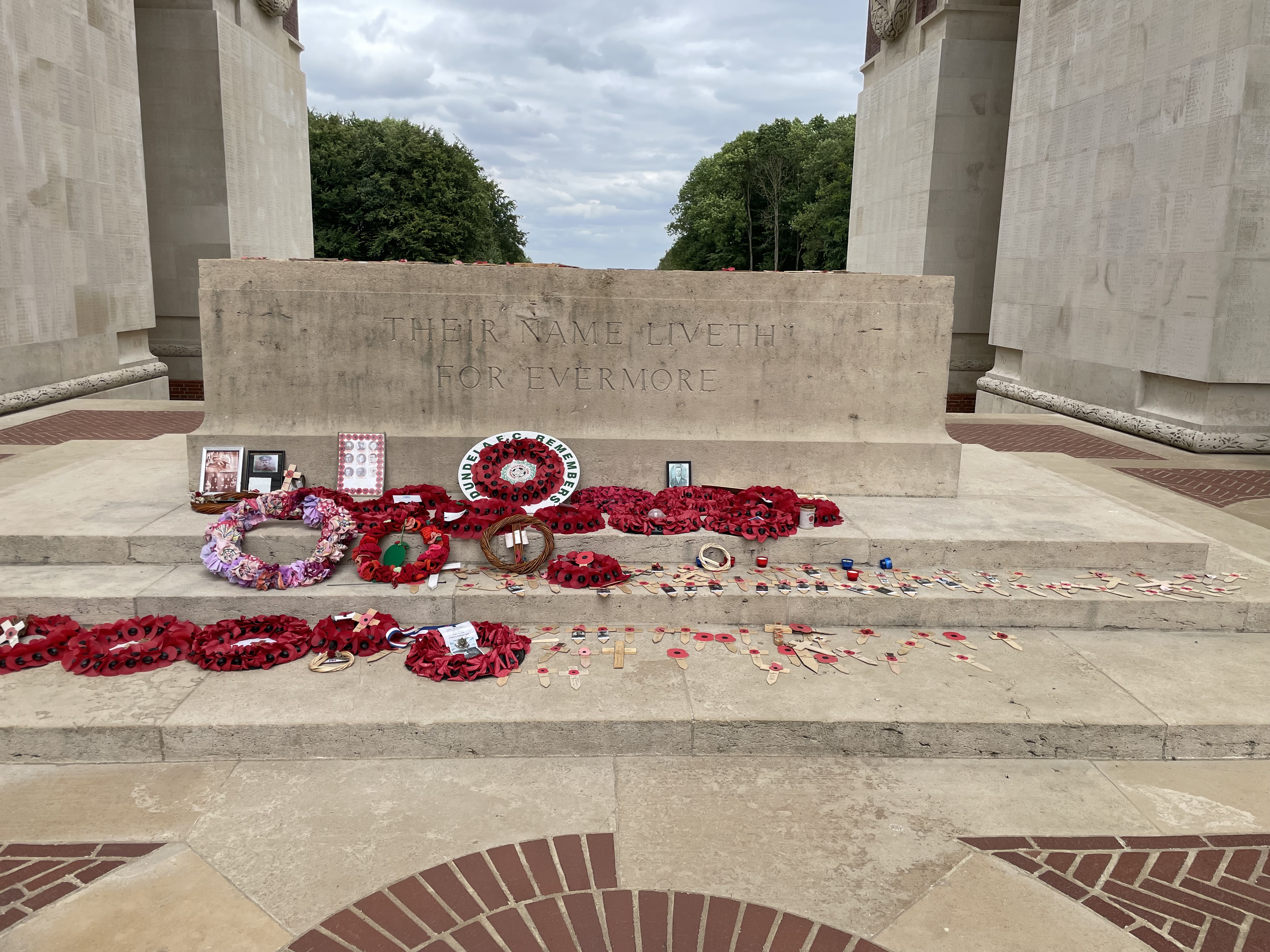
Then it was on to the towering Thiepval Memorial to the Missing, rising above the landscape like a solemn cathedral of stone. Its vast arches stretch skyward, commanding attention even from a distance, but it’s only when you step closer that the true weight of the place hits you. Etched across its pillars are more than 72,000 names, sons, brothers, fathers, men who vanished into the mud of the Somme and were never found. Standing beneath those arches, you feel dwarfed not just by the structure but by the scale of loss it represents. Each name is a story without an ending, a life remembered only because it has been carved here in stone. It’s a place that quiets conversation and leaves you with a profound sense of absence, and of the generations forever changed by the war.
Arras & Vimy Ridge
Our second tour day took us through the landscape between Flanders and the Somme, a region sometimes called the “Forgotten Front”, not because it was spared suffering, but because its tragedies have so often been overshadowed by the better-known battles to the north and south. Here, the scars of the early war years still lie just beneath the surface, woven into quiet fields and small mining towns.
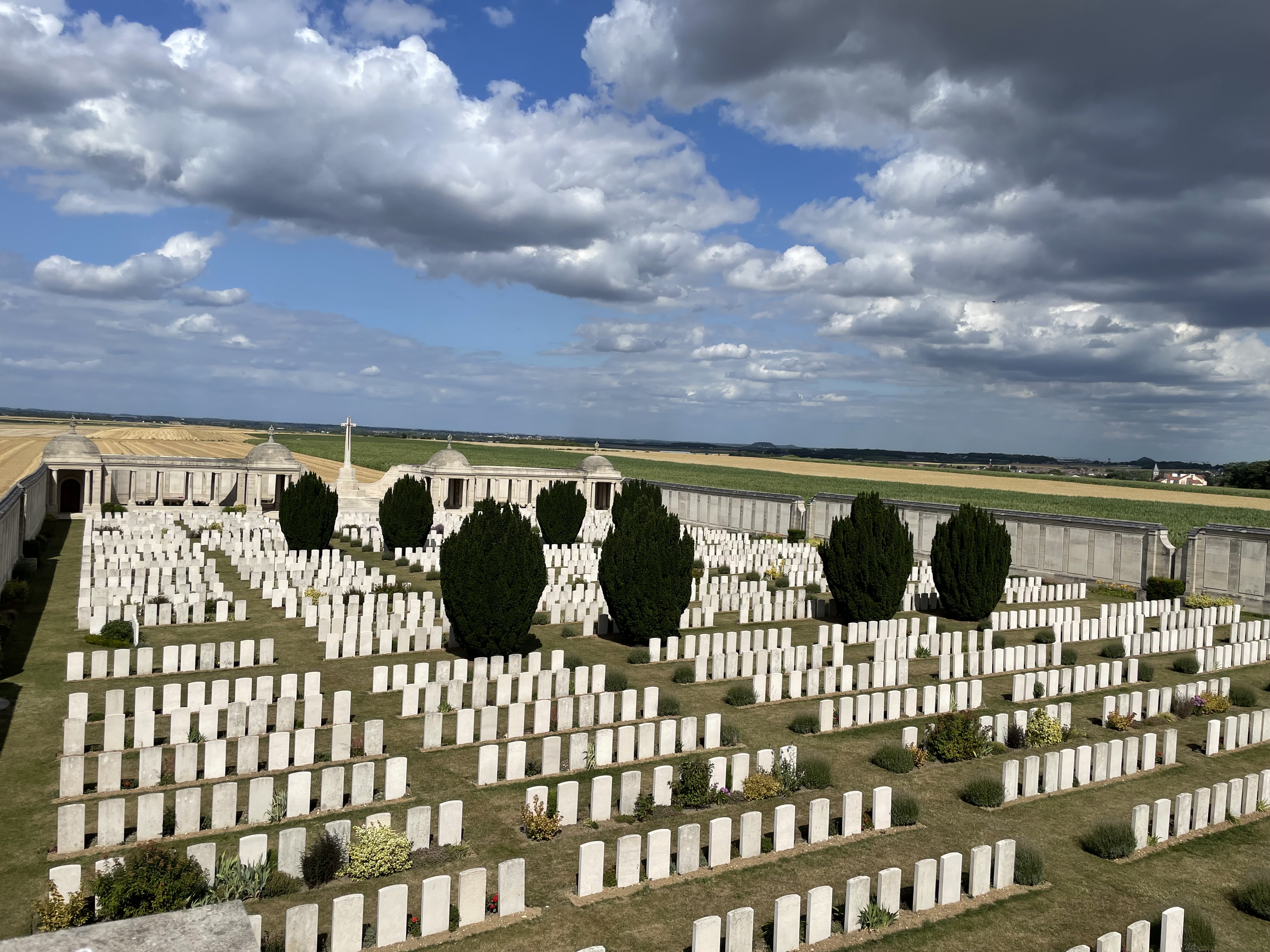
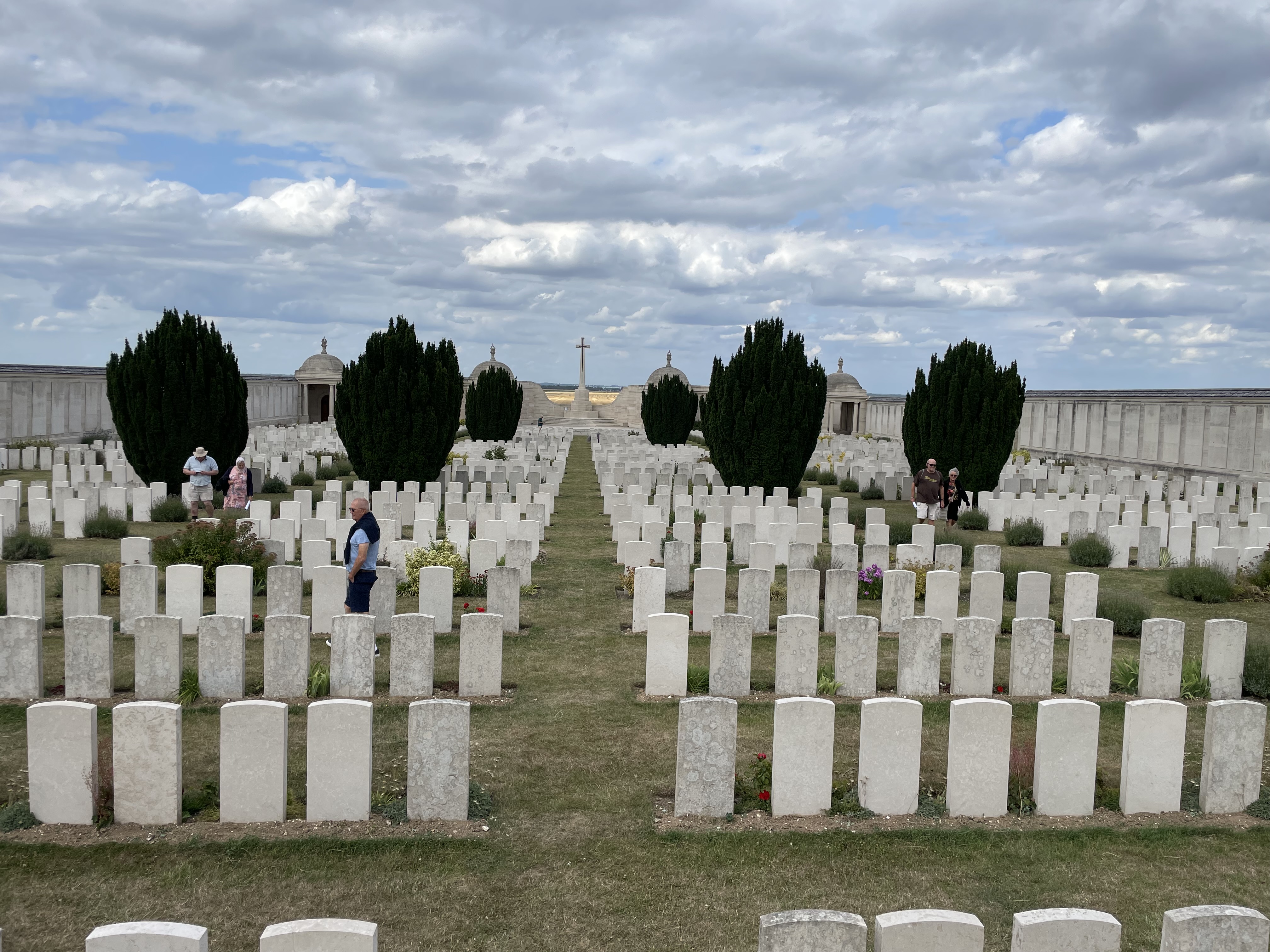
We began at the Loos battlefield, the site of the first major British offensive of the war in 1915. It was here that Kitchener’s New Army, volunteers who had stepped forward in their thousands, faced their baptism of fire. At the Loos Memorial and Dud Corner Cemetery, we paused among the long walls of stone inscribed with thousands of names. Standing there, you feel the weight of those early, costly advances: men who charged forward with hope and inexperience, only to be met by entrenched machine guns and unbroken wire. The silence in the cemetery feels almost physical, holding the memory of all those who never returned, and reminding you how desperately the early years of the war were paid for in lives.
We continued our journey to the Lens 14-18 Museum, a striking space that brings the region’s complex wartime history vividly to life. Through its exhibits, photographs, personal letters, and immersive displays, it unravelled the intertwined stories of soldiers, civilians, and communities caught in the upheaval of the Great War. Walking through the museum, it was impossible not to feel the human dimension of a conflict often reduced to numbers and dates; the faces, voices, and experiences behind the historical events came alive in a way that textbooks rarely achieve.
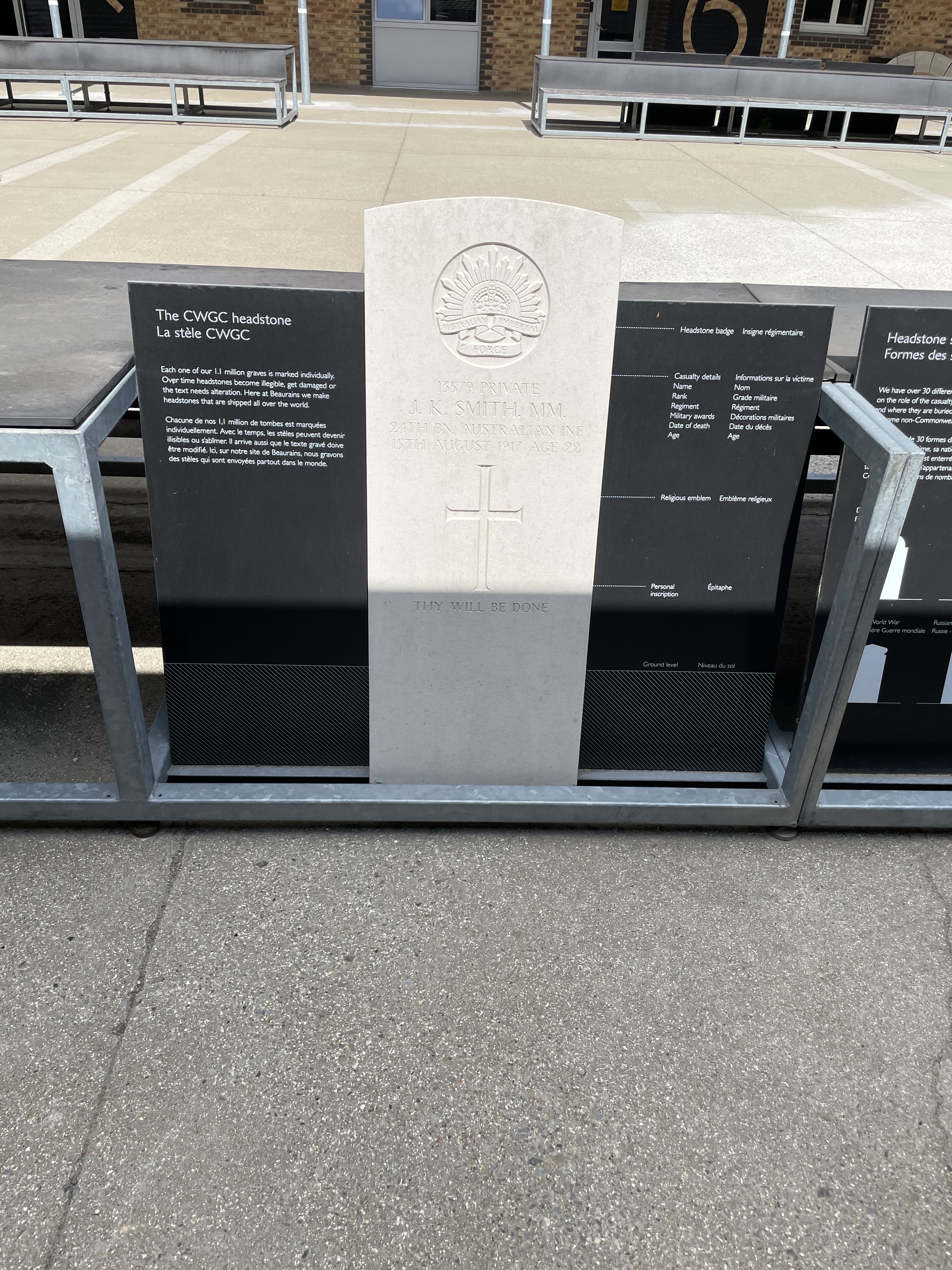
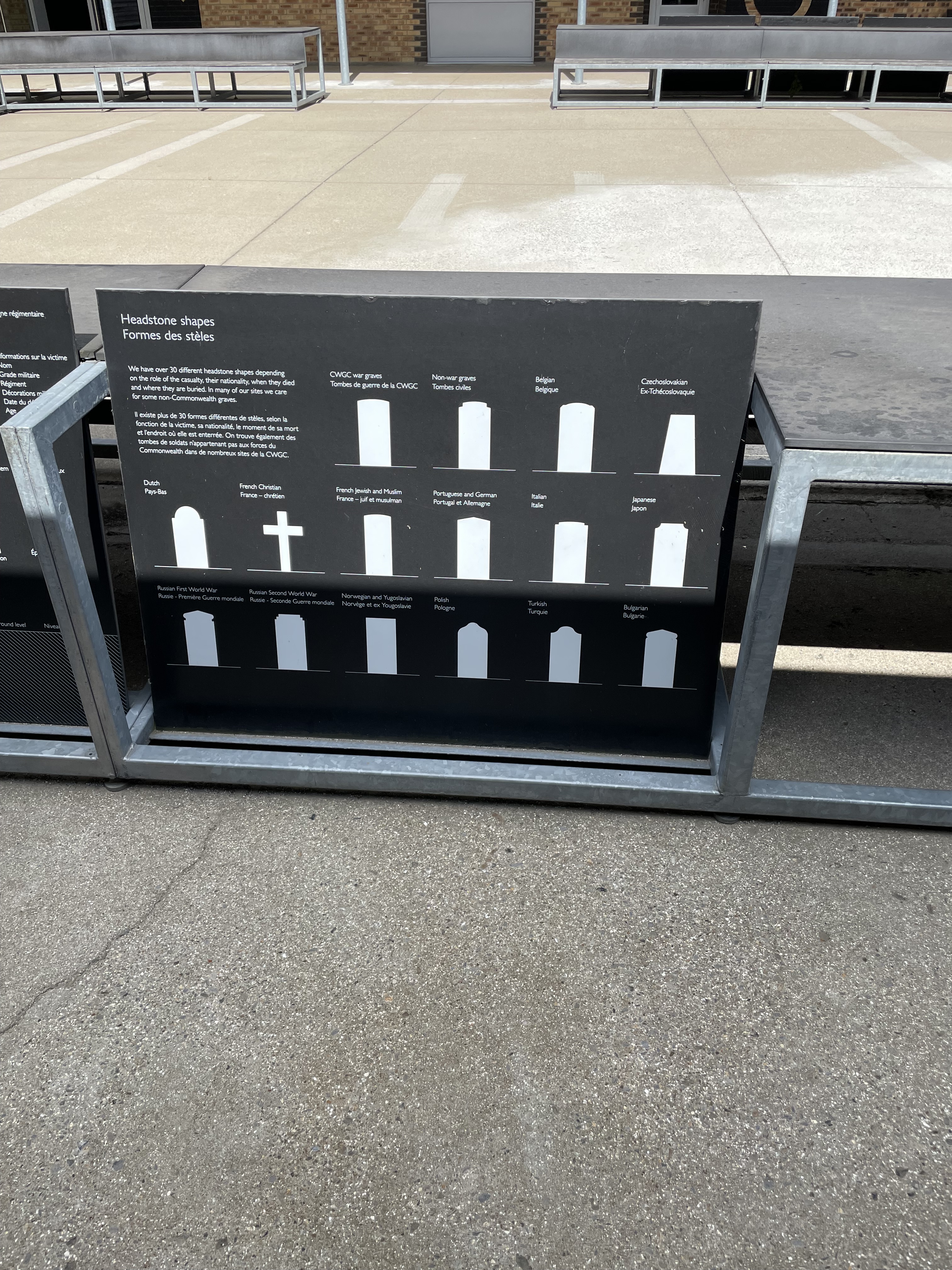
Later, in Arras, we visited the Commonwealth War Graves Commission (CWGC) Visitor Centre, where we gained a deeper understanding of the painstaking care taken to honour the fallen. From the meticulous records kept to the maintenance of cemeteries and memorials around the world, the CWGC’s work ensures that those who never returned home are remembered with dignity and respect. The centre’s displays and stories highlighted not just the scale of loss, but the continuing commitment to remembrance, a promise carried forward more than a century later.
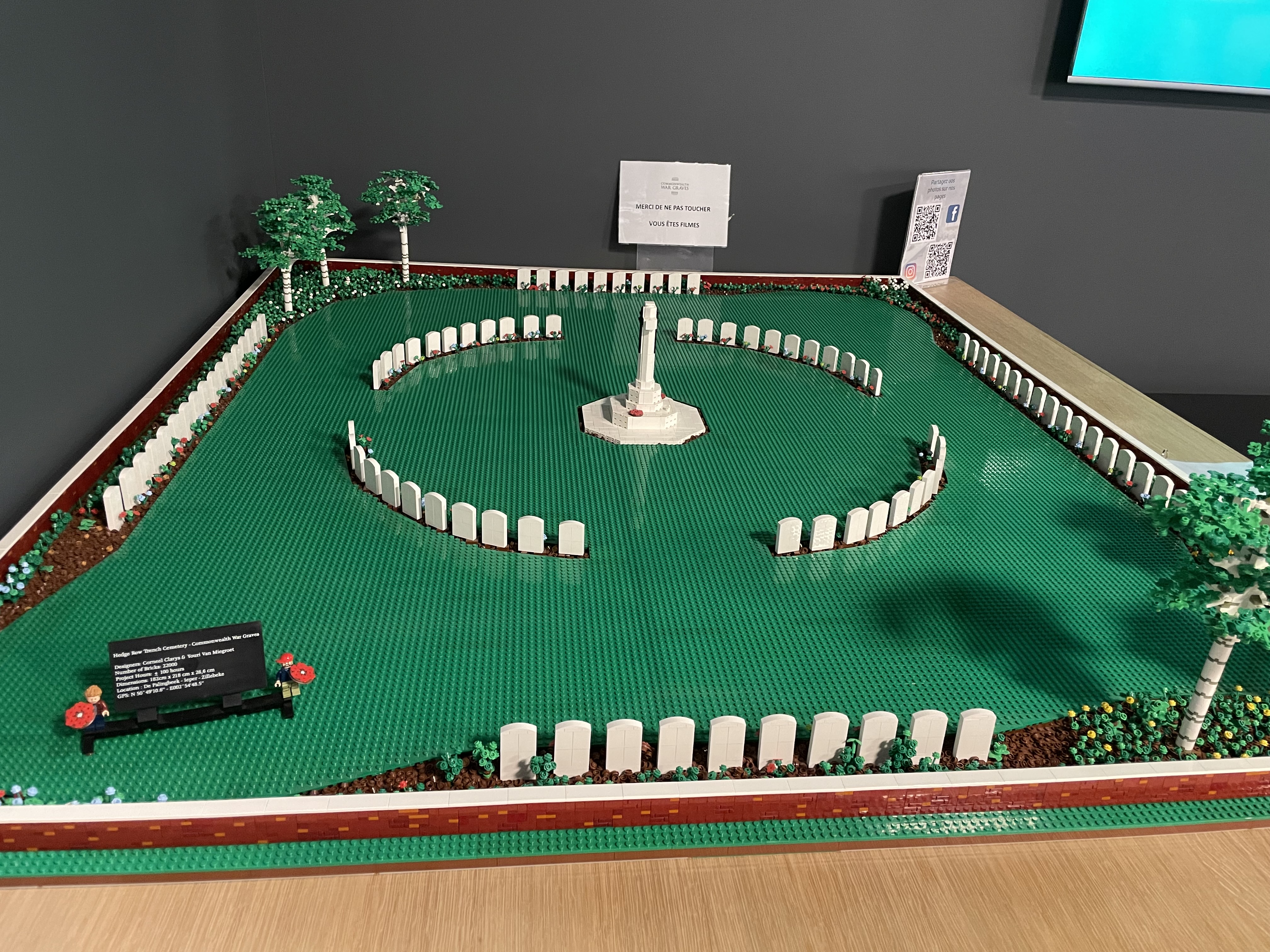
And as if the day couldn’t get more personal, I was even treated to a surprise Lego creation of a CWGC War Memorial!
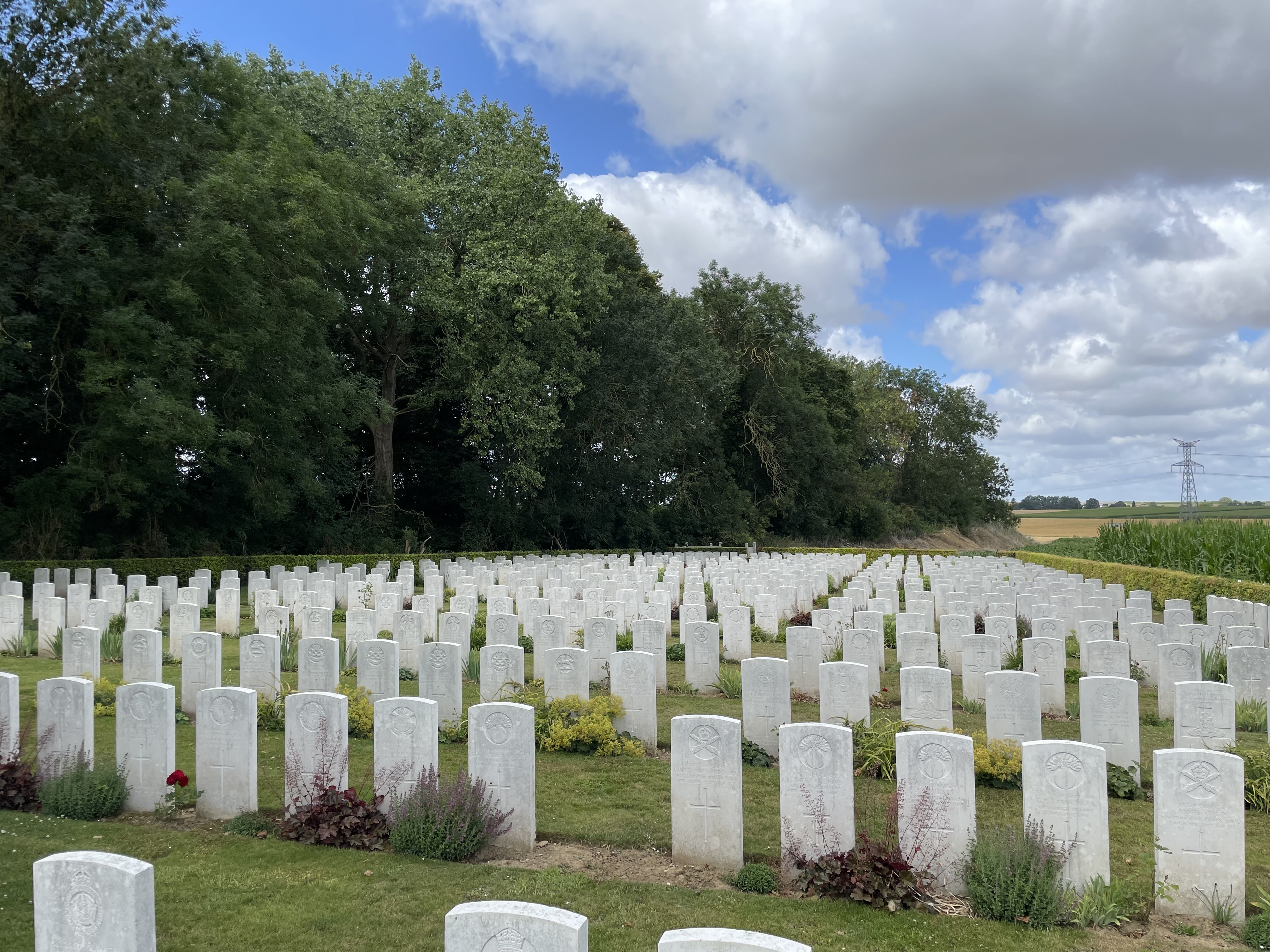
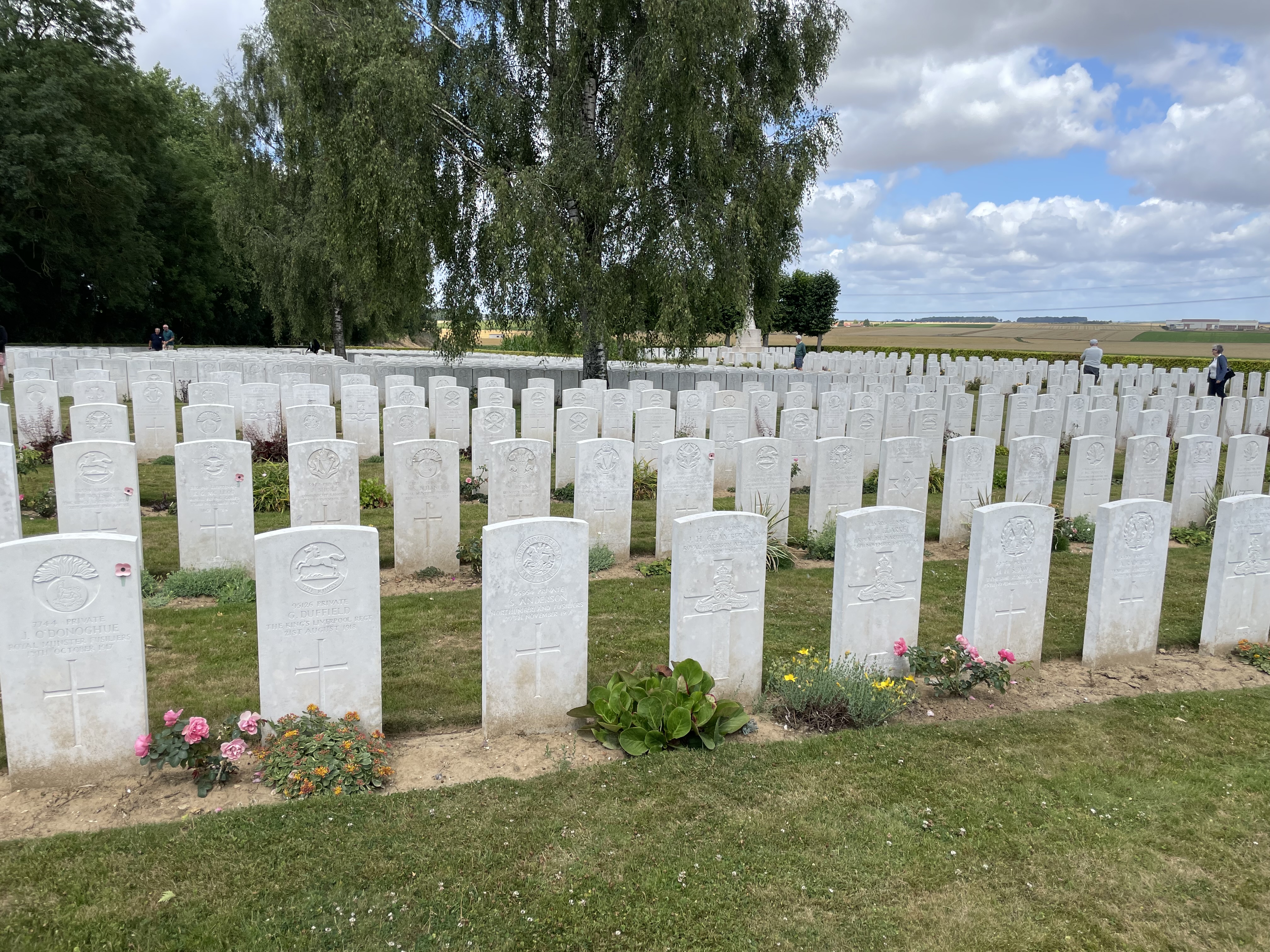
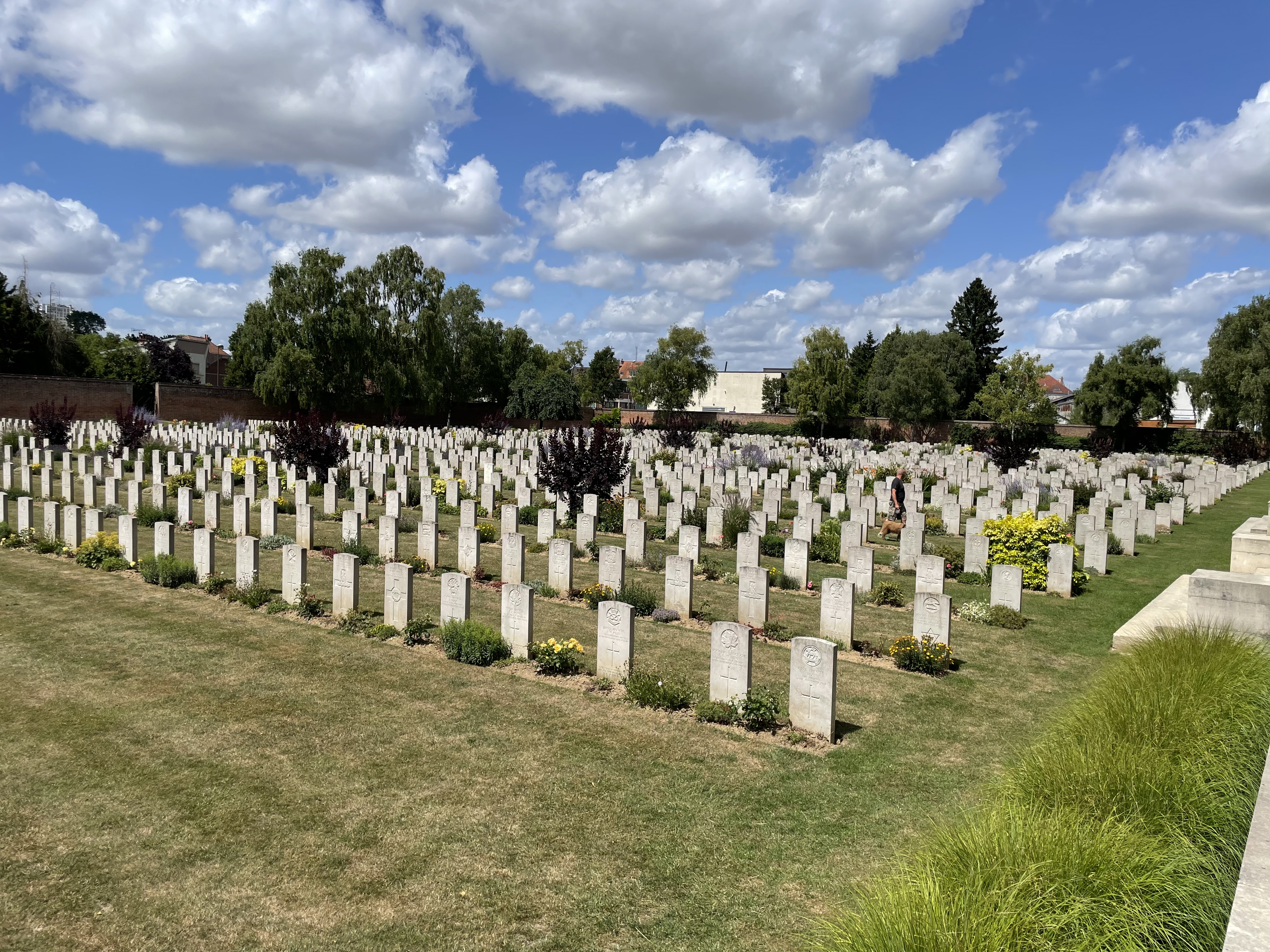
A small detour off the main route brought us to Bucquoy Road Cemetery, a quiet Commonwealth War Graves Commission site tucked amid the rolling fields near Arras and Hébuterne. Established after the First World War, it serves as a resting place for soldiers who fell in the fierce fighting that swept through this region. Though modest in size compared to some of the larger memorials, Bucquoy Road Cemetery carries a profound sense of intimacy and solemnity. Even in its quiet simplicity, it stands as a powerful reminder of the human cost of the war and the enduring care taken to honour those who never returned home.
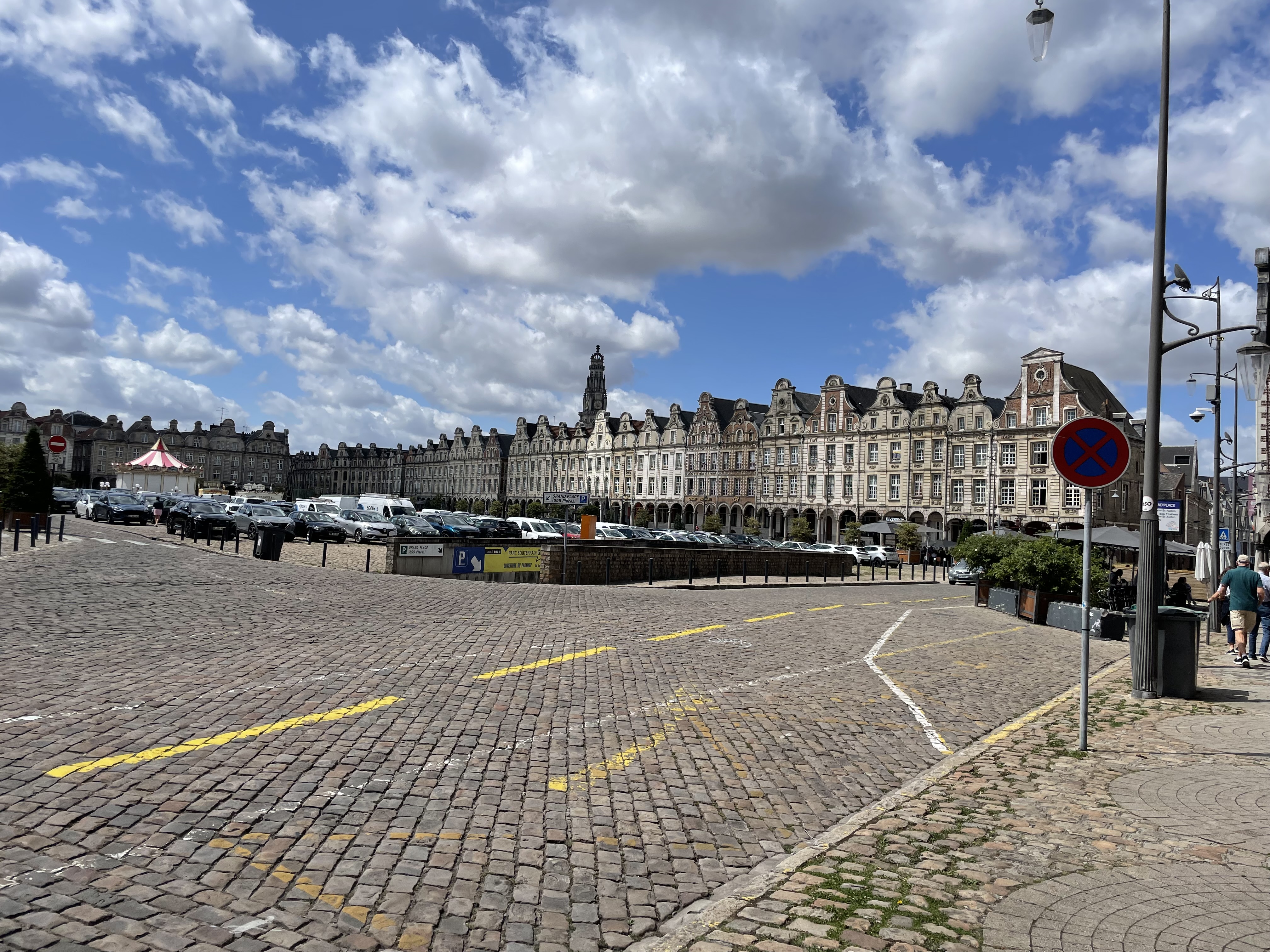
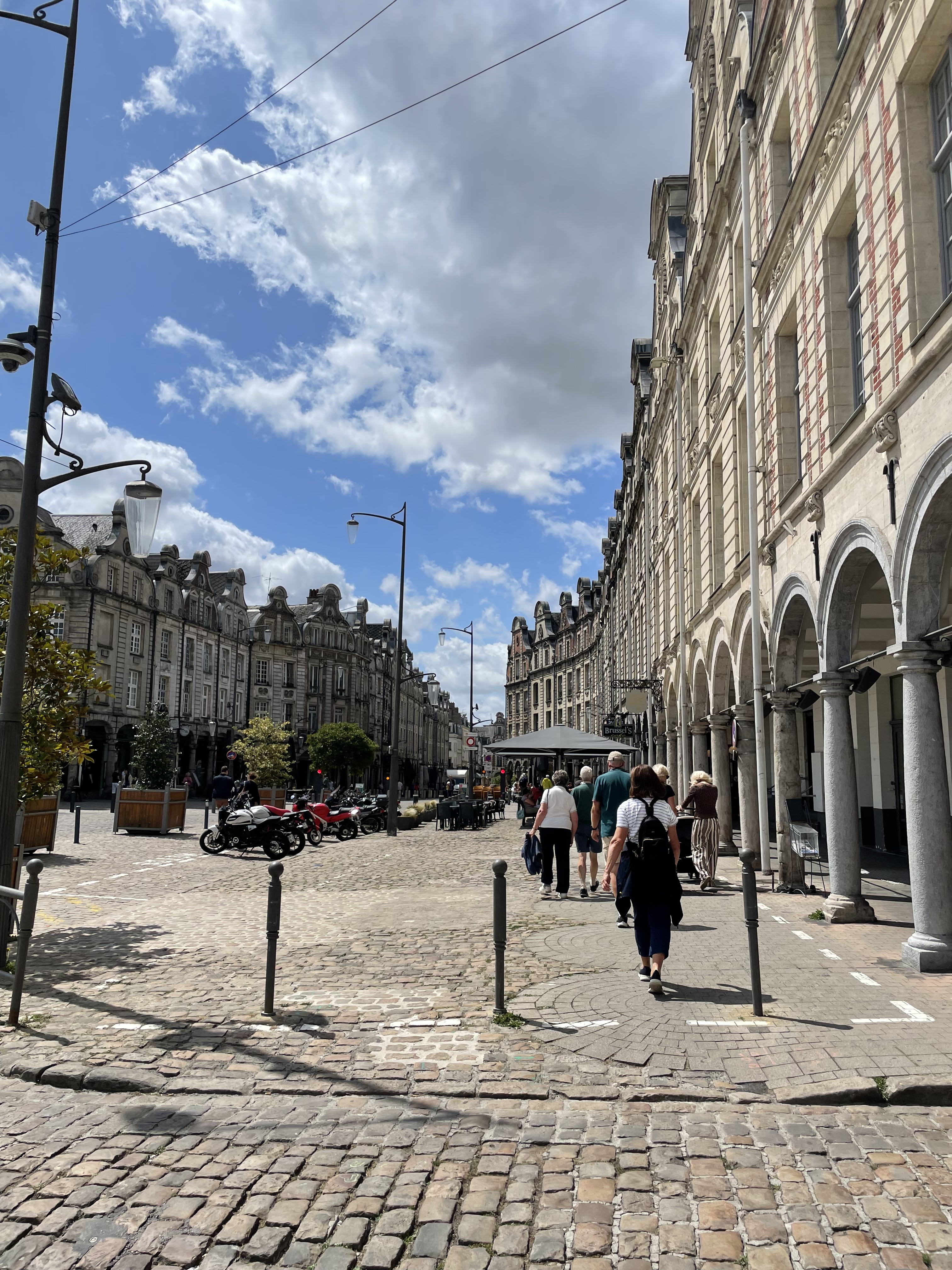
We had lunch in the beautiful French city of Arras, enjoying its charming squares and historic architecture. Afterwards, we wandered through the streets and even spotted some of the old bullet holes still visible in the buildings, a poignant reminder of the city’s experiences during the Second World War.
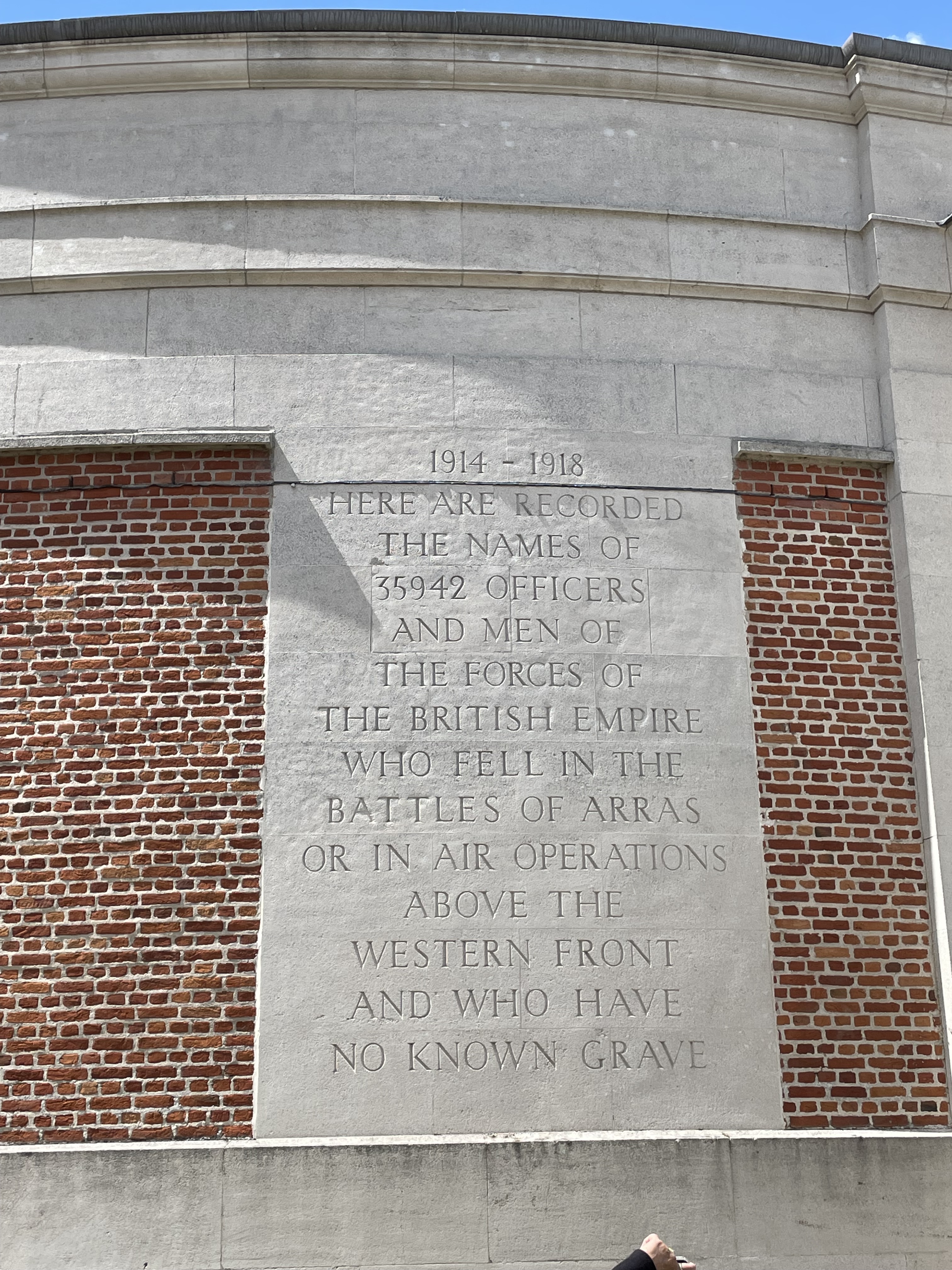
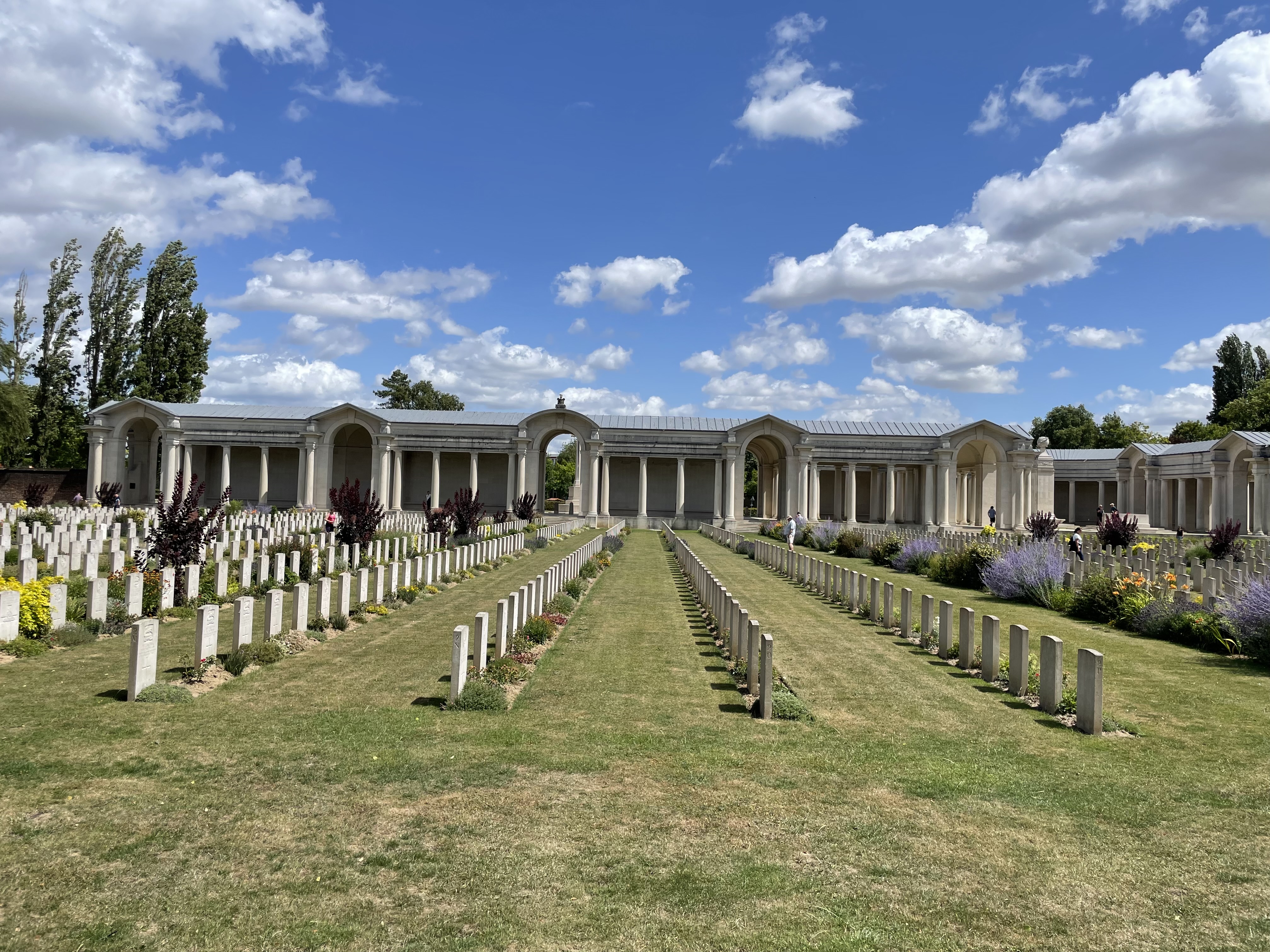
At the Arras Flying Services Memorial, we paused to remember the airmen who fought above the trenches, young men whose war was as brief as it was perilous. Many were barely out of their teens when they took to the skies, facing not only enemy aircraft but also the ever-present dangers of mechanical failure, harsh weather, and the sheer uncertainty of aerial combat. Standing before their names, etched in solemn stone, it was impossible not to feel the weight of their sacrifice. The memorial’s elevated position and open surroundings seemed to echo the vast, empty sky that became both their battlefield and, for so many, their final resting place.
Ypres & Passchendaele
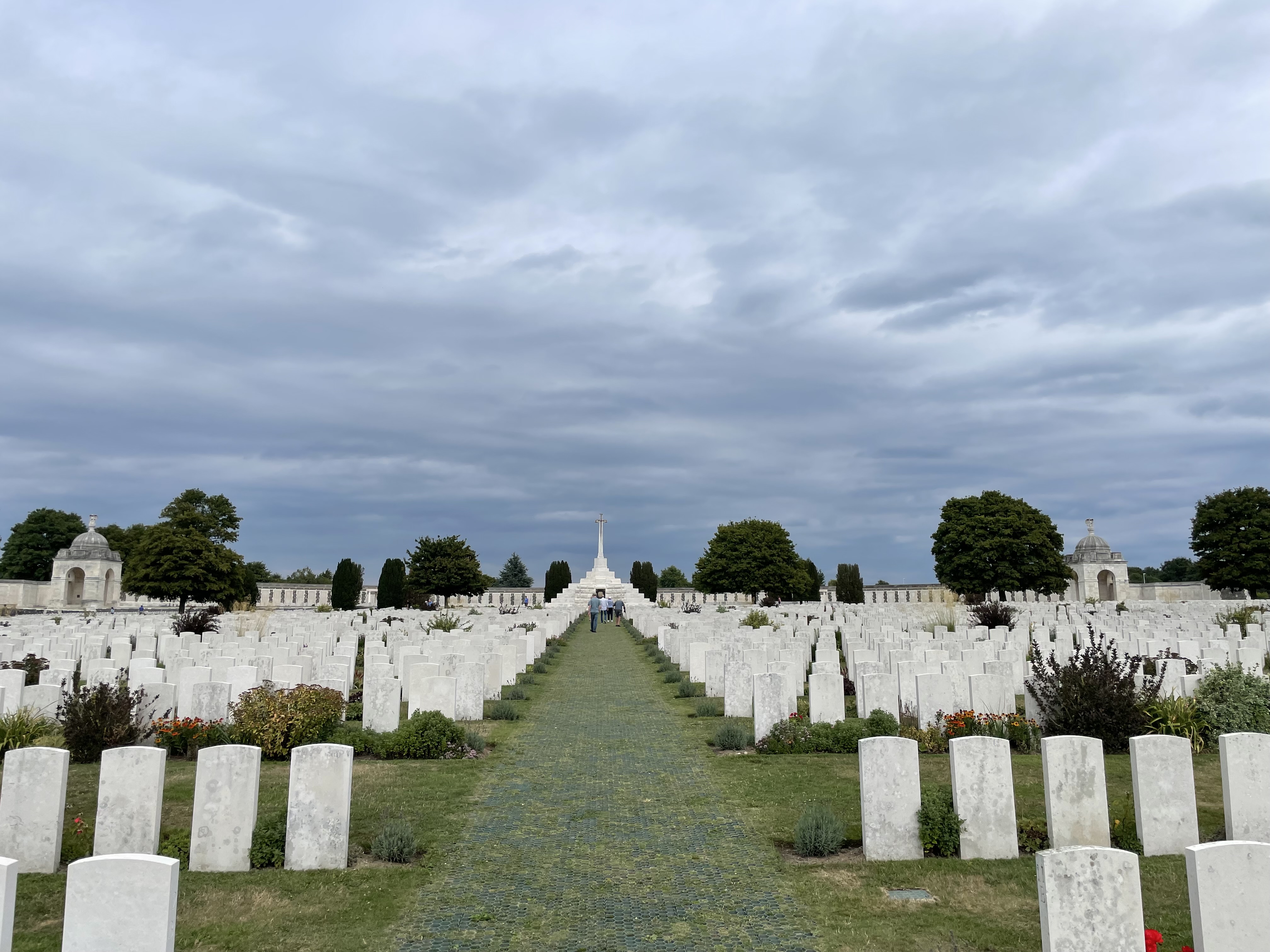
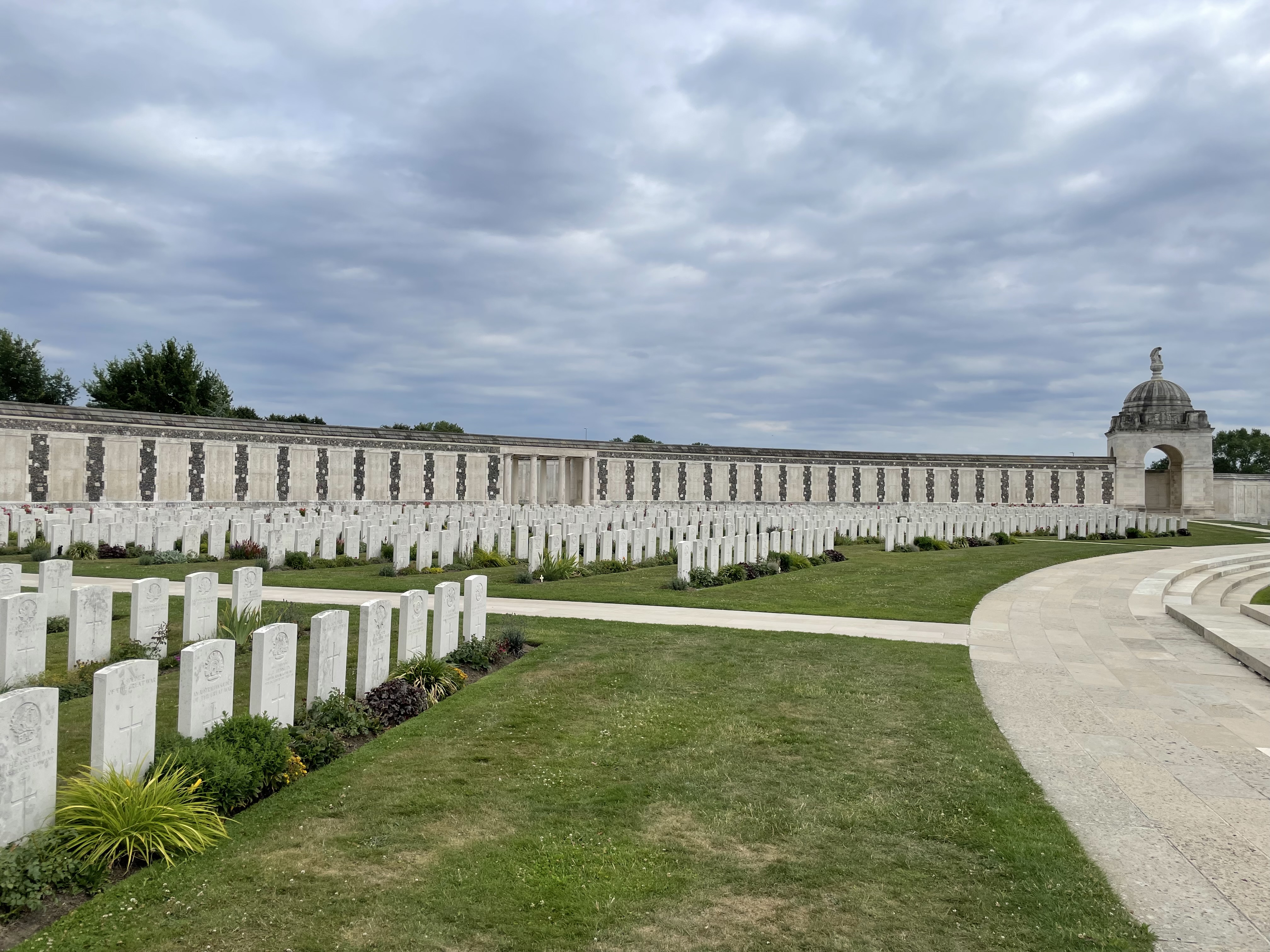
The final day of our tour brought us back to the haunting fields around Ypres, a landscape forever marked by the unimaginable toll of the First World War. By 1918, one in three of Britain’s Western Front dead had fallen here. We began at Tyne Cot Cemetery, the largest British war cemetery in the world, and even from a distance, its scale is overwhelming. Rows upon rows of white headstones stretch endlessly in every direction, perfectly aligned yet individually poignant, each one marking a life interrupted, men who had stepped forward and never returned. Walking among them, it is impossible not to feel the sheer human cost etched into the very soil, or to sense the weight of so many stories lost to history. The quiet of the cemetery, broken only by the whisper of the wind or the occasional bird, makes the enormity of the sacrifice tangible in a way that numbers alone can never convey.
At Vancouver Corner, we took a moment to reflect on one of the darkest innovations of the First World War: the first large-scale use of gas in 1915. Here, the battlefield was forever transformed, the very air becoming a weapon, and the horror of chemical warfare etched into the lives of those who survived and those who did not. Standing in that quiet space, it was easy to imagine the fear and confusion that must have gripped the men who faced this new, invisible threat.
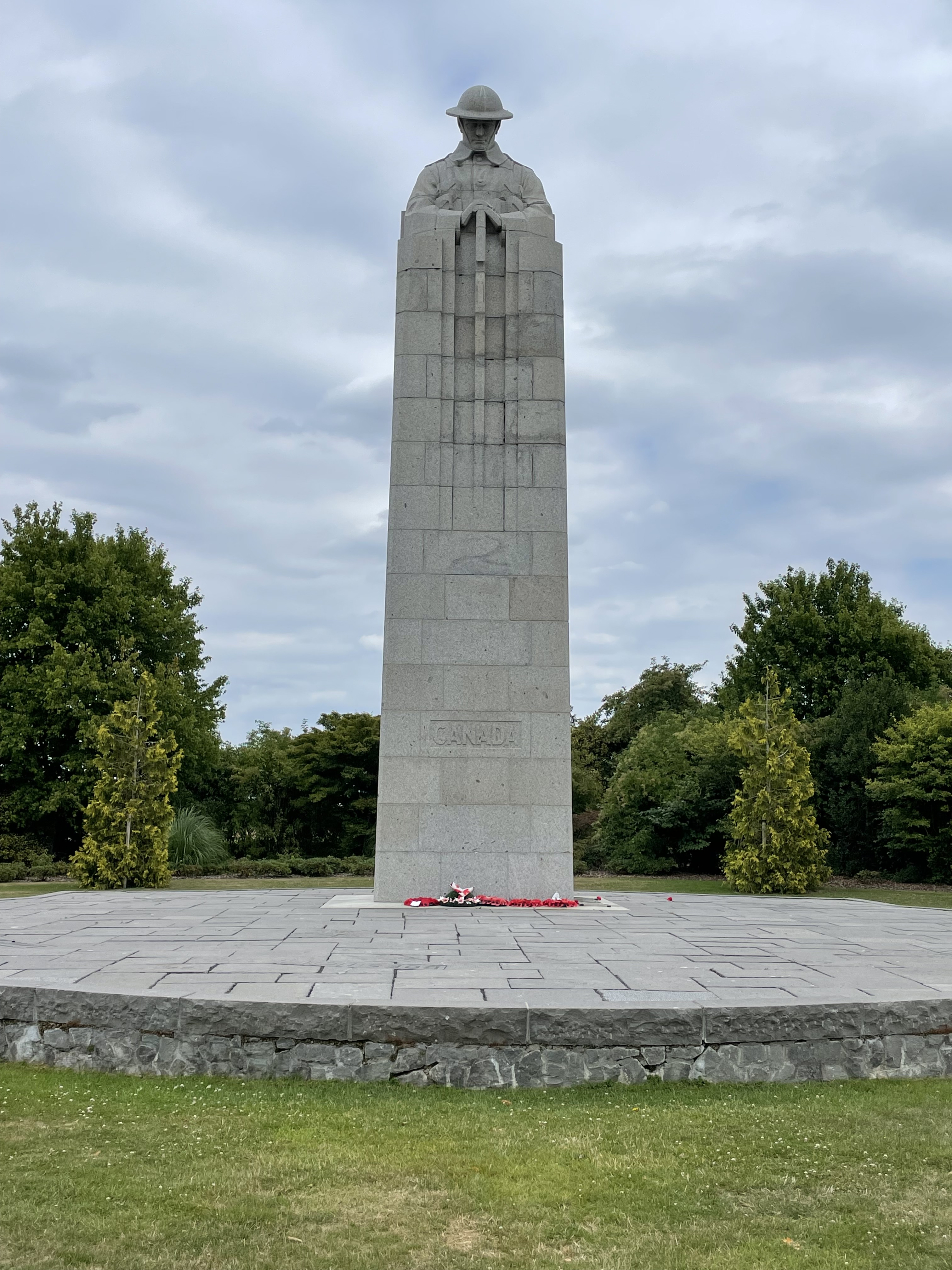
We paused before the solemn “Brooding Soldier”, a Canadian memorial whose simple dignity captures both pride and sorrow. The figure stands in silent contemplation, a guardian over the ground where so many fell, and a reminder of the heavy burden borne by soldiers from across the Commonwealth. There is a stillness here that invites reflection, not just on the tactics of war, but on its human cost, the courage of those who endured it, and the enduring responsibility we carry to remember.
From there, we moved on to Langemarck, turning our thoughts to the German experience of the war. Langemark cemetery sits dark and brooding beneath a canopy of trees, its atmosphere heavy and solemn. In that landscape, shaped by memory and loss, we considered how soldiers on the opposite side struggled, hoped, and suffered in ways both parallel to and distinct from their Allied counterparts.
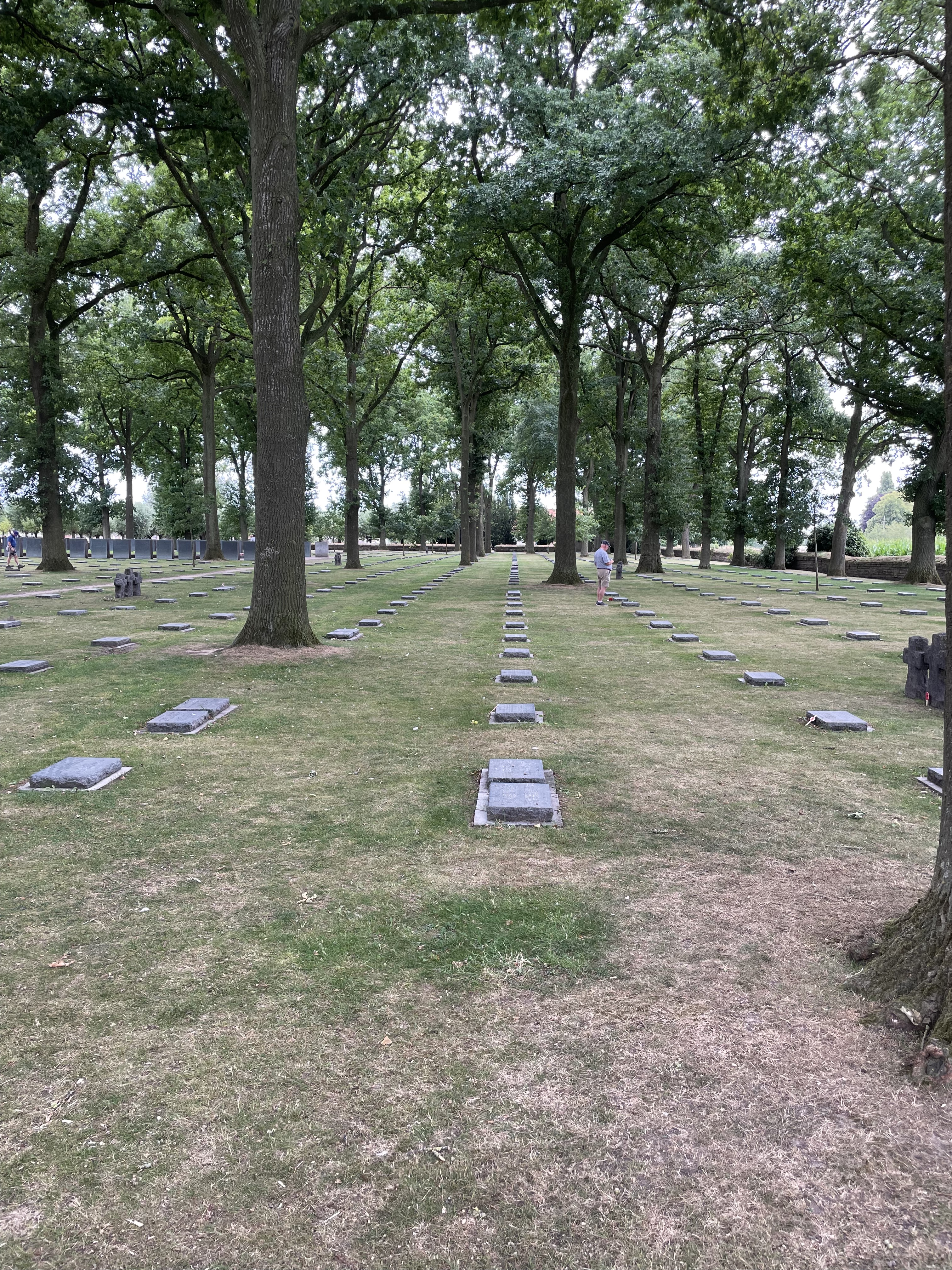
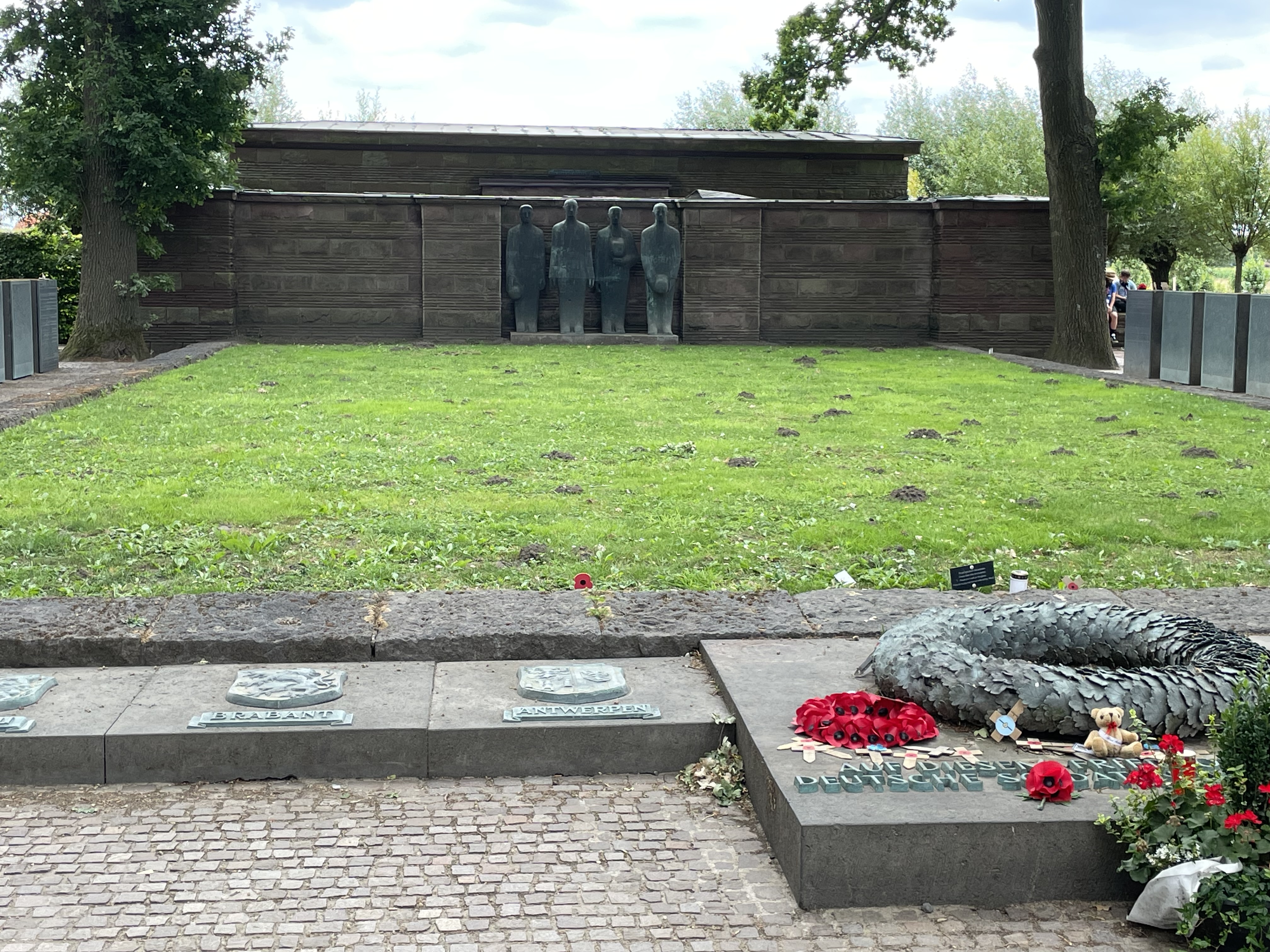
After lunch at Hooge, we made our way to the Sanctuary Wood Trench Museum, a remarkable site that preserves some of the last surviving original trenches in Flanders. Walking through the narrow passages, you could almost hear the echoes of soldiers’ footsteps and the distant rumble of artillery, as if the trenches themselves held memories of the men who once lived, fought, and sometimes died within them. The museum’s relics, personal belongings, and photographs brought the past vividly to life, capturing the harsh, unforgiving reality of trench life in a way that no textbook ever could. Every rusted helmet, every worn boot, every faded photograph told a story of endurance, fear, and camaraderie amid unimaginable conditions. Being there, surrounded by the very earth that had once been a frontline, gave a tangible, almost physical sense of the daily struggle and courage of the soldiers who called these trenches home.


Our next stop was Hooge Crater Cemetery, a site that lies in what was once one of the most fiercely contested sectors of the Ypres Salient. The area around Hooge saw almost continuous fighting, changing hands repeatedly as both sides struggled for even the smallest advantage. It was here that mines were detonated beneath enemy positions, flamethrowers were used for the first time on the Western Front, and countless assaults were launched across churned-up ground that offered little protection and no certainty of survival.
Walking among the headstones, we were reminded of the layered brutality of this place, how each grave represents not only an individual life lost but also the relentless cycle of attack and counterattack that defined Hooge. The cemetery stands today as a peaceful, meticulously cared-for landscape, yet the quiet belies the violence that once engulfed it.
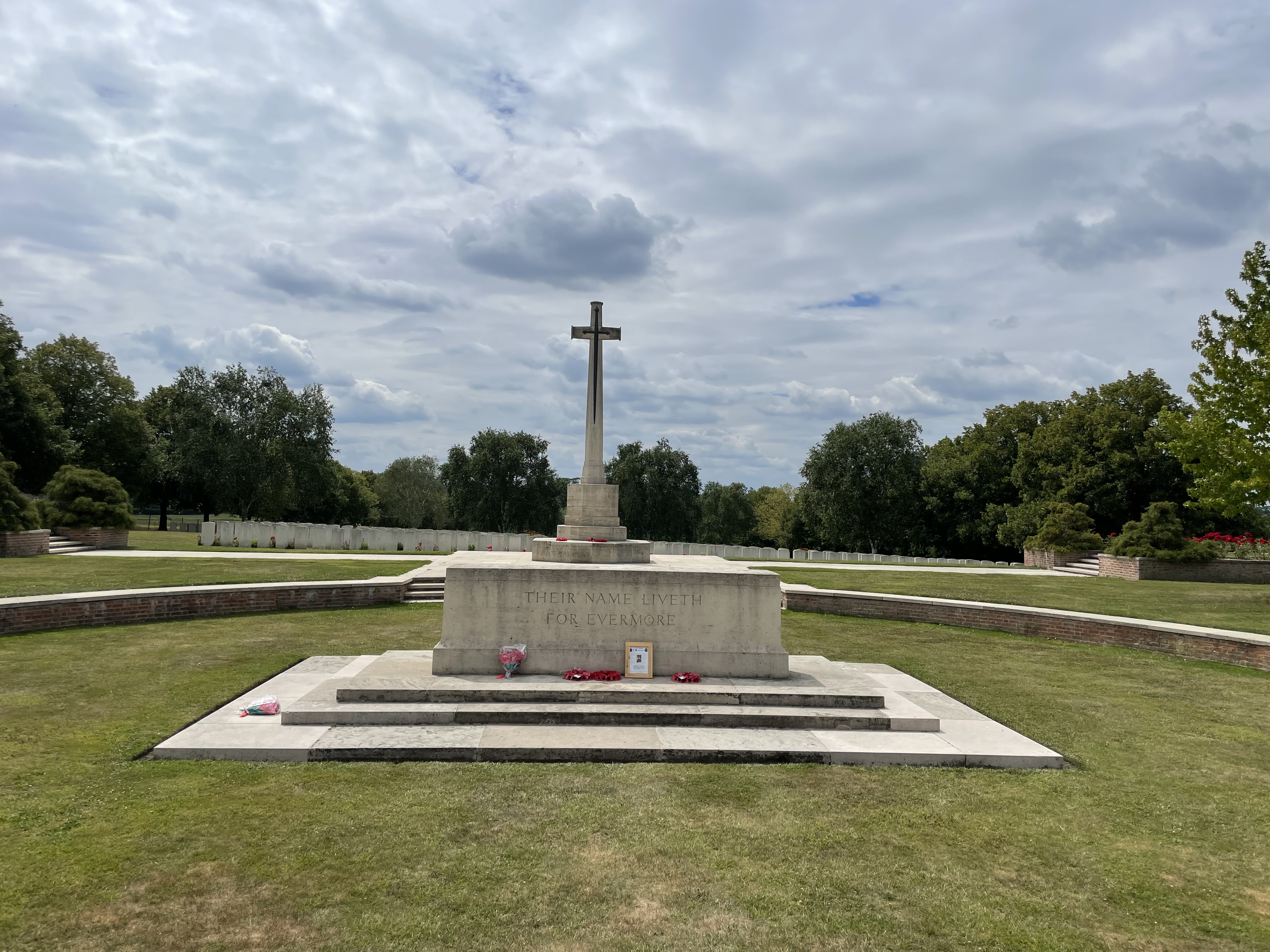
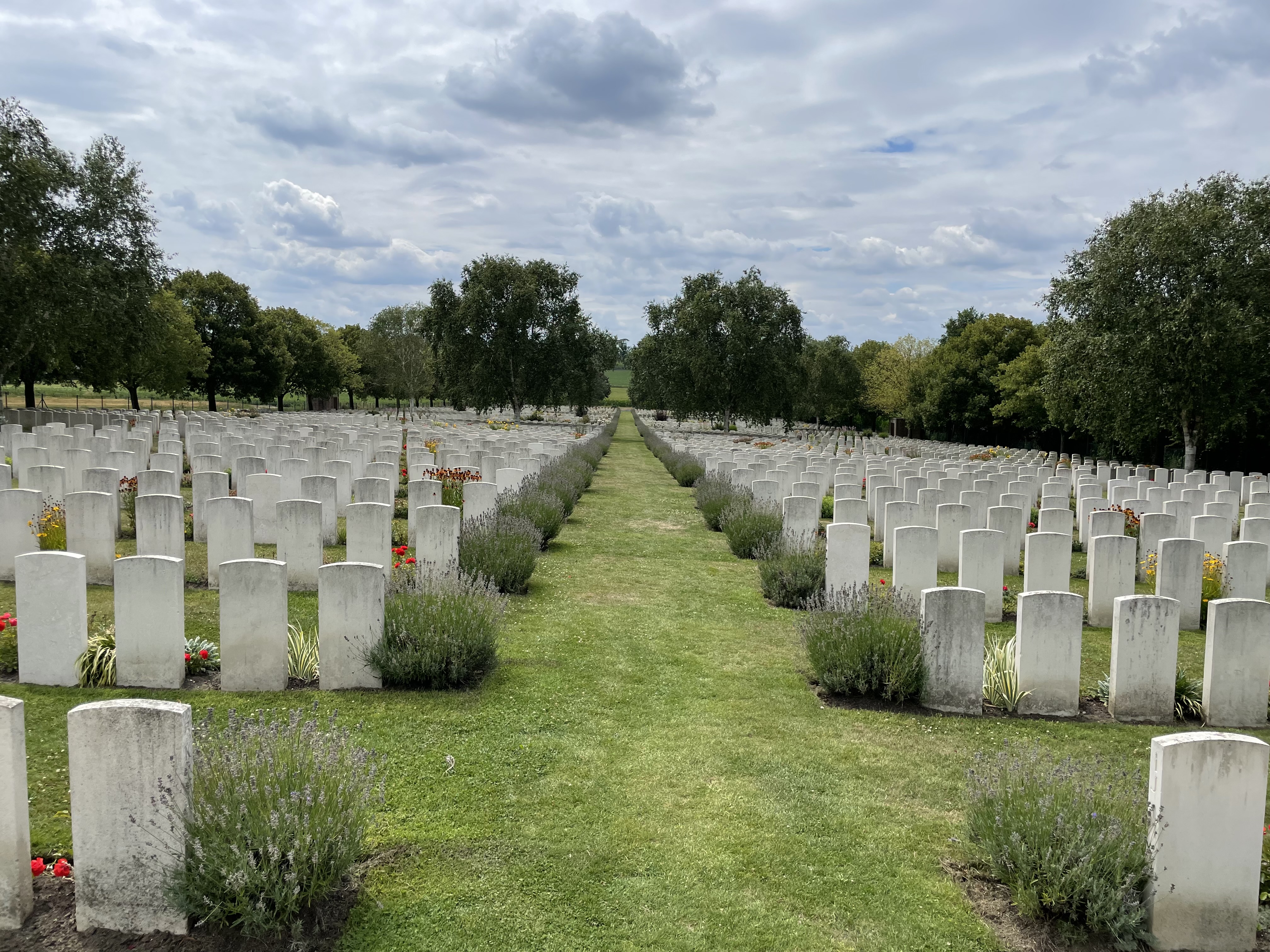
From Hooge, we continued south, following the long, commanding sweep of the Messines Ridge. The ridge, once a crucial vantage point bitterly contested by both sides, now offers quiet fields and small villages where the past lingers just beneath the surface.
Our journey led us onward to Ploegsteert, where we paid our respects at the Ploegsteert Memorial to the Missing. This memorial, dedicated to over 11,000 soldiers who have no known grave, stands in one of the more tranquil but deeply moving sectors of the Western Front. Unlike the larger monuments at Thiepval or Menin Gate, Ploegsteert feels almost secluded, its columns tucked among trees, its silence heavy with the weight of absence. Here, the enormity of the losses is felt not through grand scale but through the quiet acknowledgement of those who vanished into the long, brutal struggle along this part of the line.
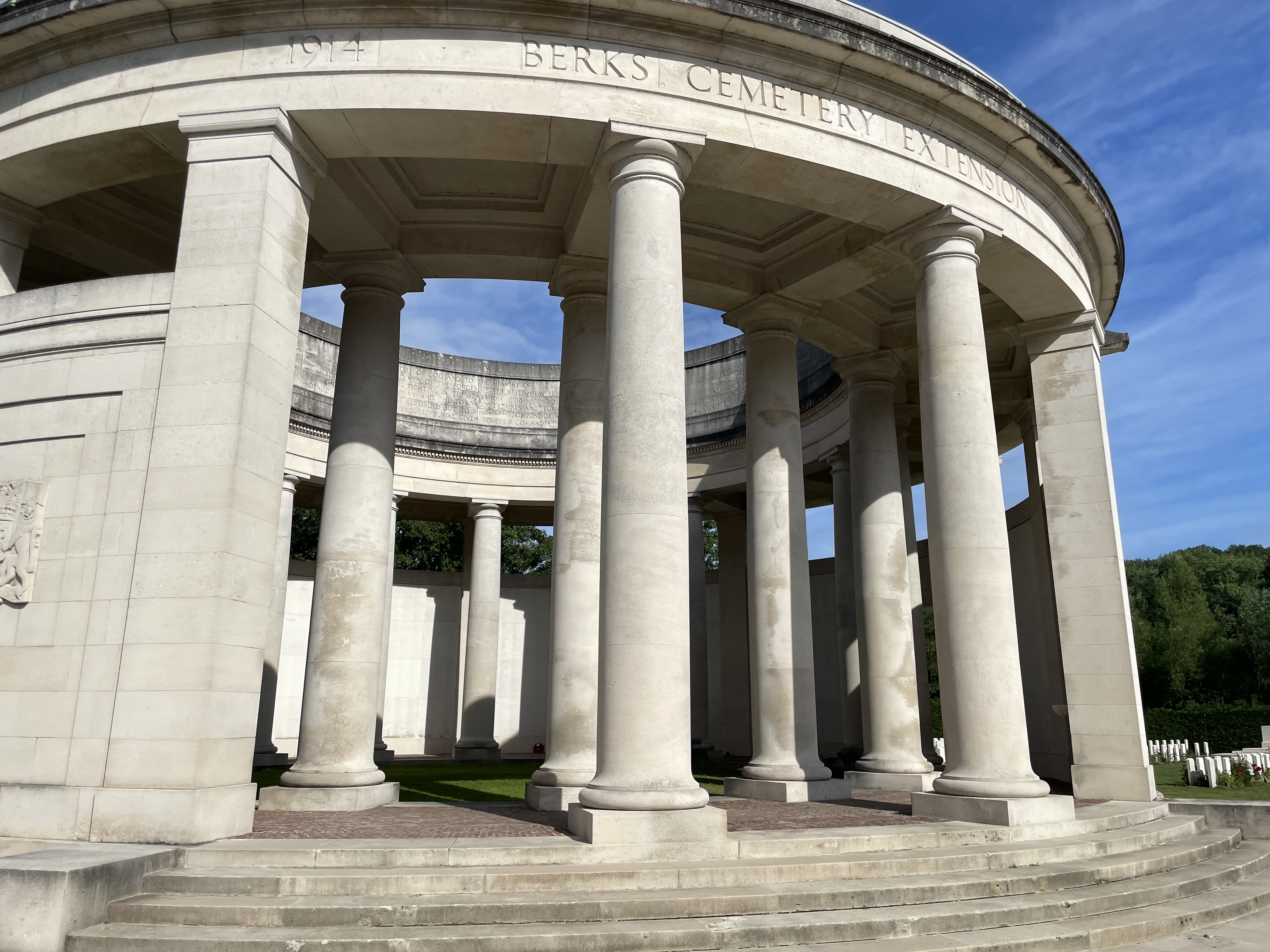
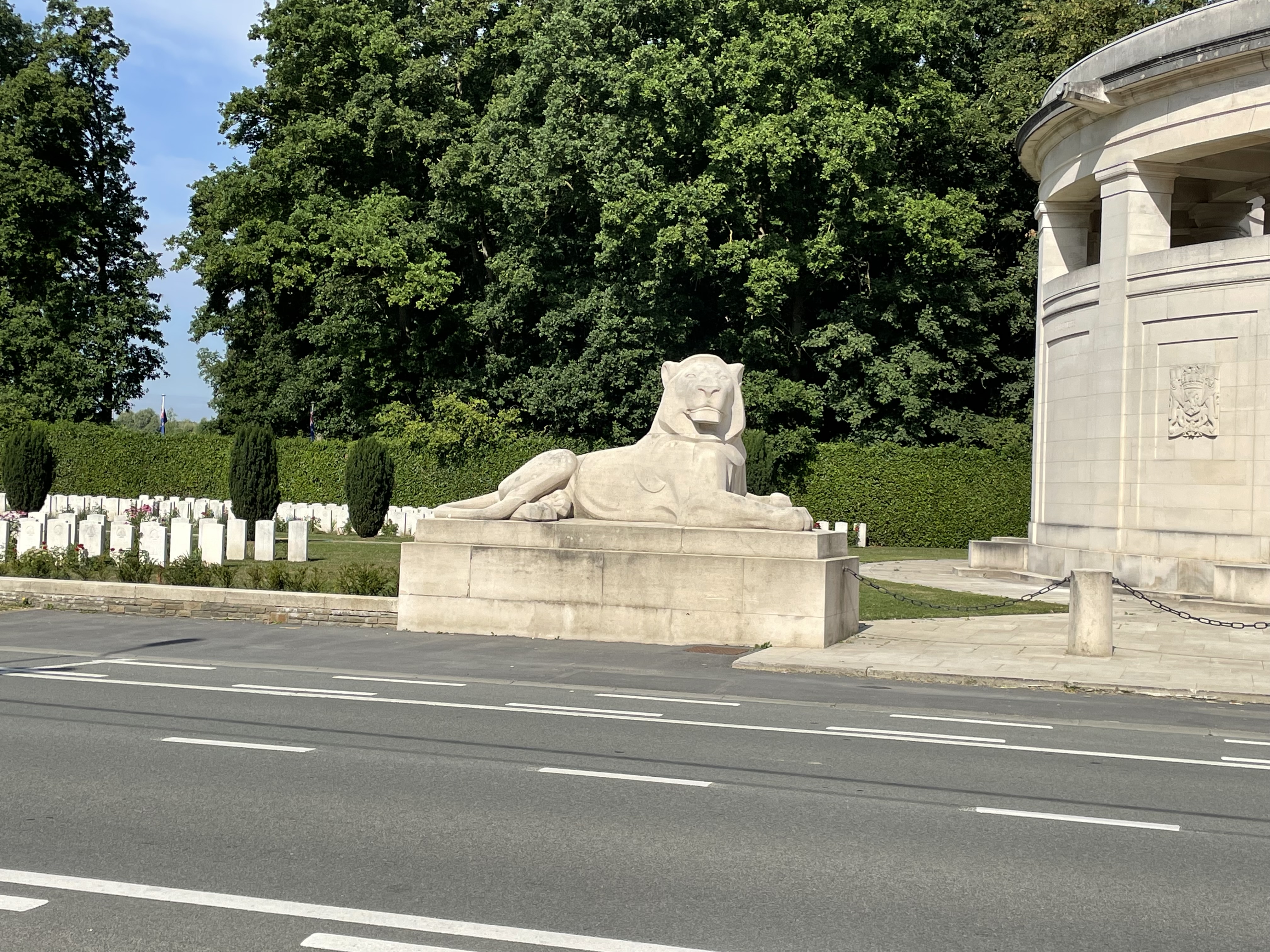
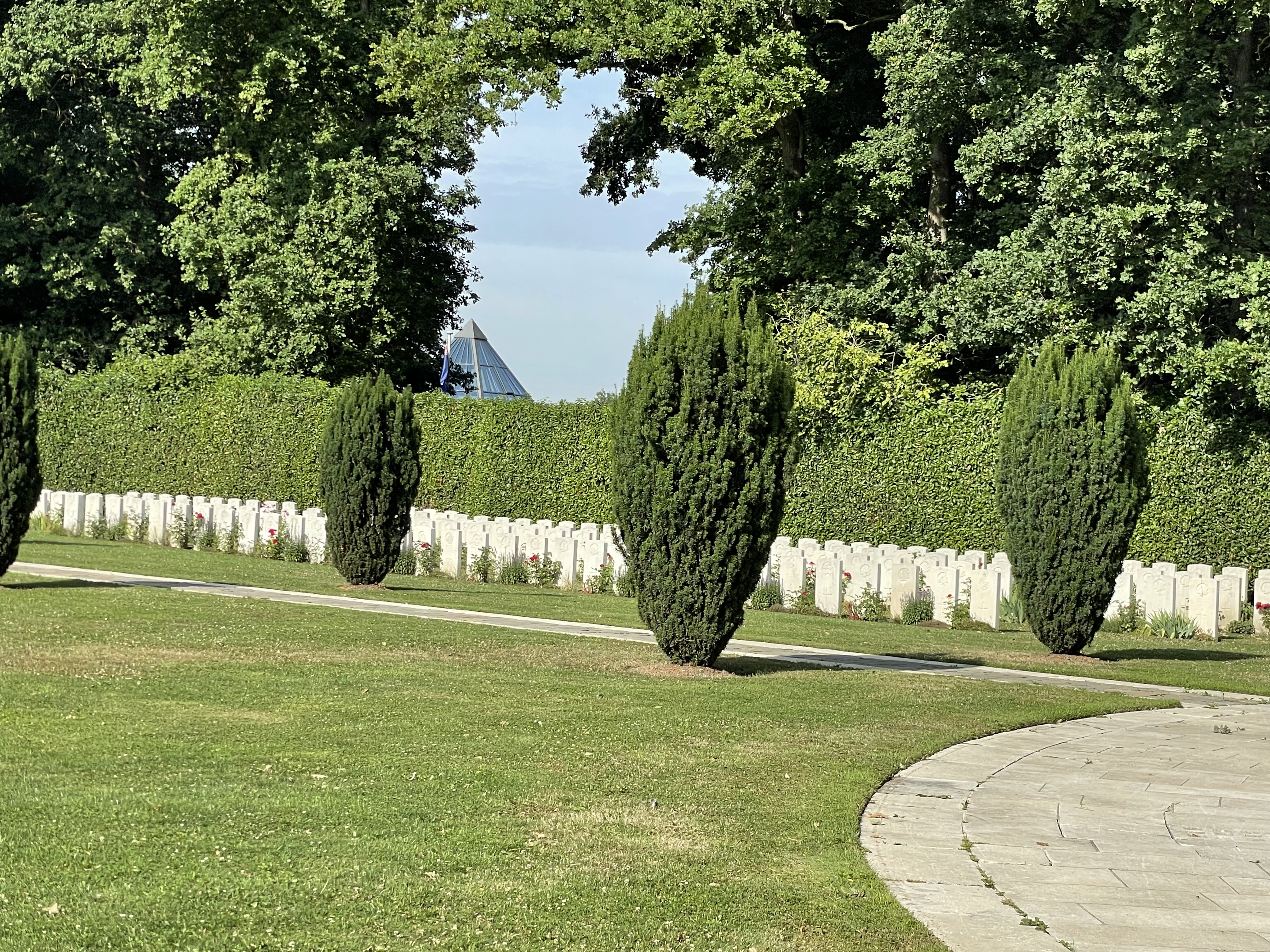
The day and indeed the tour ended at The Menin Gate. Passing beneath its arch, reading the endless lists of names carved into its walls, you feel the weight of absence more strongly than anything else. But it is at 8 o’clock each evening, when the crowds gather, and the Last Post is sounded, that the place truly reveals its power. The bugles’ mournful notes echo off the stone and drift into the night air, a nightly promise that those who died here will never be forgotten.


Over four days, I walked these fields and memorials, absorbing as much as I could, yet knowing that no amount of time would ever be enough to fully comprehend the scale of what happened here. You can study the battles, trace the map lines, read the war diaries, but standing on the soil where young men fought and fell makes everything painfully real. The Western Front is not simply a place of history; it is a place of memory. A place where peace now grows from ground once soaked in sorrow. A place where the past whispers from every hedgerow and hillside, reminding us of both the fragility of life and the extraordinary resilience of the human spirit.
Reflections……
During my visit to the Western Front, I had the privilege of standing before the memorials where three members of my own family gave their lives during the Great War. For years, their names had lived in my research in census entries, service papers, faded photographs, and whispered fragments of family memory. But here, amid the vast cemeteries and sweeping memorial walls, they became real in a way they had never been before.


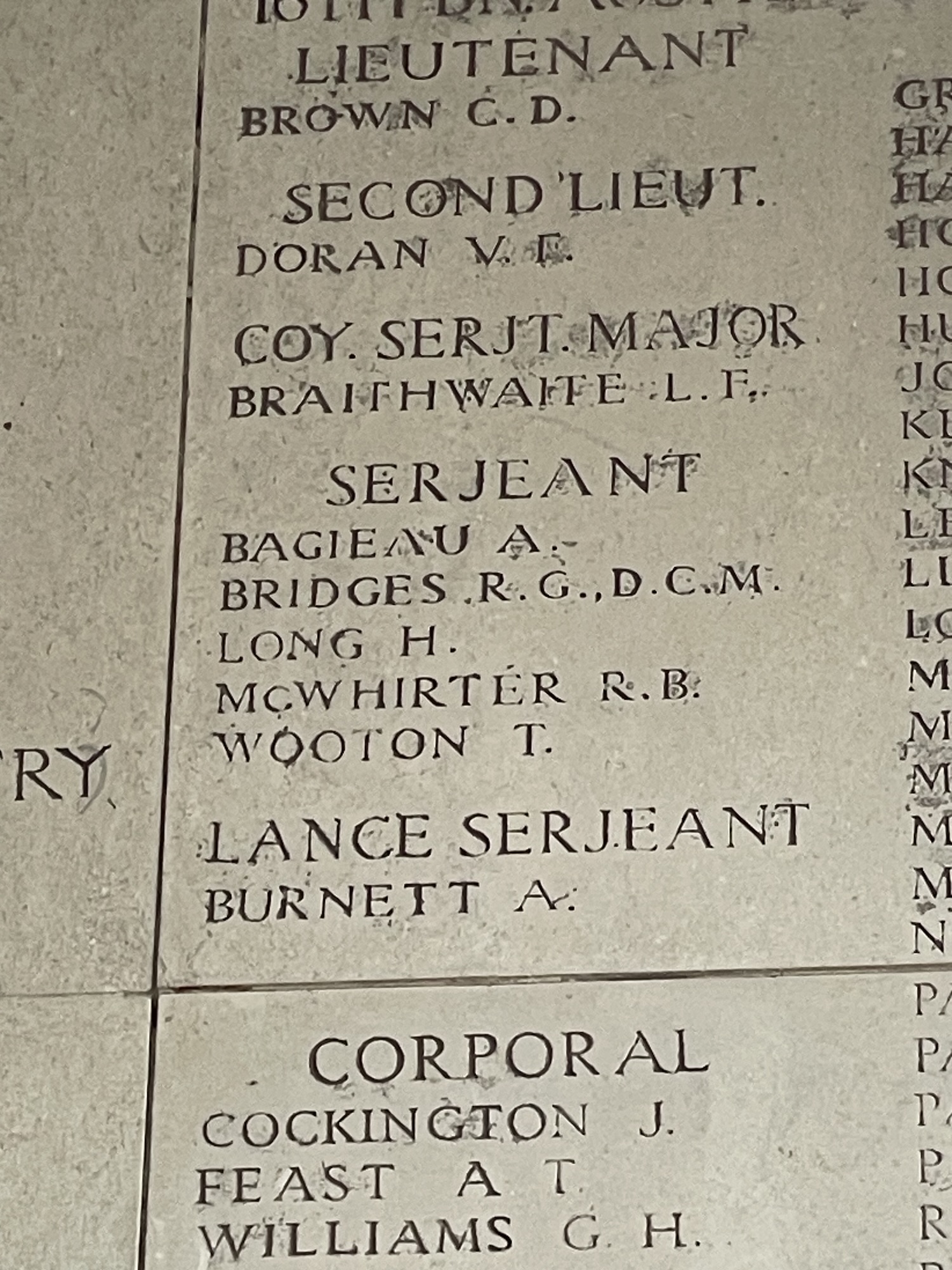
It was an emotional and humbling experience, walking among the endless rows of white headstones, each representing a life cut short and a family forever changed. The sheer number of graves is overwhelming, yet as you pause at each inscription, you are reminded that every stone marks a story: a son, a brother, a husband, a father. A life of hopes, fears and dreams that ended far too soon.
As I moved from cemetery to cemetery, Tyne Cot, Dud Corner, Thiepval, Ploegsteert and many others, I felt a growing responsibility not only to remember my own relatives, but to honour the many thousands whose names may never be spoken aloud again. Standing in these quiet, sacred places, I made a simple promise to myself: at every place of rest I visited, I would choose one individual, unknown to me and unconnected to my family, and I would take their story home. I would learn who they were. I would make sure that at least one more life, one more sacrifice, would not be lost to time. It felt like the smallest gesture I could make, yet somehow the greatest tribute. Because remembrance is not only about those we are tied to by blood, it is about acknowledging the shared human cost, the universal heartbreak, the countless futures stolen by war.
And so, as this journey drew to a close, I carried home with me not just the stories of my three ancestors who fell on these battlefields, but also the stories of three soldiers I had never known until this summer, three men who, like so many, left behind little more than a name carved in stone.
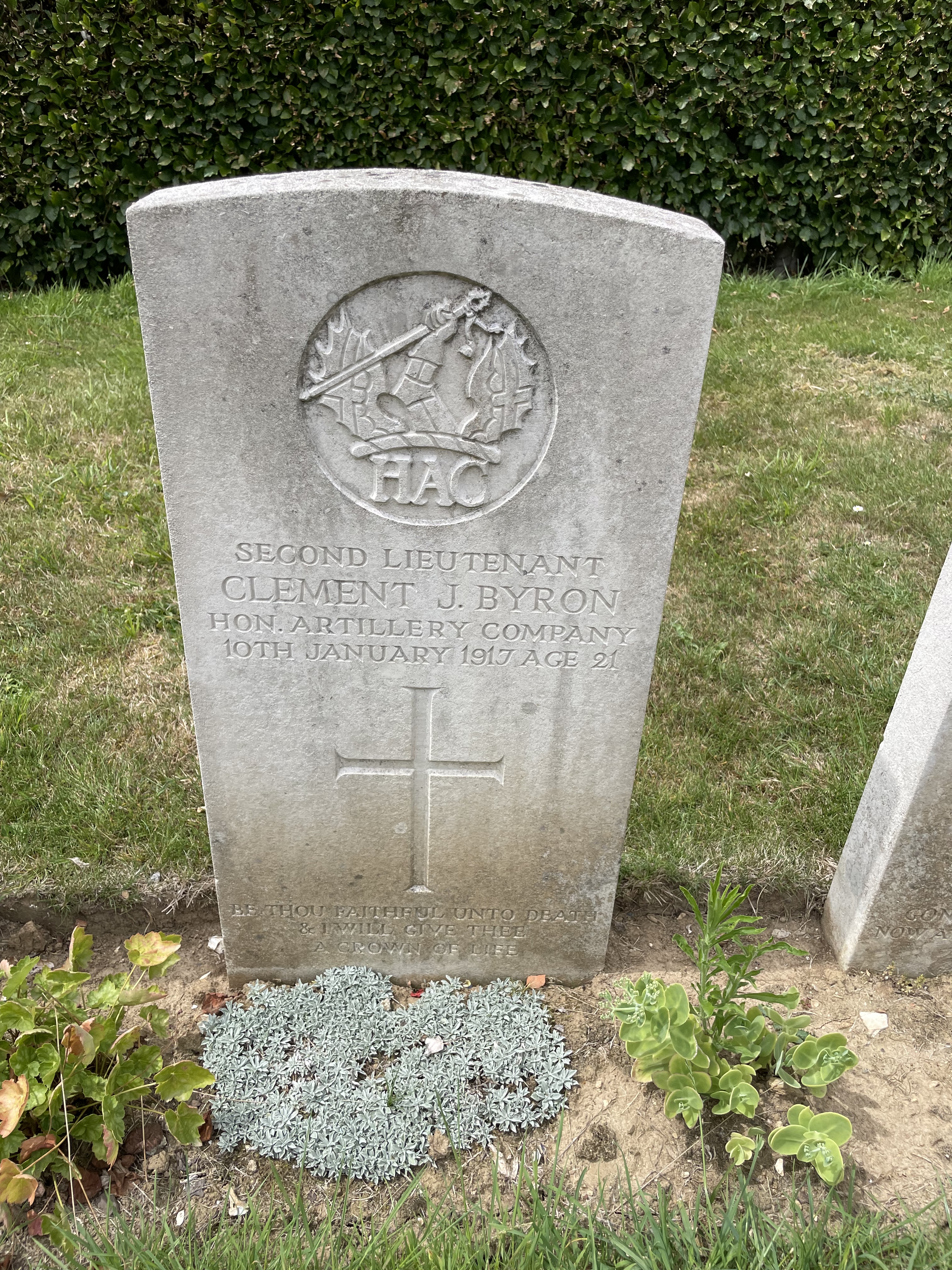
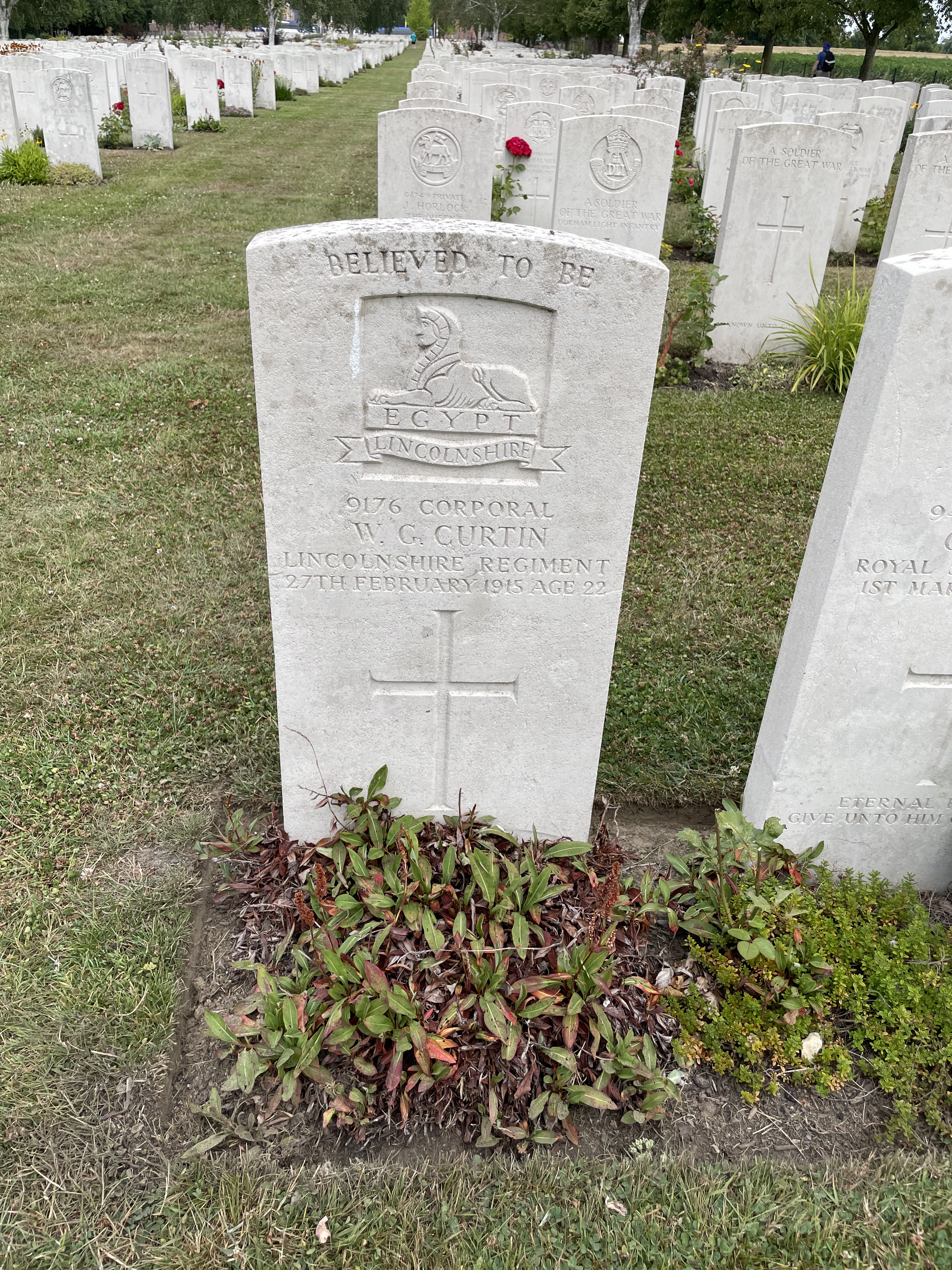
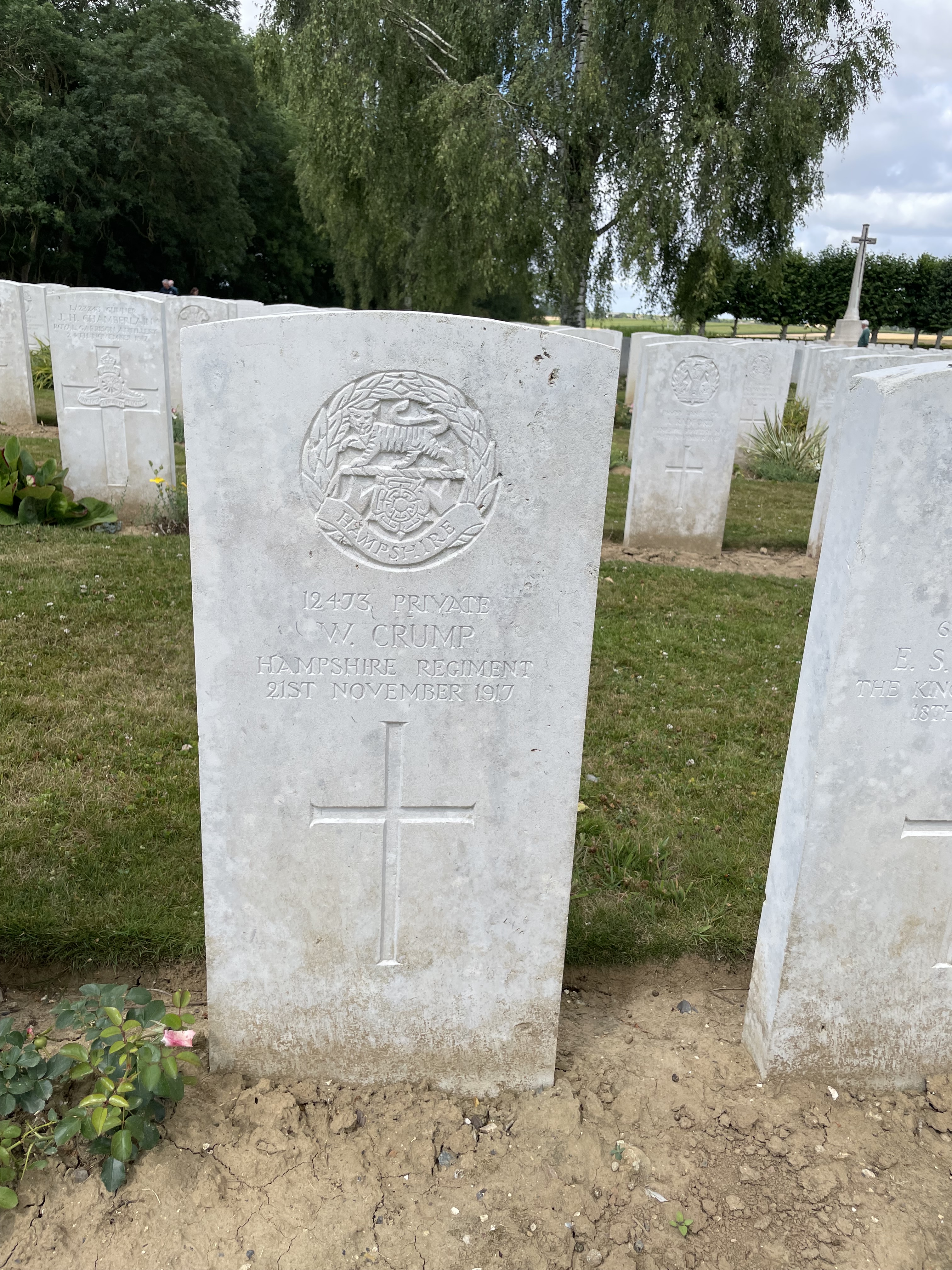
And for me, that remembrance now takes the form of stories: the three members of my own family who never returned home, and the three unknown soldiers whose lives I have since traced, men who had no connection to me except for the shared ground on which they fell. Their stories now sit side by side, reminders of the vast tapestry of humanity caught up in the storm of war. The links below will take you to those six individual stories.
And so we continue to walk these fields.
We continue to read the names.
We continue to tell the stories.
Because silence may prevail here now, but memory must never fade.
A soldier dies twice: once in battle, and once when he is forgotten
In the Shadow of Passchendaele: Remembering Private Keyes
The Forgotten Faces of the Somme
The Story of Second Lieutenant Clement John Byron, Honourable Artillery Company
In the Shadow of the Great War: Remembering William George Curtin
Before the Guns Fell Silent: The Final Days of Private Crump
With special thanks to our Leger Battlefields tour guide, Peter Smith, whose remarkable depth of knowledge brought every location we visited to life. His ability to explain complex history with clarity, insight, and genuine passion added an extraordinary level of meaning to the entire experience. A tour like this truly hinges on the quality of its guide, and while a great or even average guide can influence the journey, Peter was nothing short of exceptional. His expertise, storytelling, and dedication made this tour unforgettable.
Here’s to the next road trip………..
I spend a lot of time researching and sharing these family connections, so if this post helped you uncover part of your family story, you can support my ongoing research here:

Why not visit my new website:
All My Blogs For Family Tree Magazine in one handy place
Copyright © 2025 Paul Chiddicks | All rights reserved


That was such a lovely thing you did and I much enjoyed reading all their stories.
LikeLiked by 1 person
Thank you so much Sheree
LikeLiked by 1 person
A pleasure
LikeLike
Thank you for taking readers along on this emotional journey through the Western Front and the somber memorials to those many, many people who lost their lives.
LikeLiked by 1 person
Thank you as always for your kind words Marian, the journey was extremely moving
LikeLike
What a heart wrenching experience! To view so many sites of such tragedy must have felt heavy indeed.
My husband and I did a similar tour of WWII sites just after Russia invaded Ukraine. We were mostly in Normandy, although as you know memorials to the soldiers of WWI, WWII, and the Resistance are central to every French village, no matter how small. Thus we saw many, and I read the words on every one.
In the British, American, and German cemeteries, the sense of loss was palpable. To view now peaceful fields and bridges, and learn about the many soldiers (and civilians) who were killed in fights over a few inches of land … well, it was an experience I will always remember.
Sadly, such losses have never been confined to one country or region. They continue the world over.
To me, it’s unfathomable that any country (and I definitely include my own under its present administration) would consider war a tangible option to settle a disagreement unless that country has been invaded.
There are already too many crosses with “known only to God” and too many lives lost. Yet little men with big egos keep thinking it’s just fine to start it all over again.
LikeLiked by 1 person
Thank you for your kind words, there are no words that can ever justify the atrocities of war. The loss of human life is far more valuable, we have to find a better way in the future. I hope to do further tours in the coming years including Normandy.
LikeLiked by 1 person
We were fortunate in having an individual tour guide recommended to us, though I’m not sure if he’s doing them anymore. We went to no museums, often simply stopping by a nondescript field or road to learn about the horrible battles that had taken place there. If you do go to France again, I’d recommend a visit to Oradour-sur-Glane (https://www.nationalww2museum.org/war/articles/oradour-sur-glane-martyred-village). My husband has aunts who live in the area, and one of them took us. It was a sobering reminder of the atrocities that are sometimes visited on civilaians by war-hardened soldiers. I wrote a post about our visit. If you are interested, you can find it here: https://thebyrdandthebees.wordpress.com/2022/04/13/oradour-sur-glane-the-martyr-village/.
LikeLiked by 1 person
Thanks so much for sharing your account of the French village Oradour Sur Glane. I had not read about the story before, what incredible atrocities were carried out here. Your pictures tell their own story. I will certainly add that to the places to visit when I go to Normandy, thanks for sharing this.
LikeLiked by 1 person
I had never heard about it either until my husband’s aunt and uncle talked about it and took us there. It was a very sobering experience.
LikeLiked by 1 person
I’ve shared this incredible story across all my social media platforms
LikeLiked by 1 person
Well, that’s good. Thank you. The more people who read about it and perhaps take the opportunity to visit, the better.
LikeLiked by 1 person
Have you seen this book? https://www.amazon.co.uk/Silent-Village-Death-Occupied-France/dp/0750991348/ref=sr_1_1?crid=2XKYO78CH7AZ8&dib=eyJ2IjoiMSJ9.SSb-STVVoA7PIM7inG1kG3Y0a2jArMaGrnTuxf4StIU.Zz7x_YYvQ6dnxcwl_-yWyp0Yo-x5DPi3fQfn0d1nnI8&dib_tag=se&keywords=silent+village+by+robert+pike&qid=1765649530&sprefix=Silent+village+%2Caps%2C98&sr=8-1
LikeLiked by 1 person
I don’t think I have. I’ll check it out. I did read something about it, but can’t recall if it was a book or just the info in the village. Apparently there are also other martyred villages where similar massacres took place. There’s a list on Wikipedia, which lists them from the beginning of history, but includes other German atrocities. https://en.wikipedia.org/wiki/List_of_massacres_in_France
LikeLiked by 1 person
Thanks for the link I will take a look 👍
LikeLiked by 1 person
My library has that book as an ebook, so I think I’ll download it. Thanks for the recommendation.
LikeLiked by 1 person
What a fantastic trip and a fabulous account of it
LikeLiked by 1 person
Thanks Jane I’m glad you enjoyed it.
LikeLiked by 1 person
This is such a beautifully written piece, Paul, about the fields of battle and memorials for the dead. I recognized the museum from your photos. We visited it last year on our bike trip from Paris to Bruges. Also stopped at many WWI cemeteries and memorials along the way.
LikeLiked by 1 person
Thanks Eilene it’s so difficult to include everything as there were just so many stories to tell. But I will return!
LikeLiked by 1 person
Such a beautifully written piece and how exactly you captured so many of my own feelings on my visits to the Western Front. I have been four times and seen some places several times but other different places each time. My first two visits were organised by a retired history teacher who had escorted many school visits and his trips were wonderfully informed, including a visit to a tiny CWGC Cemetery for Chinese labourers who had somehow got caught up in the war. Thank you for sharing your experiences.
LikeLiked by 1 person
Thanks Rosie, I will definitely return, we passed just as many memorials and cemeteries as we visited. Each one has its own unique story to tell.
LikeLike