
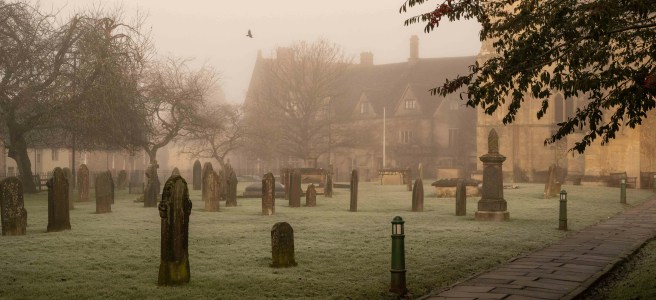
Discover the dark tales of the past in my brand-new series: “Stories From The Grave.”
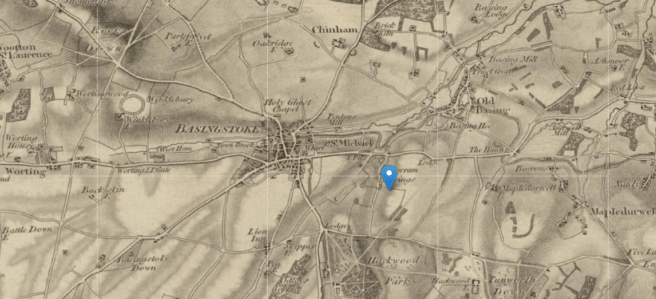
Few fears haunted the people of the 17th century more than the possibility of waking inside a coffin beneath the earth. In the town of Basingstoke, one woman’s story would become one of England’s most chilling legends of premature burial.
Who Was Alice Blunden?
History remembers kings, generals, and great statesmen through monuments and portraits. Alice Blunden survives in memory for a far darker reason.
Alice Blunden nee Davies, was a gentlewoman living in the Hampshire market town of Basingstoke during the 17th century. She married William Blunden, a prosperous maltster and burgess, in 1656, and together they belonged to a family with established standing in the town’s civic and commercial life. The Blunden’s were not poor labourers struggling at the edges of society; they were comfortable, respected, and well connected within the community.
Yet despite this, very little is truly known about Alice herself.
No portrait survives. No letters remain. The details of her daily life have long since faded into silence. Instead, her name passed into local folklore because of the terrible circumstances said to surround her death in the summer of 1674.
Or perhaps, more accurately, her deaths.
The Drink That Changed Everything
In July 1674, Alice reportedly consumed a large quantity of poppy-water, an opium-based remedy commonly used during the period to ease pain, calm illness, and encourage sleep.
In the 17th century, herbal medicines formed an uneasy boundary between healing and danger. Remedies derived from poppies could dull suffering, but in excessive quantities they could also plunge a person into a deep and unnatural unconsciousness.
Soon after drinking the preparation, Alice collapsed.
She became entirely unresponsive. Her breathing grew so faint it could scarcely be detected. To those around her, she appeared lifeless.
A physician was summoned to examine her. According to later accounts, he performed the simple tests available at the time, including holding a mirror to her mouth in search of breath. When no mist appeared upon the glass, Alice Blunden was declared dead.
Her husband reportedly begged for the burial to be delayed.
But July heat brought fears of rapid decay, and preparations for interment began swiftly.
Declared Dead
Death in the 17th century was often determined not by certainty, but by assumption.
There were no stethoscopes, no heart monitors, and no reliable means of distinguishing true death from deep coma or catalepsy. A still body, pale skin, and shallow breathing could easily convince even experienced physicians that life had already departed.
For centuries, this uncertainty haunted Europe.
The dead were often buried quickly, particularly during the warmer months, when decomposition could begin within hours. In Alice’s case, later retellings claim further haste was caused by practical difficulties surrounding the coffin itself, which had reportedly been made too small for her body and had to be forced shut.
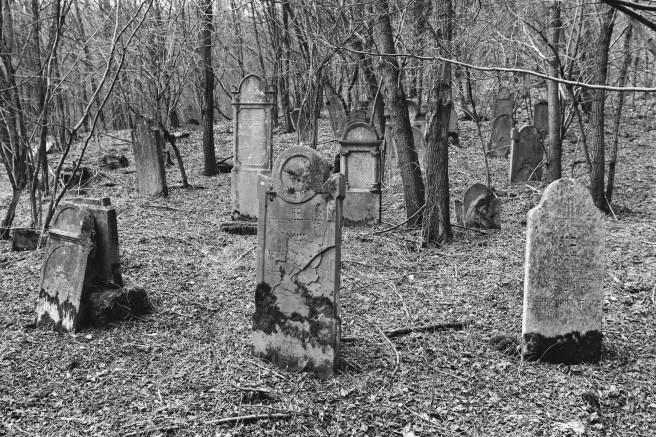
By evening, Alice Blunden had been laid to rest in the Holy Ghost Litten burial ground in Basingstoke.
The earth was closed above her.
And according to legend, she was still alive.
The Noises from the Grave
For two days, the churchyard remained undisturbed.
Then came the sounds.
According to local accounts passed down through the centuries, several schoolboys playing near the grave heard strange cries rising from beneath the ground. Some versions describe groaning. Others speak of scratching, muffled screams, or desperate pleas for help carried through the summer air.
At first, the sounds were dismissed. In a deeply superstitious age, graveyards after dark were places of dread, whispered about in fearful tones. Many preferred to believe such noises belonged to restless spirits rather than consider the far more horrifying possibility beneath their feet.
Yet the reports persisted.
Eventually, townspeople gathered and the grave was reopened.
What they discovered would ensure Alice Blunden’s story endured for centuries.
Buried Alive
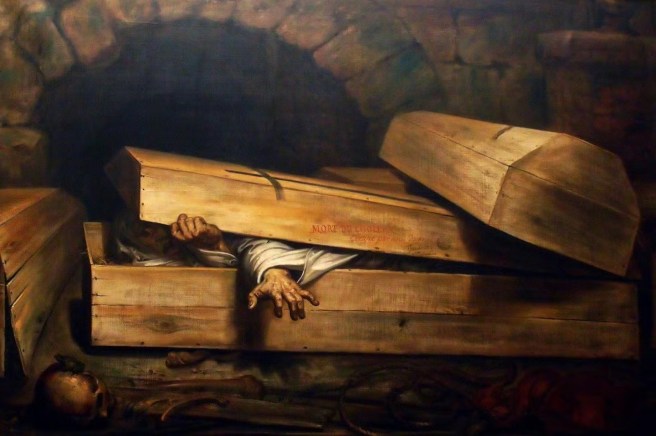
When the coffin lid was finally removed, the scene inside was said to be one of horror.
Alice’s burial shroud had been torn apart.
Her hands and fingers were bloodied and badly damaged. Her face bore scratches and bruises. Her body had shifted violently within the cramped coffin, clear signs, according to those who witnessed it, of a desperate struggle for escape in complete darkness beneath the earth.
The coffin itself told a terrible story.
Some accounts claimed she had clawed at the wood until her fingernails broke. Others described blood around her mouth and signs of convulsive effort as she fought for breath in the suffocating confines of the grave.
Against all expectation, Alice was reportedly still alive when she was removed.
For a brief time, she regained consciousness and was taken home to recover.
But the nightmare was not yet over.
Buried Twice
Not long after being exhumed, Alice reportedly fell once again into a deep unconscious state.
Fear and uncertainty spread quickly through the town. Those around her believed she had finally died, though doubt now lingered over every decision. According to later retellings, she was buried again the following night, this time with a guard stationed beside the grave in case any sounds should emerge once more from beneath the soil.
During the night, a violent storm swept across Basingstoke.
Rain lashed the churchyard. Thunder rolled overhead.
And the guard, frightened by the weather and seeking shelter, abandoned his post.
By morning, the grave was reopened yet again. Alice was found dead, her body bearing fresh signs of struggle.
It was this grim detail, that she was said to have been buried alive twice, which transformed the tragedy into one of England’s most haunting legends.
Fact, Folklore, or Exaggeration?
As with many stories handed down over centuries, separating fact from embellishment is difficult.
The parish register for Basingstoke records only a brief entry noting the burial of “Mr William Blunden’s wife” in July 1674. Much of the dramatic detail comes from later pamphlets, retellings, and antiquarian accounts written years sometimes centuries after the event itself.
Over time, the story grew darker.
Additional details appeared in Victorian retellings: the fleeing grave guard, the desperate cries of “Take me out of my grave,” and increasingly vivid descriptions of Alice’s injuries. Some historians believe these additions reflected the growing fascination with gothic horror and premature burial during the 18th and 19th centuries.
Modern scholars, including historian Jan Bondeson, have questioned how much of the tale can truly be verified. Without contemporary medical records or eyewitness testimony, absolute certainty remains impossible.
Yet the fear behind the story was undeniably real.
Before modern medicine, cases of apparent death terrified people across Europe. Deep coma, catalepsy, and opium-induced unconsciousness could all mimic death closely enough to deceive physicians and grieving families alike.
Whether entirely true or partly transformed by folklore, the story of Alice Blunden captured one of humanity’s oldest and most primal fears.
The Fear of Premature Burial
By the 18th and 19th centuries, fear of premature burial, sometimes called taphophobia, had become widespread across Europe.
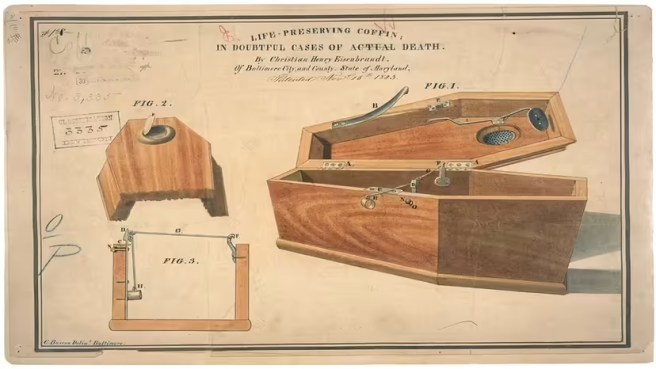
Inventors designed elaborate “safety coffins” fitted with bells, flags, breathing tubes, and escape mechanisms intended to save anyone unfortunate enough to awaken underground. Waiting mortuaries were established in some countries, where bodies were watched for days before burial in case signs of life returned.
Stories such as Alice Blunden’s fed these anxieties.
Legends surrounding grave bells and warning devices also became associated with phrases such as “saved by the bell” and “dead ringer,” though historians continue to debate whether those expressions truly originated from burial practices.
What is certain is that the terror of being mistaken for dead lingered in the public imagination for centuries, inspiring gothic literature, medical debate, and countless fireside tales.
Even Edgar Allan Poe would later explore the subject in his chilling 1844 story The Premature Burial.
Alice Blunden’s Legacy
Today, Alice Blunden’s story remains woven into the folklore of Basingstoke.
The site once known as Holy Ghost Litten, now part of South View Cemetery, still attracts visitors curious about the legend of the woman buried alive beneath its soil. In 2019, a blue plaque was erected near the cemetery in remembrance of the tale that has haunted the town for more than three centuries.
Whether Alice Blunden truly awakened beneath the earth in 1674 may never be known with certainty.
But perhaps that uncertainty is precisely why the story endures.
More than three hundred years later, her name still lingers in the shadows of Hampshire history, a haunting reminder of a time when death itself could not always be trusted.
Sources & Further Reading
- Buried Alive: The Terrifying History of Our Most Primal Fear — Jan Bondeson (1996)
- A History of the Ancient Town and Manor of Basingstoke — Francis Joseph Baigent & Joseph E. Millard (1889)
- Premature Burial and How It May Be Prevented — William Tebb & E.P. Vollum (1896)
- Basingstoke parish records, July 1674
- Basingstoke Heritage Society — South View Cemetery plaque and local history resources
As with many stories passed down through centuries, details surrounding Alice Blunden’s fate vary between historical accounts and local folklore.
If you’d like to follow my ongoing family history journey, including new discoveries, research notes, and stories that don’t always make it to this blog, you can subscribe to my Substack here:
I spend a lot of time researching and sharing these family connections, so if this post helped you uncover part of your family story, you can support my ongoing research here:



One thought on “The Grave That Would Not Stay Silent”