
Discover the dark tales of the past in my brand-new series: “Stories From The Grave.”
Why would someone be buried on top of a wall?
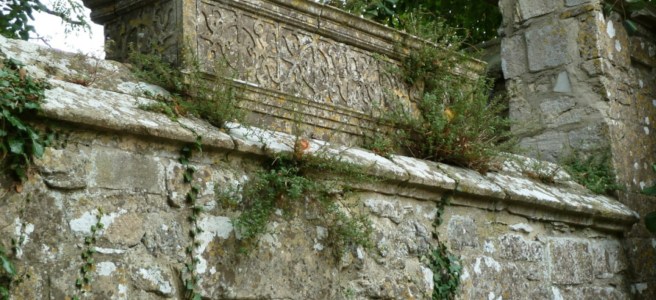
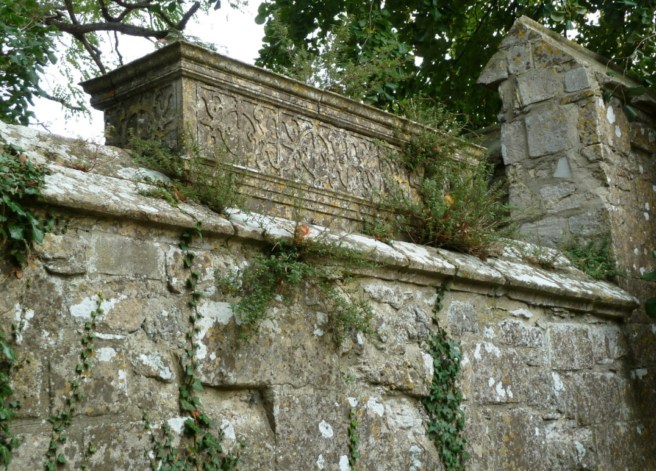
A mysterious coffin sits on a churchyard wall at Edington Priory Church. It sounds like a riddle from another age. Yet at Edington Priory Church, that is exactly what you’ll find: a coffin-like structure resting on the eastern boundary wall of the churchyard, poised between consecrated ground and the world beyond.
Unlike the carved tombs within the church and the orderly graves of the churchyard, this strange monument stands apart, both in placement and in meaning. For generations, it has quietly puzzled visitors, offering no clear explanation and no recorded identity.
A Priory Steeped in History
Founded in the mid-14th century as a house for Augustinian canons, Edington Priory has stood for centuries as a place of worship, discipline, and community life. Its church, dedicated to St Mary, St Katherine and All Saints, remains a Grade I listed parish church today.
Within its walls lie the expected memorials of the past: worn effigies, engraved stones, and carefully marked burials. Yet outside, on the very edge of the sacred boundary, sits something altogether more unusual.
Why Was the Coffin Placed on the Wall?
The location is what makes this mystery so compelling.
In medieval England, burial within consecrated ground was of deep spiritual importance. To be laid to rest within a churchyard meant remaining within the protection and blessing of the Church.
But not everyone was granted that privilege.
Those who were unbaptised, excommunicated, or considered outside the moral or religious boundaries of the community were often denied burial within sacred ground. In such cases, the boundary itself, the very edge of consecrated land, could become a final resting place.
If the coffin on the wall at Edington Priory Church does mark a burial, it may represent a compromise: neither fully accepted nor entirely cast out.
Medieval Burial Practices and the Edge of Consecrated Ground
While unusual, boundary burials are not entirely without precedent. Across England, there are scattered examples of graves placed at the edges of churchyards, reflecting the complex beliefs surrounding death, sin, and salvation.
The churchyard wall was more than a physical boundary, it symbolised the divide between the sacred and the ordinary world. To be placed upon it was to exist between those two realms.
Whether intentional or symbolic, such a placement would have carried meaning for the community that created it.
Legends of the Edington Priory Coffin
Where historical records fall silent, stories begin to grow.
Over time, several local traditions have emerged to explain the coffin:
- One tells of a disgraced monk who slipped out at night to visit local women. Excommunicated for his actions, he was denied burial within the churchyard and instead placed upon the wall.
- Another, darker version suggests a young monk was punished for falling in love and walled up alive, a tale that reflects medieval fears more than documented reality.
- For local children, the explanation was simpler and more unsettling: it was known as the “Witch’s Coffin”, said to hold someone too dangerous or unwelcome to be buried properly.
None of these stories are supported by surviving church records. There is no confirmed identity, no date, and no definitive explanation.
And that uncertainty is what gives the story its lasting power.
What Might It Really Be?
There are, of course, more practical explanations.
Coffin-like monuments and chest tombs can sometimes be found against walls or marking burials beneath them. In some cases, they are memorials rather than containers; in others, they serve symbolic or decorative purposes.
The structure at Edington may be one such monument, its unusual placement perhaps intentional, perhaps simply lost to time. It could date back several centuries, possibly even to the priory’s early history.
Without records, however, certainty remains just out of reach.
Why This Mystery Still Matters
The coffin on the wall is more than a curiosity.
It is a reminder of how past communities drew boundaries, between sacred and profane, belonging and exclusion. It hints at lives that did not fit neatly within accepted norms, and at the ways people chose to remember them.
For family historians, mysteries like this are especially compelling. They speak to the gaps in the record, the unnamed, the unrecorded, and the stories that survive only through place and memory.
Standing there today, balanced between two worlds, the coffin on the wall remains unmoved by time, its occupant unknown, its story untold.
Visitors pass, generations change, and still it waits on that narrow line between the sacred and the forgotten.
Not quite buried. Not quite remembered.
And perhaps that was always the point……..
I spend a lot of time researching and sharing these family connections, so if this post helped you uncover part of your family story, you can support my ongoing research here:

Why not visit my new website:
All My Blogs For Family Tree Magazine in one handy place
Copyright © 2026 Paul Chiddicks | All rights reserved


That was very interesting. Perhaps the coffin should be opened to ascertain if there are any human remains in it – or maybe it has been. I doubt that I would even make it on the wall.
LikeLiked by 1 person
Its certainly something to think about. Perhaps that was always the point……..to not know
LikeLiked by 1 person
Amazing
LikeLiked by 1 person
Thank you
LikeLiked by 1 person
You’re the most welcome dear Sir 🥰
LikeLiked by 1 person