
A Dorset village evacuated during the Second World War, where a promise to return was never fulfilled
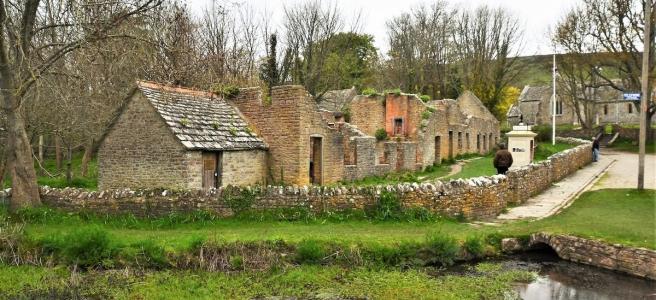
Hidden within the rolling hills of Dorset lies one of Britain’s most poignant reminders of the Second World War. For more than eighty years, nobody has lived in Tyneham, yet walking through its quiet lanes feels as though time stopped the day its residents left. Tyneham is one of England’s best-known abandoned villages, a Dorset community evacuated during the Second World War that was never reoccupied. Today, it remains one of Britain’s most fascinating historical sites.
Roofless cottages stand quietly beneath the surrounding hills, a restored schoolhouse recalls the voices of children long gone, and St Mary’s Church remains a place of reflection where history feels remarkably close. Rather than disappearing into the landscape, Tyneham has become a place where memory has been carefully preserved.
It is not simply an abandoned village, it is a story of sacrifice, broken promises, and a community that never came home.
A Village Asked to Sacrifice
In November 1943, at the height of the Second World War, the British War Office issued a notice to the residents of Tyneham, giving them just 28 days to leave their homes.
Around 250 people, including farming families and those living in the surrounding valley, were told the land was needed for military training in preparation for the Allied invasion of Normandy, what would later become D-Day.
The requisition was presented as a temporary wartime necessity. Families packed what they could carry, locked their doors, and walked away believing they would soon return.
One of the village’s most enduring symbols was left behind on the door of St Mary’s Church:
“Please treat the church and houses with care; we have given up our homes where many of us have lived for generations, to help win the war and to keep men free. We shall return one day and thank you for treating the village kindly.”
The note has become one of the defining images of Tyneham’s story. It is widely believed to have been placed on the church door by Helen Taylor, one of the last residents to leave. Written with quiet dignity and hope, it reflected a belief shared by the entire community, that their absence would only be temporary.

The Return That Never Came
When the war ended, the expected return never happened.
In 1948, the government confirmed that Tyneham would remain under military control, and the land was later secured through compulsory purchase, ending any realistic prospect of the villagers returning to their homes.
The area became part of the Lulworth Ranges, where the British Army continues to carry out military training, including exercises involving armoured vehicles and live ammunition.
Many of the cottages slowly fell into ruin as roofs collapsed and weather took its toll. Yet, unlike many abandoned settlements, Tyneham was never completely demolished. Hidden within the military training area, it gradually became an unintended time capsule. In later years, conservation efforts helped preserve several of its most significant buildings, allowing visitors to experience the village much as it was left.
Echoes of Everyday Life
There is something deeply moving about walking through Tyneham today.
Inside the restored schoolhouse, children’s names still hang above the coat pegs, while displays recreate what village life would have looked like before the evacuation. Nearby, St Mary’s Church remains quietly furnished, its pews, altar and hymn books inviting visitors to imagine the congregation that once gathered there each Sunday.
Outside, roofless cottages reveal old fireplaces, stone staircases and garden walls, offering glimpses into ordinary family lives interrupted by extraordinary circumstances.
Unlike many abandoned places reclaimed entirely by nature, Tyneham has been thoughtfully preserved as both a historical site and a place of remembrance.
A Village That Still Speaks
It is tempting to describe Tyneham as a ghost village and in many respects, it is.
Yet it is far more than a collection of ruins.
It stands as a testament to community, resilience and sacrifice. The absence of people somehow makes their presence feel even stronger, with every empty doorway and weathered stone hinting at lives once lived here.
For many years after the war, former residents and their descendants campaigned tirelessly for the village to be returned to them. Their efforts were ultimately unsuccessful, but they served as a powerful reminder of how deeply people remain connected to the places they call home..
Why Tyneham Still Matters
Tyneham reminds us that history is not only written through battles and military victories, but through the ordinary lives forever changed by them.
The families who left in 1943 believed they were making a temporary sacrifice for the greater good. Instead, they unknowingly closed the doors on generations of family history.
More than eighty years later, the village remains suspended between past and present, a place where silence tells a story more powerful than words ever could.
Behind every abandoned cottage stood a family.
Behind every silent classroom sat a child.
Behind every locked church door gathered a community that believed it would one day come home.
That promise was never fulfilled, but it has never been forgotten.
Visiting Tyneham
Tyneham lies within the Lulworth Ranges in Dorset and is open to visitors on selected weekends, bank holidays and other periods when military training is not taking place.
The village is free to explore, and many visitors continue on foot to Worbarrow Bay, one of Dorset’s most beautiful and secluded stretches of coastline.
If you’re planning a visit, it’s always worth checking the official opening dates before travelling, as access depends on the military training schedule.
Have you visited Tyneham?
Have you explored this remarkable lost village, or is it somewhere you’d like to experience one day?
I’d love to hear your thoughts or memories in the comments below.
History is all around us, sometimes we just need to slow down long enough to hear it.
I spend a lot of time researching and sharing these family connections, so if this post helped you uncover part of your family story, you can support my ongoing research here:

All My Blogs For Family Tree Magazine in one handy place
You can also explore and discover some of my other genealogy and historical stories over on Substack:
https://chiddickstree.substack.com
Copyright © 2026 Paul Chiddicks | All rights reserved

 The Chiddicks Family Tree
Sad to read about the sacrifices of these families who had no idea they would forever be unable to return to their homes. Their note is particularly moving.
LikeLiked by 1 person
The note reflected the natural instinct that they would return. The stark truth was they never ever returned. 💔
LikeLike
How fascinating. Thanks for telling this story Paul. My dad was a tank driver in the British Army in the early 1960s and spent a lot of time at Lulworth and Bovington camps. On our trip to England last year, my husband and I stayed in Swanage for a couple of nights as that is where mum and dad lived after they were married. I had heard stories of the area and nearby Corfe Castle so thought I should check it out. We didn’t make it to Tyneham though as I hadn’t heard of it then. Next time!
LikeLiked by 1 person
Thanks Karen, it’s one of those stories that feels hard to believe until you go there and witness it yourself.
LikeLiked by 1 person
The children’s names still hanging above the coat pegs in the schoolhouse is the detail that undid me. A whole village’s worth of ordinary Monday mornings, just stopped mid-sentence. We’ve taken our kids through plenty of ruins where the history stayed abstract for them, but a row of pegs with names on it is something they’d understand instantly. Twenty-eight days’ notice, and they left that note on the church door anyway. Hadn’t heard of Tyneham before this – it’s going on the someday list.
LikeLiked by 1 person
It’s those small details that hit the hardest
LikeLiked by 1 person
How very sad that these people were cheated out of their homes this way. Surely the government could have found a some unoccupied piece of land! I hope they were at least allowed to gather any of their personal property that had been left behind.
LikeLiked by 1 person
I don’t think things happened like that back then Eilene. There was a reluctant acceptance of those in authority.
LikeLiked by 1 person
Maybe so, but I’ll bet they felt cheated later!
LikeLiked by 1 person