
Discover the dark tales of the past in my brand-new series: “Stories From The Grave.”
In 1705, an Irish woman named Margorie McCall (sometimes recorded as McCat or McCool) was believed to have died suddenly from a fever and was hastily buried in Lurgan, County Armagh, a common practice at a time when contagious illness was feared, and medical understanding was limited. She was interred quickly, wrapped in her burial clothes, and laid to rest in the local graveyard.
Margorie was wearing a valuable ring, one that her husband, John McCall, a physician, had been unable to remove before burial. Her finger had swollen after her apparent death, making it impossible to slip the ring off. In early 18th-century Ireland, such items were well known to attract grave robbers, who frequently targeted newly dug graves for jewellery, clothing, and even bodies, which were sometimes sold to medical schools.
That very night, before the soil had fully settled, body snatchers came to Margorie’s grave and began digging. When they found that the ring could not be removed, they attempted to cut off her finger. At that moment, blood reportedly flowed, and Margorie suddenly revived from what was later understood to be a coma or death-like trance, conditions not uncommon in an era without reliable methods for confirming death. But what happened next was astonishing: Margorie sat upright and screamed.
Accounts differ as to what happened next. One version claims the robbers fled in terror, abandoning their tools and never returning to the trade. Others say they ran, believing they had encountered a spirit risen from the dead. Whatever the truth, Margorie was left alive, injured, and alone in her open grave.
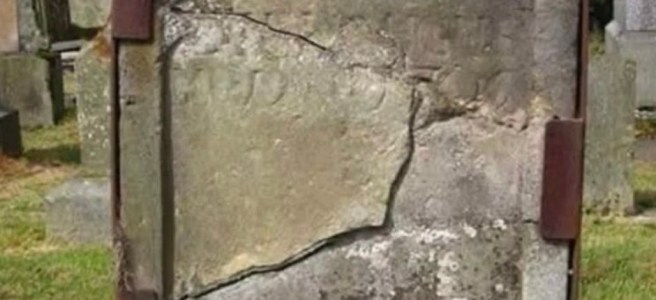
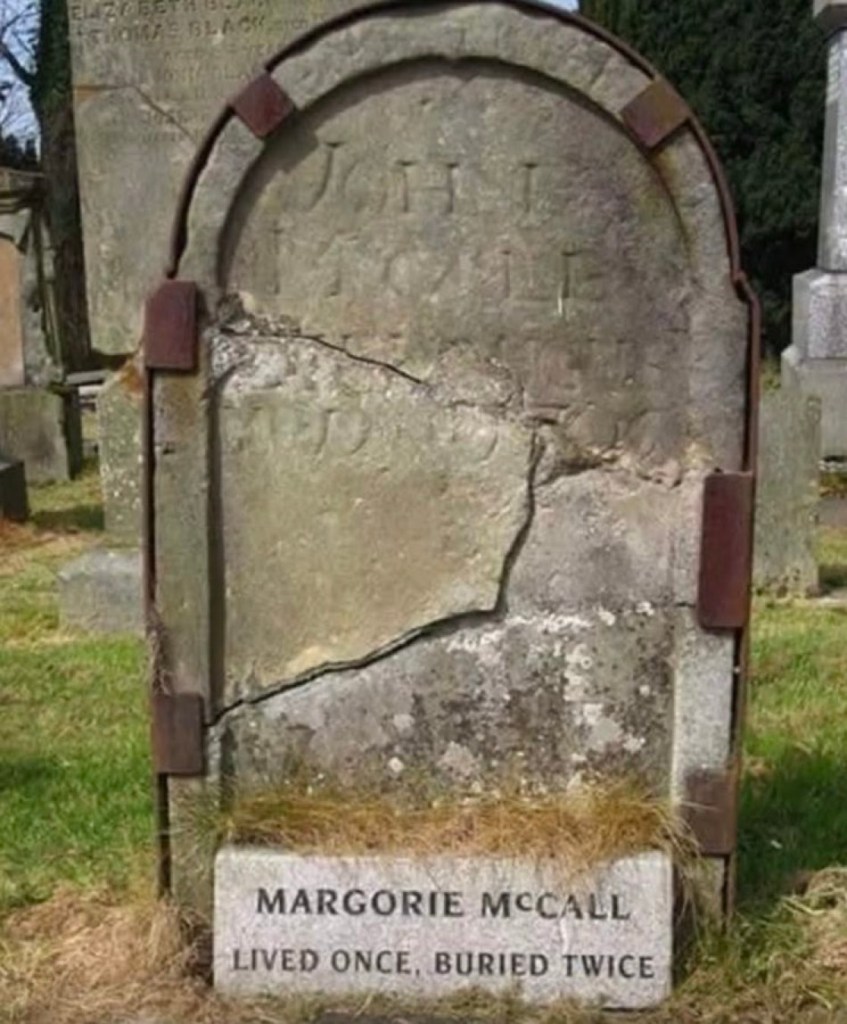
She climbed out and made her way home through the dark streets of Lurgan. When she knocked on the door, her husband John is said to have joked that if his wife were alive, he would swear it was her. Upon opening the door and seeing Margorie standing there, still in her burial clothes, bleeding and pale, John reportedly collapsed from shock and died on the spot. Whether from heart failure or sheer terror is unknown, but the story holds that he was later buried in the grave that had originally been prepared for her. Margorie survived the ordeal and went on to remarry and have several children, living for many years afterwards, a fact that helped cement her story in local memory. When she eventually died for a second and final time, she was buried at Shankill Graveyard in Lurgan, where a headstone still stands today.
The inscription reads:
“Lived Once, Buried Twice.”
While parts of Margorie McCall’s story clearly belong to folklore, the grave itself exists, and the tale has been passed down locally for over three centuries. It reflects very real fears of premature burial in the 17th and 18th centuries, fears so widespread that “safety coffins” and grave-watching became common in later years.
Whether legend, truth, or a blend of both, Margorie McCall’s story remains one of Ireland’s most enduring stories. While the dramatic details of Margorie McCall’s return from the grave are rooted in local legend, and no definitive parish record from 1705 has survived to confirm every element, what is clear is that the tale has deep historical roots in real 18th-century fears and practices. Her grave in Shankill Cemetery bears the famous inscription “Lived Once, Buried Twice,” and may have been erected in the 19th century when the story was already well known locally.
Part of the ongoing series, Stories From The Grave.
Stories From The Grave tells the stories of those once forgotten, misunderstood, or cast aside and considers how remembrance can restore dignity.
I spend a lot of time researching and sharing these family connections, so if this post helped you uncover part of your family story, you can support my ongoing research here:

Why not visit my new website:
All My Blogs For Family Tree Magazine in one handy place
Copyright © 2026 Paul Chiddicks | All rights reserved

 The Chiddicks Family Tree
Such an interesting story! Thank you for sharing it, along with the phot of the grave stone.
I have read that being buried alive was (understandably) a great fear, so much so that there were actually coffins with bells for the not-so-deceased to ring should they awaken. https://science.howstuffworks.com/science-vs-myth/afterlife/premature-burial-safety-coffins.htm
LikeLike
Thanks Kym it’s such an amazing story! I am truly fascinated by these incredible stories. I have actually written about these coffins with bells on before – https://chiddicksfamilytree.com/2024/06/20/never-let-the-truth-get-in-the-way-of-a-good-story/
LikeLiked by 1 person
I kind of figured you would have been aware of those coffins. 😉 These stories remind me of another story I read somewhere about how many English village churches look like they are sinking but it’s really because so many bodies have been buried in the graveyards around them that the ground has gotten higher. It was in Bill Bryson’s “At Home.” Here’s a reference to it: https://www.bridportmuseum.co.uk/churchyards/. Not sure if it’s true, but could be plausible. Not a problem here in the states since our cemeteries are frequently not associated with an individual church and are sometimes huge.
LikeLiked by 1 person
Thanks Kym I love these unusual stories and will have a look at this and do some digging – metaphorically speaking of course 😊
LikeLiked by 1 person
You might enjoy reading Bill Bryson’s books then, if you haven’t already. They are full of tales/facts like this, told with a sense of humor. I’d be interested in reading what you find on the graveyards, all the dirt (pun intended!). 🙂
LikeLiked by 1 person
I will certainly take a look at some of his books then and I will definitely let you know if I find out something interesting.
LikeLiked by 1 person
I can’t even imagine her husband’s shock when he saw her at the door! He was already in mourning from her death and yet here she was…bloody but apparently alive. OMG.
LikeLiked by 1 person
Can you imagine the look on his face when he opened the door!!
LikeLike
Great tale! I had not heard this one before. I’ll stick to dying once, thank you.😏
LikeLiked by 1 person
Wise choice Eilene!
LikeLiked by 1 person
wow! Increadible!
LikeLiked by 1 person
I would think the experience of those grave robbers would put them off a life of crime for the rest of their lives. Not to mention, poor Margaret and John. Very interesting story.
LikeLiked by 1 person
I’m glad you enjoyed it Linda, if enjoy is the right word. One would hope that an experience like this did put the robbers off for life, but somehow I doubt it 😊
LikeLike